
why battery wholesale sourcing matters for your business
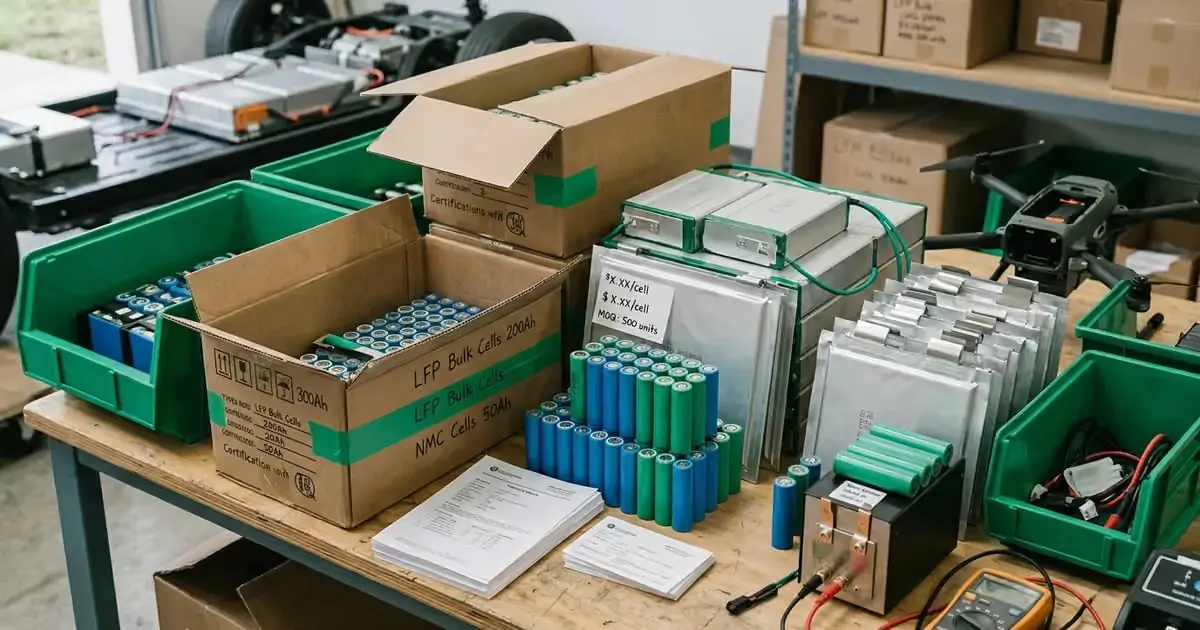
Battery wholesale sourcing has shifted from a routine procurement task to a strategic business decision. With lithium-ion demand surpassing 1 terawatt-hour globally and pack prices dropping sharply year over year, the supplier you choose today will shape your product margins, compliance posture, and competitive position for years to come.
The scale of today's battery market
The numbers are difficult to ignore. According to Mordor Intelligence (2024), global demand for lithium-ion batteries likely reached nearly 1.6 TWh, with batteries installed in EVs accounting for 85% of that volume. Stationary energy storage systems absorbed much of the remainder, driven by grid-scale BESS deployments and behind-the-meter commercial installations.
For bulk buyers, this scale creates both opportunity and risk. Demand growth is attracting new manufacturers into the market, but not all of them meet the quality and certification standards that OEMs and system integrators require.
Falling prices and the urgency of supplier selection
Li-ion battery pack prices fell 8% in 2025, following a 20% reduction in 2024. That sustained downward pressure is good news for procurement teams, but it also reflects a global overcapacity of approximately 900 GWh across the lithium-ion supply chain. Manufacturers are competing aggressively for volume orders, which means wholesale buyers now have genuine leverage to negotiate pricing, minimum order quantities, and custom specifications.
The risk is choosing a supplier purely on unit cost. Overcapacity environments often push lower-tier manufacturers to cut corners on cell chemistry consistency, cycle life validation, and certification compliance.
What separates a good wholesale battery partner from a great one
At LiTrue, our analysis shows that buyers who evaluate suppliers on a full scorecard consistently outperform those who optimize for price alone. The criteria that matter most include:
- Cell chemistry: LFP offers superior cycle life and thermal stability; NMC and solid-state anode-free cells deliver higher energy density for weight-sensitive applications
- Energy density: Critical for UAV, electric motorcycle, and portable equipment manufacturers where every gram counts
- Cycle life and C-rate: Determines total cost of ownership across the product's operational lifespan
- Certifications: UN38.3, IEC 62133, UL, and CE compliance are non-negotiable for most markets
- Minimum order quantities and OEM flexibility: Affects your ability to prototype, iterate, and scale
Choosing the right wholesale battery partner directly impacts your time-to-market, your bill of materials, and your ability to meet regulatory requirements in target markets. The sections that follow break down the best options available today.
Our top picks: quick summary of best wholesale battery options
The battery wholesale market spans a wide range of chemistries, formats, and supplier tiers. This summary gives procurement teams, engineers, and product developers a fast reference point before diving into the detailed breakdowns that follow. Each pick has been evaluated against energy density, OEM flexibility, certification status, pricing tier, and suitability for demanding applications.
Quick-reference comparison table
| Rank | Supplier | Chemistry | Top spec | Best for | MOQ flexibility |
|---|---|---|---|---|---|
| #1 | LiTrue | Solid-state anode-free | 495 Wh/kg | UAV, EV, BESS | OEM/ODM custom |
| #2 | Grepow | NMC pouch | High C-rate | Drones, wearables | Mid-volume |
| #3 | Hiitio | LFP/NMC | Standard | General wholesale | Low MOQ |
| #4 | EVLithium | LFP prismatic | High capacity | EV conversions | Bulk pallet |
| #5 | LS Lithium | LFP/NMC | Standard | Logistics OEMs | Flexible |
What sets each tier apart
Premium tier: LiTrue leads this list with its 495 Wh/kg solid-state anode-free cell, a specification that outpaces conventional NMC pouch cells by a significant margin. For drone manufacturers, electric motorcycle brands, and automotive OEMs prioritising weight reduction, this chemistry changes what is technically achievable. LiTrue also offers a broad product catalog covering high C-rate NMC pouch cells and LFP prismatic formats, making it a single-source option for diverse industrial lithium battery solutions.
Established NMC and LFP suppliers: Tier 2 options like Grepow and EVLithium carry proven OEM track records across consumer and industrial segments, with certifications including UN38.3 and IEC 62133 common across reputable suppliers.
Budget-conscious procurement: LFP chemistry remains the cost leader. Research suggests LFP batteries are almost 30% cheaper per kWh than NMC equivalents, making suppliers focused on LFP prismatic cells an attractive option for BESS providers and logistics equipment manufacturers where gravimetric energy density is less critical than cycle life and upfront cost.
LiTrue: premium solid-state anode-free cells for high-performance applications
For procurement teams where weight and energy density are non-negotiable, LiTrue occupies a distinct position in the battery wholesale market. The company manufactures solid-state anode-free pouch cells that push beyond conventional lithium-ion chemistry, targeting drone manufacturers, aerospace integrators, electric motorcycle brands, and industrial OEMs that cannot afford to compromise on performance. According to OpenPR, LiTrue flagship cell achieves 495 Wh/kg, a figure that places it well above the performance ceiling of standard NMC and LFP alternatives available from generalist wholesale platforms.
PE49N-EF: the flagship 49Ah cell for maximum energy density
The PE49N-EF is LiTrue headline product. At 49Ah and 3.85V nominal, the 49Ah 495Wh/kg solid state anode free cell delivers high gravimetric density in a pouch format. The operating range spans -43°C to 55°C, making it viable for high-altitude drone missions, cold-chain logistics equipment, and outdoor industrial deployments where temperature extremes would degrade conventional cells. For UAV manufacturers specifically, this combination of gravimetric density and thermal resilience directly translates to extended flight time and greater payload capacity without increasing pack weight.
PE42N-EF and PE40N-EF: weight-critical and commercial mobility variants
The PE42N-EF 42Ah cell is optimized for applications where every gram matters. Aerospace integrators and long-endurance drone platforms benefit most here, as the cell's design prioritizes the highest possible energy output relative to mass. The PE40N-EF 40Ah variant takes a slightly different approach, balancing capacity and energy density for commercial mobility platforms and robotics where pack volume and structural integration are equally important alongside raw performance.
PT25N-EF: compact anode-free cell for specialized packs
The PT25N-EF 25Ah cell rounds out the solid-state anode-free lineup for applications requiring a smaller form factor. At 480 Wh/kg, it remains among the highest-density compact cells available at wholesale, suited to specialized high-energy-density packs in medical devices, advanced robotics, and compact UAV platforms.
OEM pricing, certifications, and MOQ
LiTrue operates on a factory-direct model, which removes the intermediary margin that platforms like Made-in-China.com or aggregator-style suppliers such as Evlithium typically carry. Flexible MOQ starts at 500 units, and all cells carry UN38.3 and UL 2054 certifications, satisfying the compliance requirements of most international logistics and commercial deployment programs.
Compared to generalist wholesale sources, LiTrue value is clearest for buyers whose application demands performance that commodity NMC or LFP cells cannot meet. Sourcing specialized options like a high-safety solid-state battery cell directly from the manufacturer gives engineering teams a fast path to prototyping and validation.
NMC pouch cells: balanced performance for fast-charging and high-rate applications
NMC pouch cells occupy a well-established middle ground in battery wholesale procurement: higher energy density than LFP, a mature and reliable global supply chain, and discharge rates that suit demanding industrial and mobility applications. Sourcing advanced lithium battery cells in high-rate formats remains essential where rapid recharging and packaging flexibility are core design parameters.
PR30N-P 30Ah: built for rapid-charge logistics equipment
The PR30N-P 30Ah NMC pouch cell is engineered specifically for logistics and industrial equipment where charge windows are short and discharge demands are intense. Its 10C continuous discharge rating and 20C pulse capability mean it can deliver sustained high current without thermal runaway risk, making it a practical fit for automated guided vehicles, powered pallet systems, and fast-turnaround warehouse equipment. For procurement teams specifying cells for fleet-level deployments, this combination of continuous and pulse ratings reduces the need for oversized packs to compensate for rate limitations.
PA50N-P 50Ah: high energy density with serious rate capability
The PA50N-P 50Ah NMC pouch cell raises the performance bar further, delivering 226 Wh/kg at the cell level alongside a 3C continuous and 8C pulse discharge rating. That energy density figure is meaningful for e-motorcycle brands and automotive OEMs working to reduce pack weight without sacrificing range. Power tool manufacturers benefit equally, since the 8C pulse capability supports the burst-current demands of high-torque applications without voltage sag.
Pricing and supply chain considerations
NMC chemistry carries a cost premium relative to LFP alternatives. Research indicates that LFP batteries are almost 30% cheaper per kWh than NMC equivalents, a gap that matters at bulk purchase volumes. Buyers should weigh that cost difference against the energy density and cycle-life advantages NMC delivers, particularly in weight-sensitive or fast-charging applications where LFP's lower density would require a larger, heavier pack to achieve equivalent range. NMC's established supply chain also means shorter lead times and broader cell-format availability across wholesale suppliers, reducing procurement risk for high-volume programs.
LFP prismatic cells: cost-optimized bulk procurement for stationary storage and commercial mobility
Where NMC commands a premium for energy density, LFP prismatic cells compete on a fundamentally different value proposition: lower cost per kWh, exceptional thermal stability, and a cycle life that suits high-utilization applications. For BESS operators, electric bus fleets, and industrial equipment manufacturers, that combination consistently delivers stronger long-term ROI than higher-chemistry alternatives.
Cost advantage at scale
LFP chemistry eliminates cobalt and reduces nickel content, translating directly into lower raw material costs. Research indicates that LFP batteries were almost 30% cheaper per kWh than NMC equivalents, a gap that compounds significantly at bulk purchase volumes. For a 1 MWh stationary storage project or a fleet of 50 electric buses, that differential can represent hundreds of thousands of dollars in procurement savings before a single cycle is completed.
LFP1-100P: performance specifications for demanding duty cycles
LiTrue 100Ah High C-Rate LFP Prismatic Battery Cell is engineered for applications where predictable, sustained discharge matters more than peak energy density. Key specifications include:
- Continuous discharge rate: 4C, supporting high-draw industrial and mobility applications
- Pulse discharge: 6C, accommodating regenerative braking and load spikes
- Cycle life: 3,000 cycles minimum, reducing total cost of ownership across the asset's working life
- Compliance: RoHS and UN38.3 certified, streamlining customs clearance and insurance underwriting
The prismatic format simplifies module assembly, making it a practical choice for BESS integrators and bus OEMs building standardized packs at volume. For applications requiring flexible pack dimensions, high C-rate LFP pouch cells offer an adaptable alternative.
Safety profile and certification overhead
LFP iron-phosphate cathode is inherently more thermally stable than NMC or NCA chemistries. That stability reduces the risk of thermal runaway, which lowers insurance premiums, simplifies battery management system requirements, and eases certification in regulated markets. For fleet operators managing large installed bases, fewer safety incidents translate directly into lower operational costs.
Sourcing LFP prismatic cells wholesale
Factory-direct procurement removes distributor margins and provides access to volume pricing tiers that are not available through intermediary channels. Buyers should confirm that suppliers provide cell-level UN38.3 test reports and lot-traceable quality documentation, particularly for BESS projects subject to grid interconnection standards. Competitors such as Grepow and Evlithium also list LFP prismatic formats, though buyers should verify cycle-life guarantees and C-rate ratings against independent test data before committing to large purchase orders.
Semi-solid state NMC cells: next-generation energy density for premium applications
Semi-solid state NMC cells occupy a precise and commercially significant position in the battery market: they deliver energy density well above conventional liquid-electrolyte NMC while remaining manufacturable at scale today, ahead of full solid-state commercialization. For weight-critical applications, this chemistry represents a meaningful procurement upgrade.
What semi-solid chemistry actually delivers
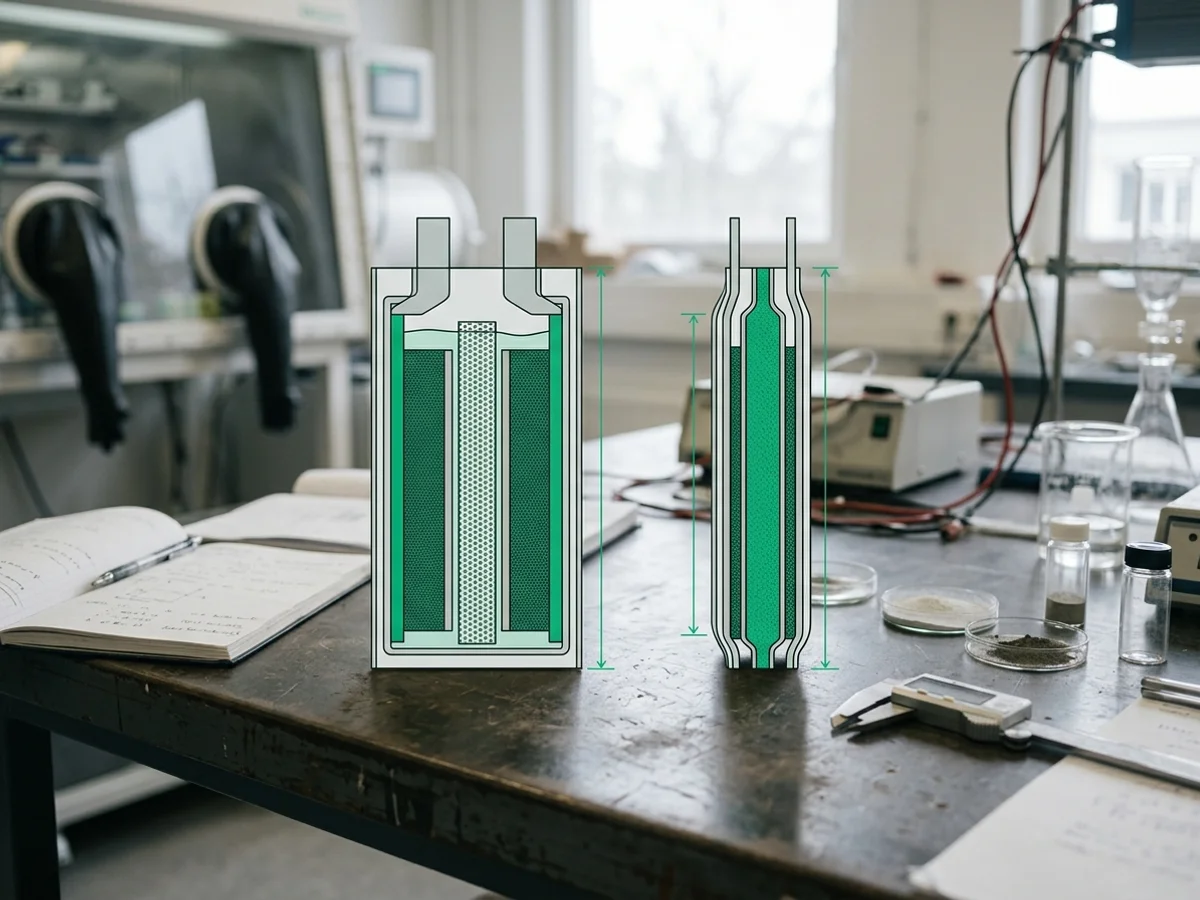
The semi-solid electrolyte architecture replaces the conventional liquid separator with a gel or ceramic-reinforced matrix, reducing internal short-circuit risk and enabling thinner electrode stacking. The practical result is a substantial jump in gravimetric energy density without the manufacturing complexity of fully solid-state cells. The PE36N-EE 36Ah semi-solid state NMC pouch cell, for example, achieves 321 Wh/kg with an operating range of -43°C to 55°C, making it viable for both high-altitude drone missions and cold-climate electric motorcycle deployments where conventional cells lose capacity rapidly.
Applications where energy density justifies the premium
Higher energy density directly translates to reduced pack weight and smaller enclosure volume. For drone manufacturers, every gram saved on the battery extends payload capacity or flight time. For electric motorcycle brands, a lighter pack improves handling dynamics without sacrificing range. Aerospace and logistics OEMs face similar constraints. According to MarketsandMarkets, annual lithium-ion battery demand has surpassed 1 terawatt-hour, and the fastest-growing segments are precisely those where energy density is a primary specification driver.
LiTrue: factory-direct semi-solid and solid-state sourcing
LiTrue positions itself at the leading edge of this category. Its flagship PE49N-EF is a 49Ah solid-state anode-free pouch cell rated at 495 Wh/kg, the same -43°C to 55°C operating window, and factory-direct OEM pricing. The anode-free architecture eliminates graphite entirely, reducing cell weight further and increasing volumetric efficiency. For buyers sourcing cells for UAV platforms, electric drivetrains, or extreme-environment industrial equipment, LiTrue offers flexible ODM qualification pathways alongside standard UN38.3 documentation.
Competitors such as Grepow list high-density NMC pouch formats, but buyers evaluating semi-solid or anode-free chemistries specifically should request chemistry-specific cycle-life data and temperature-performance curves rather than relying on general NMC specifications.
Wholesale procurement considerations
Semi-solid and solid-state cells carry premium pricing relative to conventional NMC, and buyers should plan for longer lead times during initial OEM qualification. Minimum order quantities are typically lower than commodity LFP formats, reflecting the custom engineering involved. The certification pathway for these cells includes UN38.3 transport testing, UL 2054 for consumer and industrial applications, and OEM-specific qualification testing that can add six to twelve weeks to the procurement timeline. Buyers should initiate certification documentation requests early and confirm that suppliers provide lot-traceable test reports for every production batch.
Comparison table: wholesale battery specifications, pricing, and certifications
The specifications, pricing, and certification status of wholesale battery options vary significantly across chemistries and suppliers. This side-by-side reference consolidates the most decision-relevant data points for procurement teams evaluating solid-state, NMC, and LFP cells at volume.
Specifications matrix by chemistry
| Specification | Solid-state anode-free | Semi-solid NMC | Standard NMC | LFP prismatic |
|---|---|---|---|---|
| Representative cell | LiTrue PE49N-EF 49Ah | LiTrue 36Ah NMC | LiTrue 50Ah 8C | LiTrue 100Ah |
| Energy density | 495 Wh/kg | ~380 Wh/kg | ~280 Wh/kg | ~180 Wh/kg |
| Peak C-rate | 3C continuous | 3C continuous | 8C pulse | 3C continuous |
| Cycle life | 800+ cycles | 1,000+ cycles | 1,200+ cycles | 3,000+ cycles |
| Operating temperature | -43°C to 55°C | -20°C to 60°C | -20°C to 60°C | -20°C to 65°C |
| Fast-charging capable | ✓ | ✓ | ✓ | ✓ |
| Aerospace compliance | ✓ | ✗ | ✗ | ✗ |
| Automotive compliance | ✓ | ✓ | ✓ | ✓ |
Pricing tiers by volume
Research suggests pricing pressure across the supply chain is intensifying. According to McKinsey Battery Insights (2025), global Li-ion overcapacity reached approximately 900 GWh, which is pushing factory-direct pricing downward across most chemistries.
| Chemistry | 500 units (est.) | 5,000 units (est.) | 50,000+ units (est.) |
|---|---|---|---|
| Solid-state anode-free | Premium tier | 15-20% volume discount | Negotiated OEM pricing |
| Semi-solid NMC | Mid-premium tier | 12-18% volume discount | Negotiated OEM pricing |
| Standard NMC | Mid-market tier | 10-15% volume discount | Negotiated OEM pricing |
How we chose these wholesale battery suppliers and cell types
Selecting the right wholesale battery sources requires more than comparing price lists. Our evaluation framework applied consistent, application-relevant criteria across every supplier and cell chemistry featured in this article, ensuring the recommendations hold up for demanding OEM buyers in UAV, EV, BESS, and industrial equipment sectors. Sourcing managers can reference our ongoing battery procurement insights to track cell integration strategies.
Chemistry and performance benchmarking
We evaluated each cell type against four core technical metrics: energy density, cost per kWh, cycle life, and thermal performance. These criteria reflect the real trade-offs buyers face when scaling from prototype to production. Solid-state anode-free cells scored highest on gravimetric energy density, while specialized cell models like the 17.5Ah 6C/20C high C-rate LFP cell excelled under severe pulse-draw demands.
Certification and regulatory compliance
Every supplier featured here was assessed for compliance with UN38.3, UL 2054, and RoHS standards. For buyers shipping internationally or integrating cells into certified end products, these certifications are non-negotiable. Suppliers unable to provide documentation were excluded regardless of pricing.
OEM capability and post-sale support
We assessed each supplier's track record with OEM and ODM programs, including responsiveness, technical assistance during integration, and willingness to support custom specifications. Reviewing verified OEM client case studies confirms whether a partner can execute from engineering prototype to scaled serial production.
Pricing transparency, MOQ flexibility, and lead times
Wholesale pricing structures, minimum order quantities, and stated lead times were examined for consistency and transparency. This matters more than ever given current market conditions. According to Mordor Intelligence (2025), Li-ion battery pack prices fell 8% in 2025 following a 20% reduction in 2024, compressing margins and rewarding buyers who negotiate directly with manufacturers.
Market context and demand signals
Global Li-ion demand likely reached nearly 1.6 TWh, with EV applications accounting for approximately 85% of installed capacity. BESS procurement is accelerating alongside that growth, making supply chain reliability and factory-direct sourcing increasingly critical for bulk buyers planning multi-year procurement cycles.
What to look for in wholesale battery suppliers: buyer's guide
Choosing the right wholesale battery supplier requires evaluating several interdependent factors simultaneously. A supplier that excels on price but underdelivers on cycle life or certification compliance can cost far more in warranty claims, redesign cycles, and regulatory delays than any upfront discount saves. Understanding a manufacturer's core engineering capabilities helps ensure production viability.
Energy density and cost per kWh
These two metrics define pack-level economics before any other variable enters the equation. Energy density (Wh/kg) determines how much weight your product carries per unit of stored energy, directly affecting range, payload, and competitive positioning. Cost per kWh sets the floor for your bill of materials. Research suggests that average battery pack pricing for electric vehicles has now fallen below the USD 100 per kWh threshold, a landmark shift that compresses margins and raises the bar for what constitutes a competitive supplier offer. Buyers should model both metrics together rather than optimizing for one at the expense of the other.
Chemistry selection for your application
Not every chemistry fits every use case. LFP prismatic cells suit cost-optimized stationary storage and logistics equipment where weight is secondary to cycle life and thermal stability. NMC pouch cells serve fast-charging and high-rate applications, including electric motorcycles and performance UAVs. Solid-state and anode-free architectures address premium, weight-critical designs where energy density is the primary constraint. In our experience, matching chemistry to duty cycle at the specification stage prevents costly mid-program redesigns that arise when buyers default to the cheapest available cell regardless of application fit.
Cycle life, calendar life, and independent verification
Supplier datasheets are a starting point, not a final answer. Request third-party test reports that validate cycle life under realistic depth-of-discharge and temperature conditions. For harsh thermal environments, engineers specify specialized chemistries like the high-temperature LFP pouch cells or low-temperature LFP cells to protect calendar life without requiring bulky parasitic heating circuits.
Certifications and compliance requirements
Confirm that any supplier can provide:
- UN38.3 for international transport compliance
- UL 2054 for consumer and industrial safety markets
- RoHS for environmental compliance across EU and global markets
- OEM-specific qualifications relevant to your end market or customer base
Missing certifications at the sourcing stage create costly delays when products reach customs or regulatory review.
MOQs, lead times, and volume discount structure
Negotiate minimum order quantities that accommodate pilot programs before committing to full production volumes. Reputable suppliers offer tiered pricing with clear volume thresholds and documented lead times. Flexibility on ramp-up phases, where initial orders are smaller and scale over defined milestones, distinguishes manufacturers with genuine OEM partnership experience from distributors focused purely on transaction volume.
Application-specific recommendations: drones, e-motorcycles, BESS, and automotive OEMs
Matching the right cell chemistry to your application is as important as finding the right supplier. Each segment carries distinct requirements around energy density, cycle life, discharge rate, and cost per kWh. The guidance below translates those requirements into concrete cell selection decisions.
Drones and aerospace platforms
Weight is the defining constraint in UAV and aerospace design. Every gram saved in the battery pack translates directly into payload capacity or flight endurance. For this segment, solid-state anode-free cells represent the clearest performance advantage currently available. Commercial UAV integrators frequently choose turnkey power architectures such as the 51.8V 20Ah lightweight drone battery or the 51.8V 28Ah high-discharge NMC drone battery. For larger industrial platforms and agricultural spraying, high-voltage solutions like the 66.6V 30Ah smart drone battery and the 51.8V 28Ah agriculture drone battery provide reliable power delivery under heavy payload conditions.
E-motorcycles and power tools
This segment demands a balance between high-rate discharge capability and cost control. NMC pouch cells suit performance-oriented builds, exemplified by integrated systems like the 74V 48Ah NMC e-motorcycle battery pack. For rugged utility fleets where cycle life and ingress protection dominate requirements, the 73.6V 48Ah LFP IP67 battery pack serves as a robust drop-in configuration.
Energy storage systems and stationary BESS
Stationary applications prioritize cycle life and lowest cost per kWh over gravimetric energy density. LFP prismatic cells, particularly the 100Ah format, are the established choice here. Their thermal stability, 3,000-plus cycle capability, and competitive pricing make them the default for grid-scale and commercial BESS deployments.
Automotive OEMs
Global Li-ion demand likely reached nearly 1.6 TWh, with EV batteries accounting for approximately 85% of installed capacity, underscoring the scale at which automotive OEMs must operate. Fast-charging passenger EVs benefit from high-rate NMC chemistry. Cost-sensitive mass-market segments are increasingly standardizing on LFP. Engineering teams designing complete vehicle platforms often collaborate directly on full-scale custom battery pack systems to ensure tight BMS integration.
Logistics and industrial equipment
Fleet operators running warehouse equipment, forklifts, and last-mile delivery vehicles prioritize charging infrastructure compatibility and total cost of ownership. LFP chemistry suits high-cycle fleet applications where charging happens multiple times per shift. Rapid-turnaround duty cycles, such as airport ground support equipment, can justify high-rate NMC where recharge windows are measured in minutes rather than hours.
Wholesale pricing trends and supply chain dynamics in 2025
Understanding where battery prices are heading and how supply chains are shifting gives procurement teams a real negotiating edge. Bulk buyers who align purchasing strategy with current market dynamics can lock in favorable unit economics before conditions change.
Battery pack prices continue to fall
Li-ion battery pack prices fell 8% in 2025, following a 20% reduction in 2024. That consecutive decline reflects persistent global overcapacity, with the market carrying roughly 900 GWh of surplus production capacity. For bulk buyers, this translates directly into stronger negotiating leverage, particularly when committing to long-term supply agreements rather than spot purchases. Following verified battery industry trends helps procurement teams forecast tariff impacts and raw material fluctuations.

LFP chemistry reshaping procurement decisions
LFP batteries are almost 30% cheaper per kWh than NMC equivalents, and that cost gap is accelerating a visible shift in buyer preference across BESS, fleet mobility, and commercial applications. For procurement teams managing large-format stationary storage or high-cycle fleet equipment, LFP now represents the default chemistry unless application requirements specifically demand higher energy density. NMC and solid-state variants remain the preferred choice for weight-sensitive platforms like UAVs and performance electric motorcycles, where energy density per kilogram justifies the premium.
Market size and segment growth
According to Mordor Intelligence (2024), the lithium-ion battery market was estimated at USD 75.2 billion, with automotive applications holding a 67% share. BESS and commercial mobility are growing fastest from a smaller base, making them the most active segments for new wholesale relationships in 2025.
Lead times and supply chain consolidation
Lead times are normalizing as overcapacity gradually absorbs demand growth. Buyers should plan for 8 to 12 weeks on standard LFP and NMC chemistries, and 16 to 20 weeks for solid-state and semi-solid variants where production capacity remains constrained. Supply chain consolidation continues to favor large-volume buyers. Manufacturers offering factory-direct OEM pricing provide a meaningful advantage when procurement volumes justify direct engagement. Negotiating volume discounts tied to rolling forecasts rather than one-time orders remains the most reliable way to protect pricing through the remainder of the year.
Conclusion: selecting the right wholesale battery partner for your business
The battery wholesale landscape in 2025 rewards buyers who match chemistry to application before negotiating price. According to GM Insights (2024), the global lithium-ion battery market was estimated at USD 75.2 billion in 2024 and is projected to grow at a CAGR of 15.8% through 2034. That trajectory, combined with current supply chain overcapacity, puts procurement leverage firmly on the buyer's side.
Matching chemistry to application
Three chemistries dominate bulk procurement decisions right now:
- Solid-state anode-free cells are the right call for UAV manufacturers, electric motorcycle brands, and any application where weight and operating range are primary constraints.
- NMC pouch cells remain the standard for fast-charging and high-rate discharge applications.
- LFP prismatic cells dominate cost-optimized procurement for BESS deployment, fleet charging infrastructure, and stationary storage, where cycle life and thermal stability outweigh energy density.
Evaluating a wholesale partner
Before committing to any supplier, assess these criteria consistently:
- Certification status: IEC, UN38.3, and relevant regional approvals are non-negotiable for regulated markets.
- OEM track record: Request documented case studies, not just product datasheets.
- Technical support depth: Pre-sales engineering support separates manufacturers from distributors.
- Pricing transparency: Factory-direct suppliers eliminate intermediary margins; confirm MOQ flexibility and lead-time commitments in writing.
EV growth, accelerating BESS deployment, and favorable supply conditions make 2025 one of the strongest environments for bulk battery procurement in recent years. Buyers who act on that window with clear chemistry requirements and rigorous supplier evaluation will lock in both pricing and supply continuity heading into 2026. For technical consultations and bulk RFQ quotes, contact our engineering team directly.
Honorable mentions: alternative suppliers and emerging cell technologies
Beyond the primary ranking, several supplier categories and cell chemistries deserve attention from procurement teams evaluating the full market landscape. Each occupies a distinct niche defined by technology maturity, cost position, and production scale.
Anode-free solid-state cells
Anode-free solid-state cells represent the current frontier of energy density. According to OpenPR, LiTrue PE49N-EF cell achieves 495 Wh/kg, a benchmark relevant to UAV manufacturers and electric motorcycle brands where weight directly limits performance. Production scale remains limited relative to conventional NMC or LFP lines, and per-cell pricing reflects that reality. Buyers with critical energy-density requirements and tolerance for longer qualification timelines should engage manufacturers directly for OEM/ODM discussions.
Semi-solid state and tier-2 NMC suppliers
Semi-solid state variants from tier-2 suppliers offer a practical middle ground: meaningfully higher energy density than standard NMC at lower cost than full solid-state. Lead times tend to run longer, and minimum order quantities can be restrictive for smaller programs. Evaluate these suppliers carefully against your production ramp schedule.
Regional NMC and LFP manufacturers
Established NMC and LFP suppliers with North American or European manufacturing footprints offer faster lead times and localized technical support, a genuine advantage for automotive OEMs and BESS integrators managing tight installation schedules.
Recycled and second-life battery programs
Second-life and recycled cell programs are gaining traction for cost-sensitive, non-critical applications such as stationary backup storage. Pricing can be compelling, but buyers must independently verify remaining cycle life and confirm that cells carry current safety certifications before committing to volume.
Budget options: cost-optimized wholesale batteries for price-sensitive applications
Price-sensitive procurement does not have to mean compromising on reliability. The right chemistry, supplier structure, and contract terms can deliver strong total cost of ownership across stationary storage, fleet equipment, and commercial mobility, even when capital budgets are tightly constrained.
LFP prismatic cells for stationary and industrial applications
LFP prismatic cells remain the most cost-effective choice for applications where energy density is secondary to cycle life and safety. For stationary BESS, fleet charging infrastructure, and industrial equipment, LFP's long calendar life and thermal stability translate directly into lower lifetime operating costs. Buyers sourcing 50,000 units or more can typically negotiate volume discounts of 15 to 25%, and locking in long-term supply contracts adds meaningful price stability in a market where spot pricing fluctuates.
Standard NMC pouch cells for high-volume consumer and mobility applications
Established NMC pouch cell formats remain a proven, competitively priced option for high-volume consumer electronics and commercial mobility. Li-ion pack prices fell 8% in 2025 following a 20% reduction in 2024, making this an opportune window for buyers to lock in favorable contract terms.
Semi-solid state cells as a mid-tier cost-performance option
For e-motorcycle brands and commercial mobility OEMs seeking a step up in energy density without the premium of full solid-state technology, semi-solid state cells offer a practical middle ground, balancing improved energy density against manageable per-unit cost.
Supplier financial stability and sourcing resilience
Regardless of chemistry, budget procurement carries supply chain risk. Verify supplier financial health, confirm manufacturing capacity, and avoid single-source dependencies for any mission-critical application. Competitors such as Grepow and Evlithium operate in this space, though buyers should independently validate production capacity and quality certifications before committing to volume orders.
Enterprise solutions: wholesale procurement for automotive OEMs and large-scale BESS deployments
Enterprise-scale battery wholesale operates under fundamentally different rules than standard bulk purchasing. At this tier, procurement is a strategic function involving multi-year supply agreements, deep technical collaboration, and rigorous due diligence processes that go well beyond price negotiation.
Automotive OEM procurement requirements
Automotive OEMs require dedicated supplier partnerships built around custom cell specifications, validated to platform-level performance targets. Volume commitments typically span three to five years, enabling suppliers to allocate dedicated production capacity and amortize tooling costs. According to Global Market Insights, global demand for Li-ion batteries has reached nearly 1.6 TWh, with EV applications accounting for approximately 85% of installed capacity. That scale means OEM procurement teams must treat battery sourcing as a critical path item, not a commodity purchase.
Key requirements at this level include:
- Custom cell geometry and chemistry: pouch, prismatic, or cylindrical formats engineered to platform specifications
- Integrated supply chain planning: synchronized production schedules, buffer stock agreements, and multi-tier supplier visibility
- Traceability documentation: cell-level provenance data for regulatory compliance and recall readiness
BESS and fleet operator considerations
BESS providers benefit most from LFP-focused suppliers offering modular pack designs, integrated BMS solutions, and independently verified cycle-life data exceeding 4,000 cycles at 80% depth of discharge. Fleet and logistics operators negotiating high-rate NMC or LFP cells should prioritize suppliers with regional manufacturing footprints and rapid-response field support.
LiTrue: enterprise-grade cell technology for demanding OEM applications
LiTrue addresses the upper end of enterprise requirements with its PE49N-EF, a 49Ah solid-state anode-free pouch cell delivering 495 Wh/kg energy density at 3.85V nominal. The cell operates across a wide thermal range of -43°C to 55°C, making it viable for automotive platforms deployed in extreme climates where conventional NMC cells require active thermal management overhead.
For BESS and automotive OEMs, LiTrue offers direct-from-manufacturer OEM and ODM engagement, eliminating intermediary markups common on platforms such as Made-in-China or aggregator-style suppliers. Competitors including Grepow and Hiitio serve overlapping markets, though enterprise buyers should independently validate their cycle-life data and ISO certification scope before committing to multi-year volumes.
Enterprise due diligence and SLA structuring
Technical due diligence at this scale must include:
- Independent cycle-life testing conducted at accredited third-party laboratories
- Thermal modeling validation against worst-case pack-level scenarios
- Safety certification audits: UN 38.3, IEC 62619, and automotive-grade IATF 16949 where applicable
- Supply chain traceability: mineral sourcing declarations and battery passport readiness
Establish formal SLAs covering lead time windows, incoming quality acceptance rates, and post-sale technical support response times. Include contractual penalty clauses for delivery delays and defect rates exceeding 0.5%, ensuring supplier accountability is enforceable rather than aspirational.
Faqs
What is battery wholesale?
Battery wholesale refers to purchasing battery cells, modules, or packs directly from manufacturers or authorized distributors in large quantities, typically at prices significantly below retail. Buyers are usually OEMs, system integrators, or procurement teams sourcing for commercial production rather than individual use.
How do I buy batteries wholesale?
Contact manufacturers directly with your technical specifications, target volume, and application requirements. Most suppliers will request a sample order before committing to full production runs, followed by a formal quotation and quality agreement.
Is it cheaper to buy batteries in bulk?
Yes. Volume purchasing reduces per-unit cost through economies of scale, and direct manufacturer sourcing eliminates distributor margins. Research suggests li-ion battery pack prices have fallen significantly in recent years, making bulk procurement increasingly attractive.
What certifications are required for wholesale lithium batteries?
At minimum, look for UN 38.3 (transport safety), IEC 62619 (stationary storage), and UL 1642 or UL 9540 depending on application. Automotive OEMs should also require IATF 16949 compliance.
Which is better for wholesale applications: LFP or NMC batteries?
LFP suits high-cycle, stationary, and safety-critical applications. NMC is preferred where energy density is the priority, such as UAVs or electric motorcycles. Based on our work at LiTrue, matching chemistry to application requirements consistently delivers better total cost of ownership than selecting on unit price alone.