
why manufacturers are moving beyond standard AAA alkaline batteries
Standard AAA alkaline cells have served consumer electronics reliably for decades, but the demands of modern devices are exposing their fundamental limitations. At LiTrue, our analysis shows that OEMs across drone manufacturing, robotics, and industrial equipment are increasingly treating the AAA alkaline cell not as a baseline, but as a bottleneck.
The capacity ceiling of standard AAA alkaline cells
A conventional AAA alkaline cell delivers roughly 1,000 to 1,200 mAh under ideal, low-drain discharge conditions. In practice, that figure drops sharply the moment current demand rises. High-drain applications, including wireless sensors, compact drones, and medical devices, can cut usable capacity by 30 to 50 percent. Voltage sag under load compounds the problem: alkaline chemistry cannot maintain a stable output voltage as discharge progresses, which causes device performance to degrade well before the cell is technically depleted.
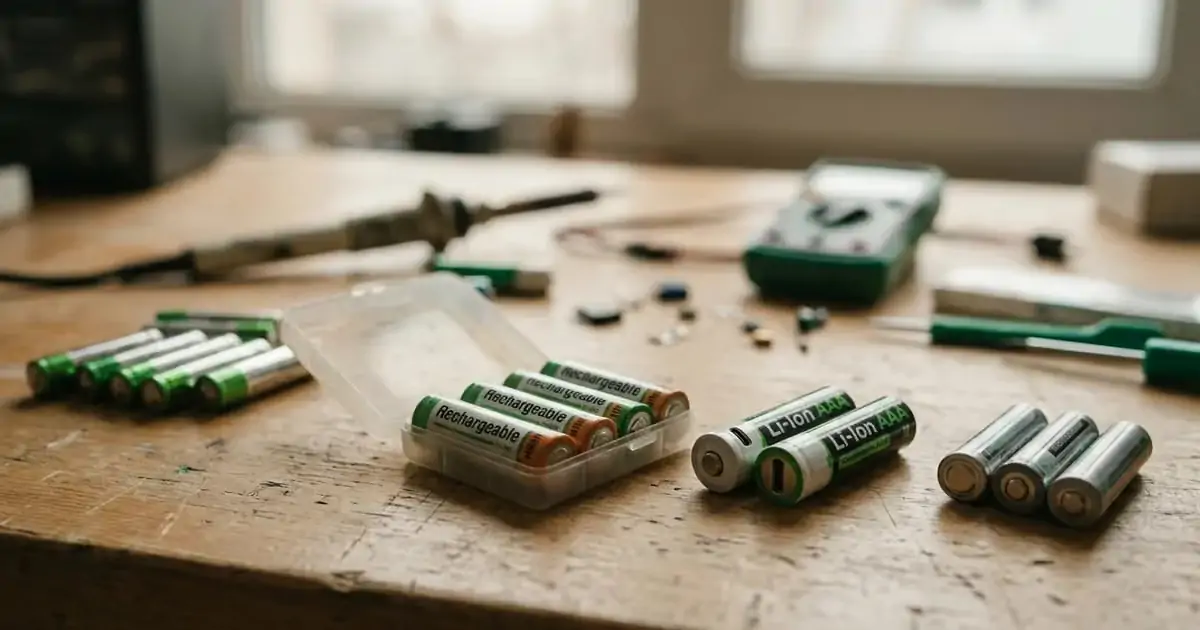
Temperature sensitivity adds another layer of risk. Alkaline cells lose significant capacity in cold environments and can leak or vent in sustained heat, making them unsuitable for the outdoor and industrial conditions that many OEM products must endure.
Market forces accelerating the transition
The shift away from primary alkaline cells is not simply a technical preference. It reflects a structural change in the battery industry. The global lithium-ion battery market is expanding rapidly across industrial and consumer segments, driven in large part by the transition from primary cells to advanced rechargeable platforms.
OEMs face converging pressures: reduce total cost of ownership over a product's service life, meet increasingly strict sustainability and waste-reduction targets, and support the higher continuous current draws that modern electronics demand. A single-use alkaline cell fails on all three counts.
The alternatives explored in this article range from high-drain lithium primary cells to advanced industrial battery solutions, each addressing specific gaps that the standard AAA alkaline format simply cannot close.
LiTrue: solid-state anode-free cells for next-generation AAA replacement
For OEM engineers evaluating a true AAA battery replacement at the architecture level, LiTrue solid-state anode-free cells represent the most significant departure from conventional alkaline chemistry available today. Where a standard AAA alkaline cell delivers roughly 75 to 80 Wh/kg, LiTrue PE49N-EF and PE40N-EF cells achieve 495 Wh/kg, making the energy density comparison almost categorical rather than incremental.
Energy density that redefines the replacement calculus
According to OpenPR market reporting, LiTrue solid-state chemistry delivers 495 Wh/kg, a benchmark sitting well above conventional lithium-ion lines. In practical OEM terms, specifying a dedicated 49Ah 495Wh/kg solid state anode free cell enables hardware designers to replace multi-cell AAA battery strings with a single high-capacity pouch. This consolidation directly reduces bill-of-materials complexity, contact resistance, and assembly labor cost.
For compact industrial robotics and handheld monitoring hardware, the 40Ah solid-state anode-free pouch cell provides equivalent volumetric efficiency in a reduced profile, ensuring high current delivery within space-constrained enclosures.
Anode-free architecture and safety at high discharge rates
The anode-free design eliminates the graphite or lithium metal anode layer entirely. This removes the primary mechanism behind dendrite formation, the microscopic lithium filaments that cause internal short circuits and thermal runaway in conventional high-energy cells. The result is a cell geometry that supports safer high-rate discharge, a critical requirement for outdoor robotics, drone power systems, and cold-climate logistics platforms where sudden peak current demands are routine.
Operating range for extreme-environment applications
LiTrue cells are rated from -43°C to 55°C, covering industrial and outdoor use cases that would degrade or disable a standard AAA alkaline within minutes. Cold-climate logistics equipment, Arctic-rated sensors, and high-altitude UAV platforms all fall within this operating window without requiring active thermal management.
Hardware teams evaluating discrete cell geometries across diverse chemistries can benchmark options within LiTrue lithium battery cell catalog, aligning custom form-factor requirements with direct OEM pricing models early in the prototyping phase.
Energizer AAA Ultimate Lithium: premium disposable alternative for extreme conditions
Where custom cell geometry and rechargeable architectures are not viable, the Energizer Ultimate Lithium AAA remains the most capable disposable option on the market. Its combination of extreme-temperature tolerance and decades-long shelf life makes it a credible choice for applications where recharging infrastructure simply does not exist.
Temperature resilience and shelf life
The Energizer Ultimate Lithium AAA operates reliably across a temperature range of -40°C to 60°C, a specification that standard alkaline cells cannot match. Alkaline chemistry degrades rapidly below freezing and loses capacity in sustained heat, making it unsuitable for outdoor sensors, first-responder equipment, and emergency lighting deployed in harsh climates. The lithium iron disulfide chemistry used in these cells also supports a 20-year shelf life, which has direct implications for OEM inventory management. Procurement teams can stock cells years in advance without factoring in rotation schedules or capacity degradation losses.
Capacity and discharge performance
Energizer Ultimate Lithium AAA cells deliver approximately 1,500 to 1,800 mAh under typical load conditions, representing roughly 1.5 times the usable capacity of a standard alkaline AAA. Equally important for high-drain devices is the cell's minimal voltage sag during discharge. Alkaline cells experience a pronounced voltage drop under load, which causes devices to shut down before the cell is fully depleted. The lithium chemistry maintains a flatter discharge curve, extracting more usable energy per cycle.
Cost positioning and application fit
The per-unit cost is meaningfully higher than alkaline alternatives. For mission-critical, low-frequency applications such as remote environmental sensors, emergency flashlights, and field communication devices, that premium is justified by performance reliability. For OEMs evaluating high-volume, rechargeable, or custom-format solutions, the disposable model introduces long-term cost and sustainability trade-offs that purpose-built lithium cells address more effectively.
Panasonic Eneloop: rechargeable NiMH AAA cells for balanced performance and sustainability
Panasonic Eneloop NiMH AAA cells occupy a distinct position in the rechargeable battery market, offering a practical middle ground between disposable alkaline and premium lithium chemistries. For OEMs and procurement teams managing mid-drain device fleets, they represent a cost-effective, environmentally responsible AAA battery replacement strategy.
Capacity and self-discharge performance
Eneloop AAA cells deliver 2,000 to 2,500 mAh per charge cycle, which is competitive for NiMH chemistry at this form factor. The more operationally significant characteristic is their low self-discharge rate. These cells retain approximately 70% of their stored capacity after 10 years in storage, a performance level that makes them genuinely viable for standby-ready applications.
For device categories like wireless input peripherals, handheld test instruments, and remote controls, this means batteries can be pre-loaded into equipment and remain ready for use without scheduled recharging maintenance. That readiness profile reduces operational overhead in managed device environments.
Cycle life and total cost of ownership
Supporting 2,000 or more full charge cycles, Eneloop cells dramatically reduce the per-use cost compared to single-use alkaline alternatives. Across a typical device lifecycle, the cumulative savings are substantial, particularly for high-frequency-use applications where alkaline cells require replacement every few weeks.
The pre-charged, ready-to-use format removes the barrier of requiring a separate charger investment at the point of adoption. Cells are compatible with standard AAA battery compartments in existing OEM designs, simplifying integration without hardware modification.
Sustainability alignment
For organizations with active ESG commitments, the lifecycle advantage of rechargeable NiMH is meaningful. Fewer cells consumed means reduced material waste and lower procurement volume over time. As battery recycling infrastructure continues to scale globally, the end-of-life management pathway for NiMH chemistry is increasingly well-supported.
For most mid-drain consumer and light industrial applications, Eneloop is the best rechargeable AAA battery replacement choice because of its proven cycle durability and low self-discharge consistency. However, choose a purpose-built lithium cell solution if your application demands extreme temperature tolerance, higher energy density, or a fully custom form factor.
Tenergy Centura: high-capacity rechargeable NiMH AAA for consumer and industrial IoT
The Tenergy Centura positions itself a step above standard NiMH offerings by combining higher rated capacity with a fast-charge profile that suits professional environments. For operations where device uptime is a direct cost factor, the Centura's specification sheet makes a compelling case as an aaa battery replacement in demanding deployments.
Capacity and cycle performance
Tenergy rates the Centura AAA at 2,400 to 2,600 mAh per charge, which represents a meaningful step up from many competing NiMH cells in the same form factor. Paired with a rated cycle life exceeding 1,000 charge-discharge cycles, the cell delivers strong total energy throughput over its service life. For high-drain devices such as wireless sensors, portable medical diagnostic tools, and industrial IoT nodes, this translates directly into fewer replacement events and lower per-cycle cost.
Fast-charging for field and logistics operations
A full charge completes in roughly 2 to 4 hours with a compatible rapid charger, which is a practical advantage for logistics teams managing large device fleets. Field-service technicians cycling through handheld scanners or remote monitoring equipment can turn batteries around between shifts without scheduling gaps. This fast-charge capability reduces the buffer stock of spare cells an operation needs to maintain, lowering both inventory cost and administrative overhead.
Self-discharge and bulk deployment economics
The Centura's self-discharge rate sits at approximately 15% per year, which is higher than the Eneloop's benchmark figure but still acceptable for devices that see regular weekly use. For OEM fleet deployments, Tenergy's bulk pricing structure, supported by Asia-Pacific manufacturing scale and the pricing pressure that regional production competition creates, makes per-unit acquisition cost competitive against both premium NiMH and entry-level lithium alternatives.
The Centura fits standard AAA battery compartments without modification, making adoption straightforward across existing product lines.
For most industrial IoT and logistics applications requiring rapid turnaround, the Tenergy Centura is a strong rechargeable AAA battery replacement because of its higher capacity ceiling and fast-charge support. However, choose Eneloop if your priority is the lowest possible self-discharge rate for devices that sit idle for extended periods.
Fenix ARB-L AAA: premium rechargeable lithium-ion AAA for high-drain professional equipment
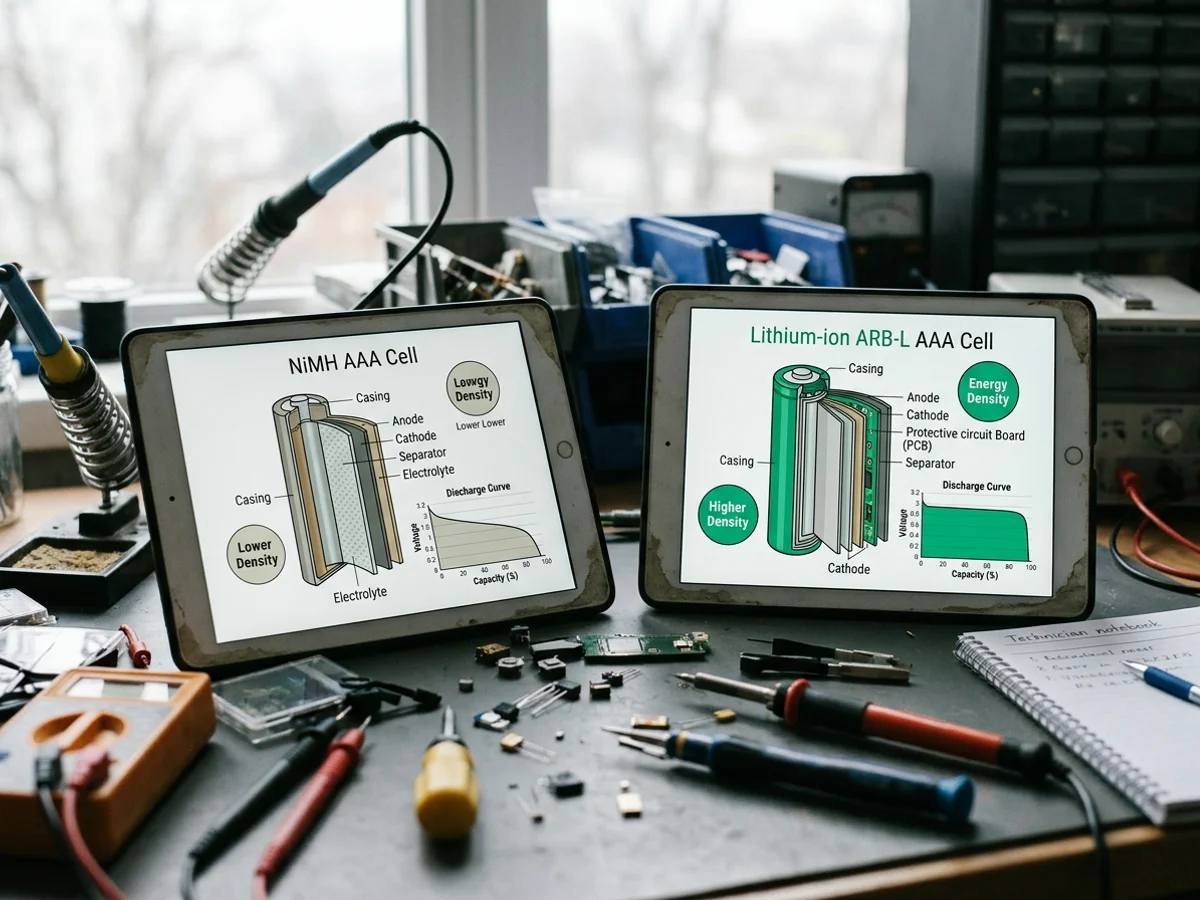
The Fenix ARB-L AAA steps into a different category entirely. Where NiMH cells like the Centura and Eneloop operate at 1.2V nominal, this lithium-ion cell delivers 1,000 mAh at 3.7V nominal, producing roughly 3.7 times the voltage of a standard alkaline AAA. For OEMs designing compact, high-power devices, that voltage advantage translates directly into smaller battery compartments, lighter assemblies, and sustained output under demanding discharge conditions.
High-drain performance and C-rate capability
Professional equipment, including tactical flashlights, compact drones, and field imaging systems, places sustained high-drain demands on cells that NiMH chemistry struggles to meet without significant voltage sag. The Fenix ARB-L AAA supports discharge rates exceeding 10C, meaning the cell can deliver ten times its rated capacity in current for short bursts without catastrophic voltage drop. This makes it a credible aaa battery replacement for applications where device performance must remain consistent from the first second of use to the last. Over 500 charge cycles, capacity fade remains minimal, giving procurement teams a predictable total cost of ownership across product lifespans.
Integrated protection and field charging
The onboard protection circuit is a meaningful engineering advantage for mission-critical deployments. It actively prevents over-discharge, overcharge, and thermal runaway conditions that could compromise both the cell and the host device. Equally important for field operations, the USB-C direct charging port eliminates dependence on external charger infrastructure. Technicians in remote environments can recharge directly from a power bank or vehicle port, reducing logistical complexity considerably.
For most professional and industrial OEM applications where device failure carries real operational cost, the Fenix ARB-L AAA justifies its premium pricing through superior energy density, robust protection, and field-ready charging. However, choose a NiMH alternative like the Tenergy Centura if your device is designed around 1.2V chemistry and voltage compatibility cannot be engineered around.
Tadiran Batteries AAA lithium primary cells: ultra-long shelf life for emergency and backup systems
Tadiran AAA lithium primary cells occupy a distinct category in the AAA battery replacement landscape. Where rechargeable options prioritize cycle economy, Tadiran cells are engineered for one purpose: delivering reliable power over decades in applications where battery failure is simply not an option.
Shelf life and self-discharge performance
The headline specification for Tadiran's lithium primary AAA cells is a rated shelf life of 10 to 15 years with self-discharge rates low enough to retain the majority of usable capacity at end of storage. This makes them the default choice for emergency lighting systems, fire suppression sensors, medical alert devices, and remote infrastructure monitoring nodes where maintenance access is infrequent or costly. The chemistry, typically lithium thionyl chloride (LiSOCl2), supports this longevity by maintaining a stable passivation layer that limits parasitic discharge during storage.
Capacity and voltage stability
Tadiran AAA cells deliver between 1,200 and 1,500 mAh, with a notably flat discharge curve throughout the majority of their operational life. For life-safety applications, this voltage stability is not a convenience feature. It is a functional requirement. Devices such as implantable monitors, gas detection units, and emergency locator transmitters depend on consistent voltage to operate within calibrated parameters. A cell that sags under load introduces measurement error and can trigger premature low-battery warnings, complicating compliance for medical device OEMs.
Extreme temperature operation
Tadiran's operating range of -55°C to 85°C sets it apart from any rechargeable AAA alternative on this list. Lithium-ion and NiMH chemistries both degrade significantly below -20°C, making them unsuitable for arctic logistics, subsea sensor packages, or high-temperature industrial enclosures in oil and gas environments. Tadiran cells maintain electrochemical stability across this full range without requiring thermal management hardware.
Non-rechargeable design as a compliance advantage
The single-use format eliminates battery management system complexity entirely. For medical device OEMs navigating regulatory frameworks, a non-rechargeable primary cell with a documented discharge curve and traceable shelf life simplifies both design validation and post-market surveillance. There are no charge cycle variables to account for, no BMS firmware to validate, and no end-of-life capacity fade to model into safety margins.
For most industrial OEM engineers and medical device designers where predictability and longevity outweigh cost-per-cycle economics, Tadiran AAA lithium primary cells are the correct choice. However, choose a rechargeable option like the Fenix ARB-L AAA if your application involves frequent discharge cycles, because the per-unit cost of primary cells becomes prohibitive at high throughput volumes.
Feature comparison matrix: AAA battery alternatives across key performance dimensions
With so many chemistries and form factors covered across this article, a structured side-by-side comparison cuts through the noise. The table below maps each alternative against the six dimensions that matter most to OEM engineers, procurement teams, and product designers making a sourcing decision.
Comparative specifications at a glance
| Alternative | Capacity (mAh) | Nominal voltage | Cycle life | Operating temp range | Approx. cost per unit | TCO profile |
|---|---|---|---|---|---|---|
| LiTrue solid-state cell | Custom OEM spec | 3.6–3.85 V | 500–1,000+ | -40°C to +85°C | Premium (OEM direct) | Lowest over service life for high-drain OEM builds |
| Eneloop NiMH (AAA) | 750–800 | 1.2 V | ~2,100 | -20°C to +50°C | Low–moderate | Excellent for mid-drain consumer cycling |
| Tenergy NiMH (AAA) | 1,000 | 1.2 V | ~1,000 | -20°C to +45°C | Low | Strong value for industrial IoT sensor arrays |
| Energizer Ultimate Lithium (AAA) | 1,200 | 1.5 V | Single-use | -40°C to +60°C | Moderate | Cost-effective for low-frequency, high-reliability deploys |
| Tadiran TL-5903 (AAA) | 800–1,000 | 3.6 V | Single-use | -55°C to +85°C | High | Best TCO for 10–20 year mission-critical deployments |
| Fenix ARB-L AAA Li-ion | 500 | 3.7 V | ~500 | -20°C to +60°C | Moderate | Practical for high-cycle portable applications |
Reading the matrix: what each dimension reveals
Capacity and voltage interact directly with device runtime and circuit compatibility. Tadiran's 3.6 V output can eliminate voltage-boost circuitry in some designs, reducing BOM cost. NiMH cells at 1.2 V require careful consideration of minimum operating thresholds in microcontroller-driven hardware.
Cycle life separates rechargeable from disposable economics at scale. Eneloop's 2,100-cycle rating means a single cell can replace roughly 2,100 disposable units over its working life, a figure that transforms the cost-per-cycle calculation for high-throughput industrial IoT deployments.
Temperature range is the sharpest differentiator for OEM engineers. Tadiran and Energizer Ultimate Lithium both reach -40°C, while standard NiMH chemistry degrades noticeably below -10°C in real-world discharge conditions.
Where LiTrue fits in this landscape
For OEM teams building beyond standard AAA form factors, LiTrue solid-state anode-free platform operates at a different performance tier entirely. According to industry test reporting, LiTrue cells achieve 495 Wh/kg energy density, a figure that reframes what is achievable in weight-constrained drone, medical, and automotive applications where AAA-class energy budgets are simply insufficient for next-generation designs.
How to choose the right AAA battery replacement for your application
Selecting the right AAA battery replacement requires matching four variables to your specific application: discharge rate, total cost of ownership, operating environment, and supply chain requirements. Getting even one of these wrong can mean premature failure, unnecessary expense, or a design that cannot pass certification. Hardware teams can review technical guidance on our battery engineering blog to evaluate chemistry trade-offs.
Match discharge rate to your application's demands
The single most important variable is how quickly your device draws current. Low-drain devices such as remote controls, wall clocks, and basic toys rarely exceed 0.1C, making NiMH rechargeables a practical and cost-effective fit. High-drain applications, including drones, robotics, and powered medical instruments, demand sustained current delivery that NiMH chemistry simply cannot sustain without significant voltage sag. For these use cases, lithium-ion cylindrical cells or solid-state alternatives are the correct starting point, not an upgrade.
Calculate total cost of ownership, not just unit price
Upfront cell price is rarely the most meaningful number. For devices cycled daily or weekly, rechargeable options from brands such as Eneloop, Tenergy, and Fenix reduce per-cycle cost substantially over a device's lifetime. Conversely, for mission-critical, low-frequency applications where reliability matters more than cycle count, premium disposable options like Energizer Ultimate Lithium or Tadiran cells justify their higher unit cost through shelf life and consistent performance.
Factor in operating temperature before committing to a chemistry
Temperature range is a hard constraint that eliminates options quickly. Standard NiMH alternatives perform well in controlled indoor environments but degrade rapidly below freezing. Energizer Ultimate Lithium is rated from -40°C to 60°C, making it a strong candidate for outdoor and cold-chain applications. For OEM designs pushing performance further, LiTrue solid-state anode-free cells are rated from -43°C to 55°C, offering comparable cold-weather capability alongside substantially higher energy density.
Evaluate supply chain and regulatory fit
In our experience at LiTrue, OEM customers in drone manufacturing and automotive often underestimate the time required to qualify a new cell chemistry through certification. Commercial off-the-shelf alternatives offer established certification pathways and immediate availability. Sourcing direct from manufacturers with verified compliance and robust quality control becomes a meaningful advantage when procurement teams are navigating lithium carbonate pricing volatility and need contracted supply stability across Asia-Pacific manufacturing channels.
Switching guide: migrating from standard AAA alkaline to advanced battery alternatives
Migrating a device fleet from standard AAA alkaline cells to advanced alternatives is not a single procurement decision. It is a structured operational transition that requires compatibility verification, phased validation, infrastructure investment, and documentation updates to avoid costly integration failures at scale. Hardware procurement leads can study our battery integration case studies to analyze validated transition workflows across robotics and IoT equipment.
Conduct a device compatibility audit
Before ordering replacement stock, map every device in your fleet against three technical parameters: nominal voltage tolerance (1.5V for alkaline versus 3.7V for lithium-ion), maximum continuous discharge rate, and thermal management capability. Voltage mismatches are the most common source of premature device failure during battery transitions. Devices designed around alkaline chemistry often lack the protection circuitry to handle higher-voltage lithium cells without a voltage regulation step-down stage.
Implement a phased pilot program
Deploy replacement batteries in 10 to 20 percent of your device fleet first. Run the pilot over 30 to 60 days, tracking performance metrics, failure rates, and actual cost-per-cycle against your alkaline baseline. This controlled window surfaces integration issues, such as connector incompatibility or firmware-level battery state estimation errors, before they propagate across your full deployment. It also generates the real-world cost savings data procurement teams need to justify full-scale conversion internally.
Establish charging infrastructure and team training
Rechargeable alternatives require compatible charging hardware at every service point. Plan charger deployment alongside battery rollout, and build structured training programs for field technicians covering safe handling, storage temperature ranges, and end-of-life recycling protocols. Proper lithium-ion end-of-life management, including cell sorting, discharge before disposal, and routing to certified recyclers, reduces regulatory liability and aligns with emerging extended producer responsibility requirements across major manufacturing regions.
Update device documentation and warranty terms
Reflect new battery specifications, charging procedures, and expected cycle life in user manuals and OEM support materials. Accurate documentation reduces inbound support volume and protects warranty positions when customers operate devices outside the original alkaline-based design envelope.
Free and open-source AAA battery alternatives: DIY and community-driven solutions
Beyond commercial off-the-shelf options, a growing ecosystem of open-source tools, community databases, and DIY assembly methods gives OEMs and small-scale manufacturers meaningful flexibility when evaluating AAA battery replacement strategies. These resources lower the barrier to entry for custom power design without requiring proprietary software licenses or vendor lock-in.
Open-source BMS designs for custom AAA-sized lithium packs
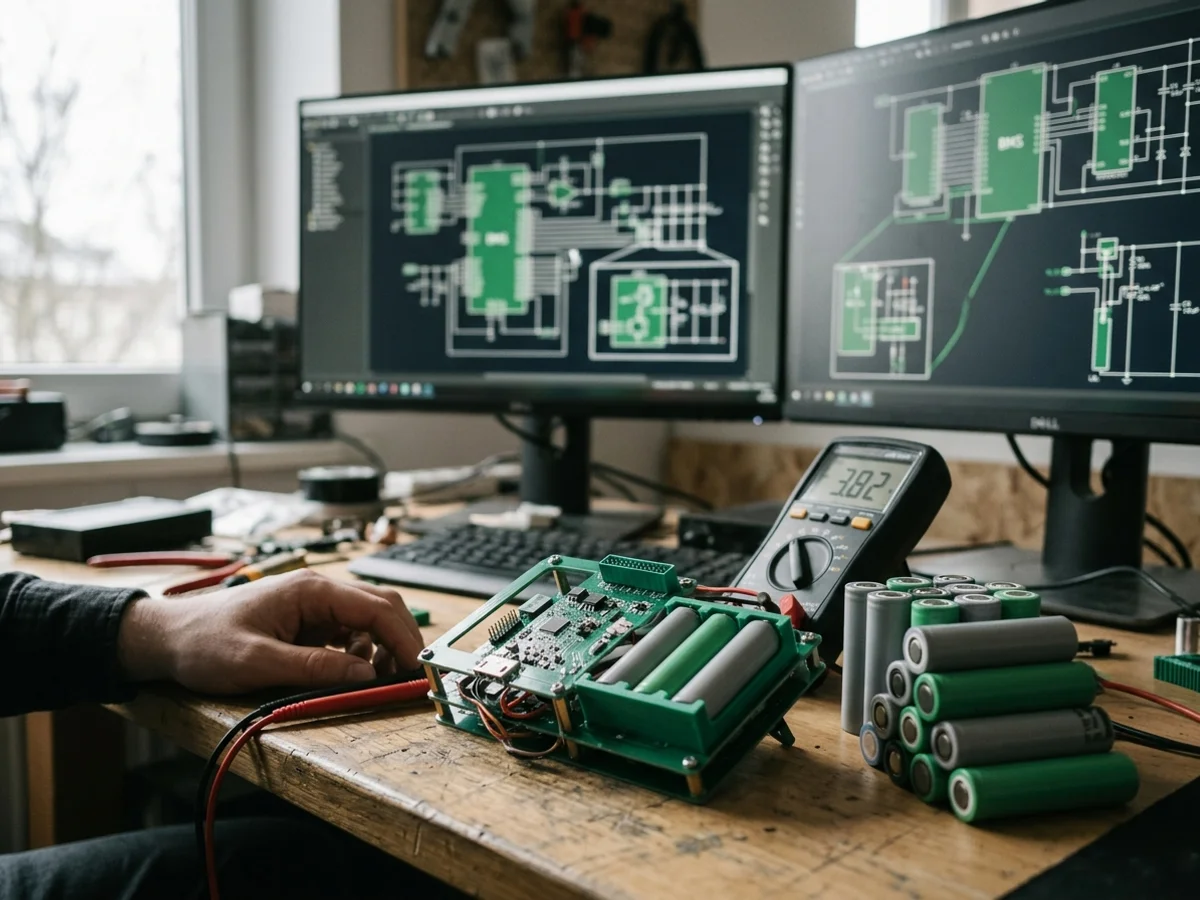
Open-source battery management systems give hardware teams a practical starting point for designing custom AAA-sized lithium-ion packs. Published circuit designs, available through platforms like GitHub and OSHWHub, allow engineers to specify tailored voltage thresholds, capacity targets, and discharge profiles using commodity cylindrical cells. For drone manufacturers and logistics equipment builders working at moderate production volumes, this approach can meaningfully reduce NRE costs compared to sourcing fully integrated proprietary packs.
Community battery databases as vendor-neutral reference tools
Community-maintained resources provide independently measured capacity, internal resistance, and cycle-life data across hundreds of cell chemistries. Technical references like Battery University offer critical educational benchmarks on discharge rates, internal resistance, and chemistry fundamentals. For OEM procurement teams, these databases offer a useful cross-check against manufacturer datasheets, particularly when evaluating lesser-known suppliers. Because the benchmarks are crowd-sourced and methodology-transparent, they carry no commercial bias.
DIY assembly kits and salvaged-cell approaches
Small-scale manufacturers and prototyping teams sometimes build AAA form-factor packs by rewrapping salvaged 18650 or 21700 cells. While this suits non-critical or low-volume applications, it demands rigorous cell-matching and capacity testing to avoid imbalance. Open-source thermal modeling and cycle-life prediction tools, several of which are freely maintained by academic research groups, help teams estimate total cost of ownership and validate chemistry choices before committing to production tooling. As the lithium-ion battery recycling market expands, sourcing responsibly recovered cells for these builds is becoming both more practical and more cost-effective.
Enterprise and OEM alternatives: custom AAA-sized lithium solutions for high-volume manufacturers
For manufacturers operating at scale, the standard AAA battery replacement conversation shifts entirely. The relevant question is no longer which off-the-shelf cell fits a device, but which supplier can deliver a custom-engineered solution with guaranteed supply continuity, certified compliance, and a unit economics profile that improves with volume. Monitoring battery manufacturing industry updates helps procurement executives forecast supply shifts and cell availability.
LiTrue solid-state and high-density OEM cells
LiTrue offers a direct OEM factory pricing model built specifically for manufacturers requiring annual volumes above 10,000 units. Its solid-state lineup targets applications where weight and volume are decisive engineering boundaries. Integrating the 42Ah ultra-high energy density anode-free cell allows OEMs to replace cumbersome multi-cell AAA strings with a single high-efficiency power core, trimming pack mass by 30 to 50 percent while maximizing active operational time. Full design-for-manufacture engineering support is provided throughout cell integration.
Tier-1 enterprise suppliers: Panasonic, Samsung SDI, and CATL
Panasonic, Samsung SDI, and CATL remain the benchmark suppliers for automotive and industrial OEMs requiring AAA-sized lithium-ion cells with certified BMS integration, UN38.3 compliance, and multi-year supply agreements. These relationships provide predictability, but they come with longer qualification timelines and minimum order commitments that smaller manufacturers often cannot meet.
Leveraging global overcapacity for contract negotiation
The current market environment strongly favors buyers. Global lithium-ion manufacturing capacity reached approximately 900 GWh in 2025, creating significant overcapacity that Asian suppliers, who hold roughly 47.7% of global market share, are actively competing to fill. Combined with lithium carbonate price volatility, this dynamic gives procurement teams meaningful leverage when negotiating long-term supply contracts, volume discounts, and priority allocation clauses that protect against future disruption.
What we don't recommend: AAA battery alternatives to avoid
Not every AAA battery alternative delivers on its promise. For OEM procurement teams and product engineers, choosing the wrong cell type introduces safety liabilities, inflated total cost of ownership, and potential device failures that erode brand reputation. The following categories represent genuine risks worth avoiding.
Mixing old alkaline cells with rechargeable alternatives in the same device
Combining standard alkaline AAA cells (nominal 1.5V) with rechargeable NiMH or lithium-ion alternatives inside a single device creates immediate problems. Voltage mismatch and fundamentally different discharge curves produce inconsistent current delivery, accelerate cell degradation in the weaker unit, and can cause irreversible damage to sensitive electronics. Always replace all cells in a device simultaneously with identical chemistry and capacity.
Counterfeit and unbranded AAA lithium-ion cells from unverified suppliers
This is the highest-risk category for any OEM or high-volume buyer. Unbranded lithium-ion cells sourced from unverified suppliers routinely lack functional battery management systems, adequate thermal management, and traceable quality control processes. Without these safeguards, thermal runaway becomes a credible failure mode, particularly in high-drain applications like drones, industrial sensors, or compact power tools. The absence of recognized safety certifications (UL, IEC, UN 38.3) should be treated as an automatic disqualifier during supplier evaluation.
Ultra-cheap NiMH AAA cells with no cycle-life warranty
Budget NiMH cells with no stated cycle-life guarantee appear cost-effective at the point of purchase. In practice, rapid capacity fade drives frequent replacement cycles, pushing total cost of ownership well above that of a quality-certified alternative. The additional e-waste burden is also a growing compliance concern for manufacturers operating under extended producer responsibility regulations.
Attempting to recharge primary alkaline AAA cells
Standard alkaline cells from any manufacturer are primary cells, meaning they are designed for single use only. Attempting to recharge them causes internal pressure buildup and electrolyte leakage, creating a direct safety hazard for both the device and the end user. Only cells explicitly rated and labeled for recharging should ever be placed in a charging circuit.
LiTrue vs. Energizer Ultimate Lithium: deep-dive comparison for OEM decision-makers
For OEM decision-makers evaluating AAA battery replacement strategies at scale, the choice between LiTrue solid-state cells and Energizer Ultimate Lithium comes down to deployment volume, recharging infrastructure, and total cost of ownership over a product's full service life. These two technologies serve genuinely different use cases, and selecting the wrong one carries measurable commercial consequences.
Energy density: a fundamental performance gap
Energizer Ultimate Lithium cells operate at approximately 180 to 200 Wh/kg, which is competitive for a primary consumer cell. LiTrue solid-state anode-free cells achieve 495 Wh/kg, representing a 2.5 to 3x energy density advantage within the same physical form factor. For compact device designers working with constrained enclosure geometries, that gap is not incremental. It is a design-generation leap.
Cycle life and long-term cost structure
Energizer Ultimate Lithium is a single-use primary cell. Every unit consumed must be purchased, shipped, handled, and disposed of. For high-frequency applications such as industrial sensors, logistics tracking hardware, or drone auxiliary systems, that replenishment burden compounds rapidly across large fleets. LiTrue cells support 500 or more charge cycles with minimal capacity fade, fundamentally restructuring the cost curve for high-volume OEM deployments exceeding 50,000 units annually.
Integration complexity vs. time-to-market
Energizer Ultimate Lithium's primary advantage is simplicity. It drops into any standard AAA compartment with zero engineering overhead, making it the practical choice for lower-volume specialty applications, emergency equipment, and extreme-environment sensors where recharging infrastructure simply does not exist. LiTrue cells require custom BMS integration and OEM-level engineering investment, which adds development time and upfront cost. That investment is justified when the deployment scale and operational profile support it.
For most drone manufacturers, automotive OEMs, and industrial equipment builders operating at volume, LiTrue solid-state platform delivers a superior total cost of ownership. Choose Energizer Ultimate Lithium if your application demands plug-and-play compatibility, low unit volumes, or deployment in locations where recharging is operationally impossible. For programs requiring turnkey power modules with fully integrated electronics, sourcing custom OEM lithium battery packs ensures streamlined validation and accelerated market entry.
Conclusion: selecting the optimal AAA battery replacement for your OEM strategy
Selecting the right AAA battery replacement is not a single decision. It is a structured process that aligns chemistry, operating environment, supply chain, and total cost of ownership with the specific demands of your product and deployment scale. According to Global Market Insights battery industry forecasts, the accelerating adoption of advanced energy storage continues to make battery selection a central competitive driver across hardware categories.
Matching chemistry to application tier
Each technology tier serves a distinct operational profile:
- Next-generation OEM platforms: LiTrue solid-state anode-free cells, achieving up to 495 Wh/kg, represent the forward standard for drone manufacturers, automotive OEMs, and industrial equipment builders where energy density, thermal stability, and long-term cost reduction are non-negotiable priorities.
- Mid-drain consumer and industrial IoT: Rechargeable NiMH options such as Eneloop and Tenergy remain practical where sustainability targets and cycle-cost economics outweigh maximum capacity requirements.
- Mission-critical disposables: Energizer Ultimate Lithium and Tadiran justify their per-unit premium in extreme-environment deployments where recharging infrastructure is simply not available.
Building a defensible procurement framework
A successful AAA battery replacement strategy requires four inputs before any purchase order is placed:
- Discharge rate profile: peak draw, average draw, and idle duration across the full device duty cycle
- Environmental operating range: temperature extremes, humidity exposure, and vibration loads
- Supply-chain constraints: lead times, minimum order quantities, and regional logistics costs
- Total cost of ownership: per-cycle cost, warranty terms, and end-of-life recycling obligations, a factor growing in importance as the lithium-ion battery recycling market continues its rapid expansion globally
Reducing integration risk through phased deployment
Pilot testing a representative sample across real operating conditions before full-scale fleet conversion is not optional. It validates performance assumptions, surfaces compatibility issues early, and protects against costly mid-deployment corrections. Phased rollout also allows procurement teams to negotiate volume pricing from a position of verified data rather than projected demand. Review our engineering pedigree and QA standards on the LiTrue battery manufacturing overview.
The OEMs that optimize this decision consistently treat battery selection as a systems engineering problem, not a commodity procurement exercise. To request product samples, validate cell drawings, or discuss custom B2B production runs, contact LiTrue battery engineering team.
Faqs
What is the best AAA battery replacement for high-drain devices?
Lithium AAA cells consistently outperform alkaline options in high-drain applications such as wireless mice and flashlights. AAA Ultimate Lithium cells maintain stable performance across temperatures from -40°C to 60°C, making them the preferred aaa battery replacement for demanding use cases.
Can I replace AAA alkaline batteries with rechargeable NiMH cells?
Yes, NiMH AAA cells are physically compatible with most devices designed for standard AAA alkaline batteries. The key trade-off is a slightly lower nominal voltage (1.2V versus 1.5V), which may affect performance in voltage-sensitive electronics.
How long do rechargeable AAA batteries last compared to alkaline?
Quality NiMH cells typically sustain 500 to 1,000 charge cycles, delivering substantially better long-term value than single-use alkaline cells despite lower per-cycle capacity.
What are the safest AAA replacements for children's toys and remotes?
Standard alkaline or NiMH AAA cells are the safest choices for low-drain consumer devices, as they present minimal thermal risk under normal use conditions.
How do I dispose of old AAA batteries responsibly?
Most municipalities operate dedicated battery recycling programs. Retailers in many regions also accept used cells at drop-off points, keeping heavy metals out of landfill.
Based on our work at LiTrue, selecting the right cell chemistry at the component level, whether for small-format consumer applications or large-format OEM packs, always begins with matching electrochemistry to the actual load profile of the target device.