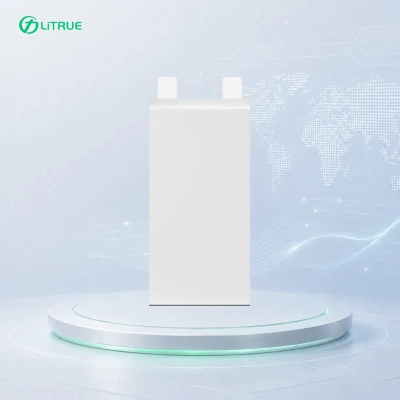
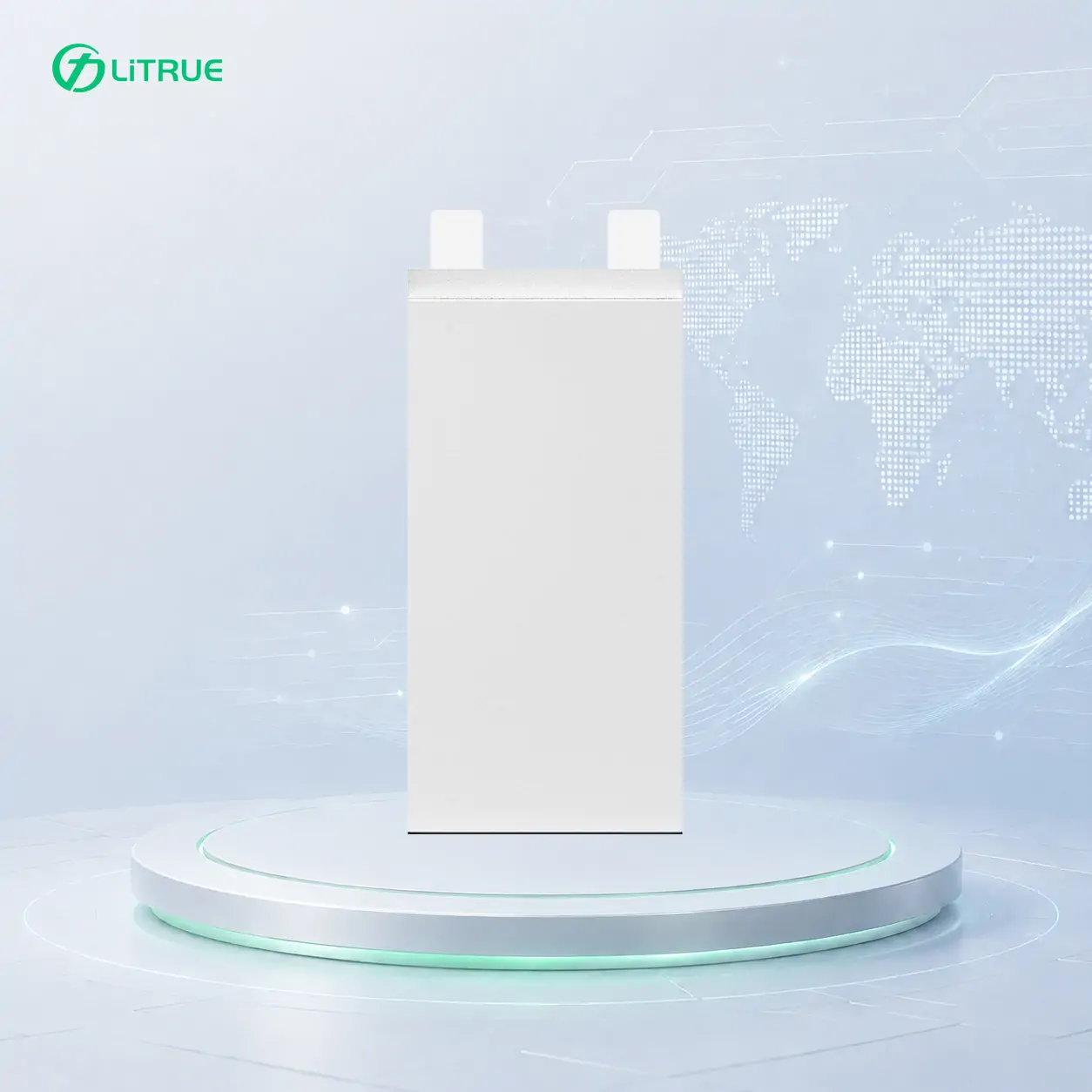
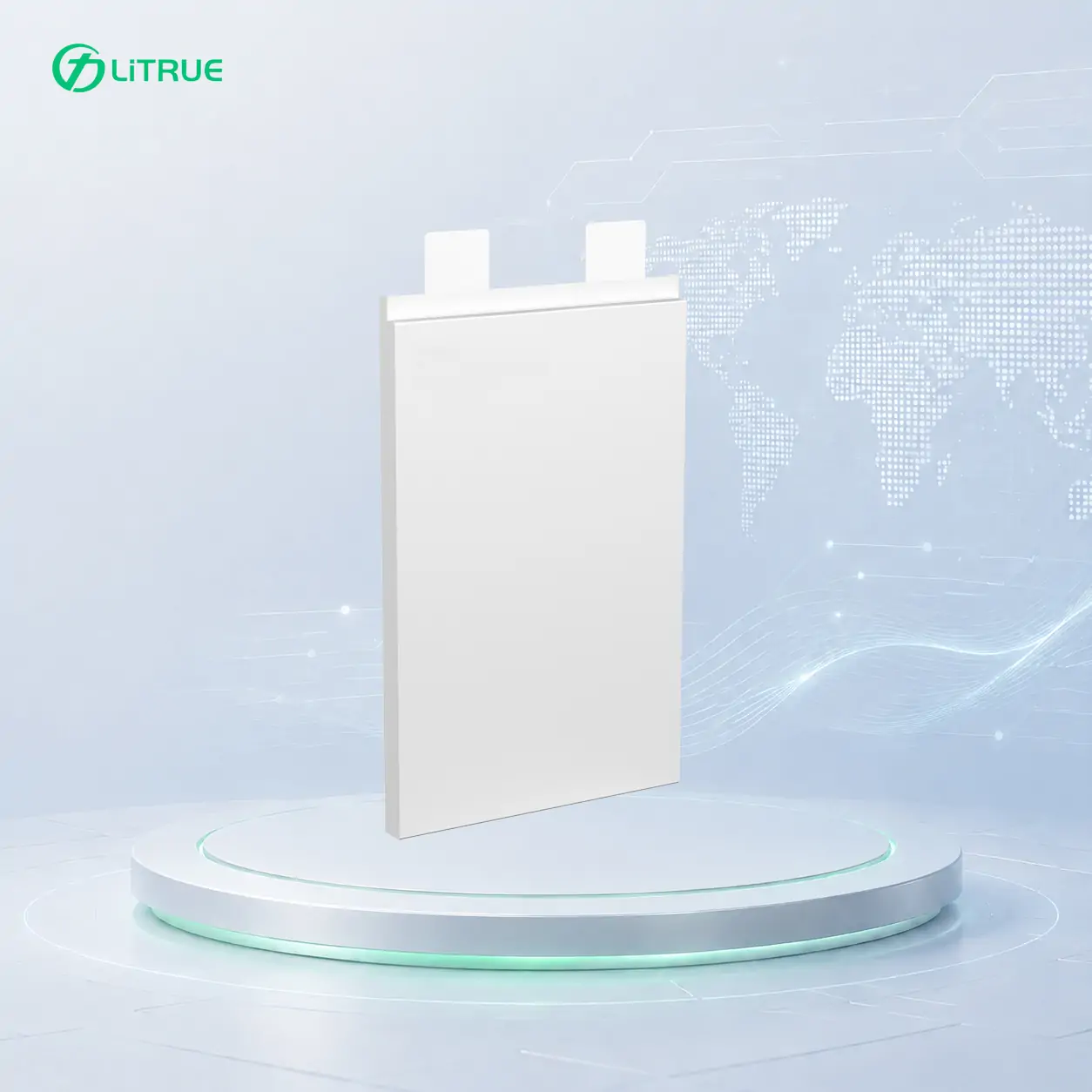
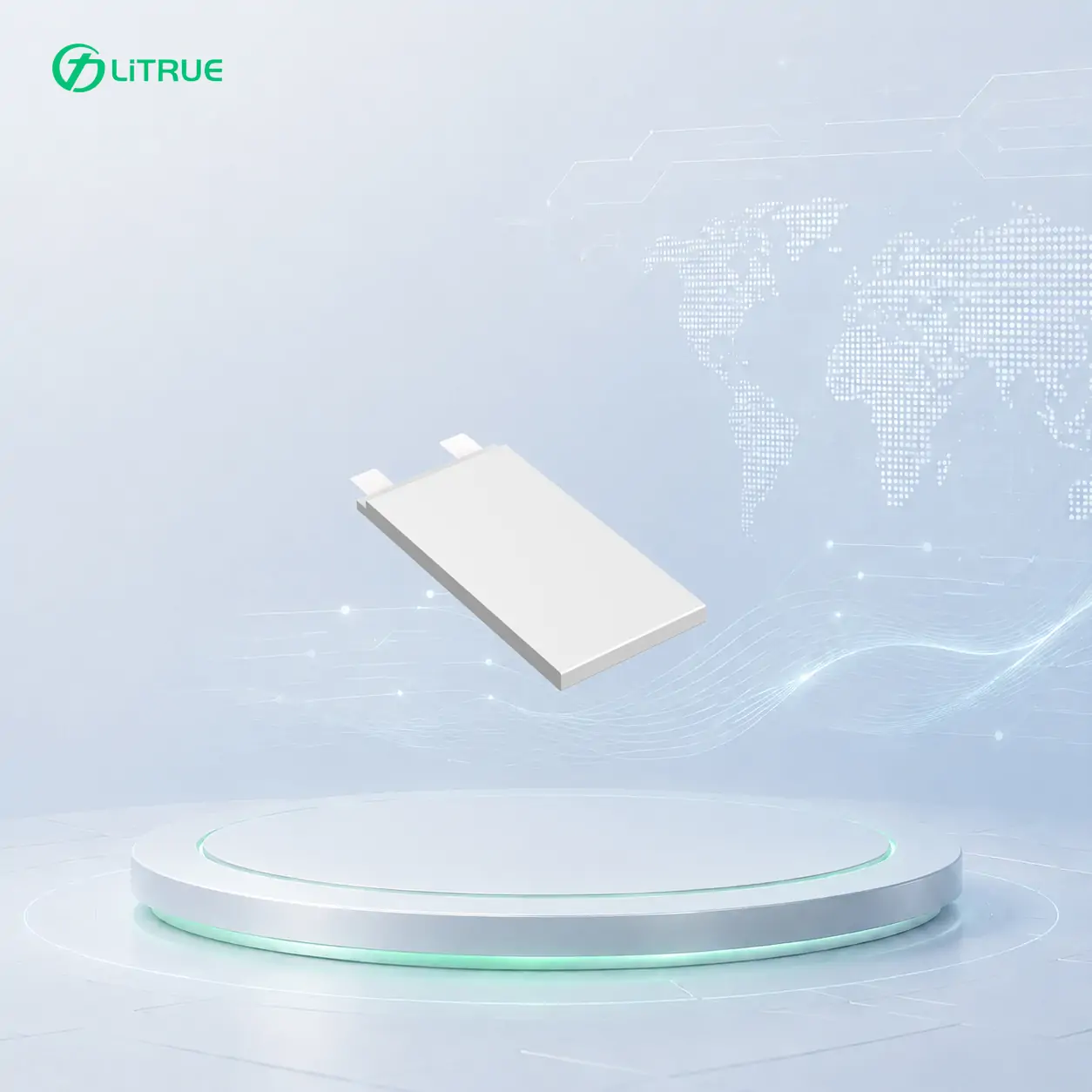
The PA60N-EB is a 60Ah solid-state lithium pouch cell for battery systems that need both high energy density and high-current output. It combines a specified cell-level energy density of 327Wh/kg with a 644g weight, 5C continuous discharge, and 10C pulse discharge capability.
| Model Number | PA60N-EB |
| Classification | High Energy Density, High-Rate Solid-State |
| Battery Technology | Solid-State Lithium |
| Cell Structure | Pouch |
| Nominal Capacity (Ah) | 60 |
| Nominal Voltage (V) | 3.51 |
| Cell Weight (g) | 644 |
| Energy Density (Wh/kg) | 327 |
| Max. Continuous Charge Rate | 2C |
| Max. Continuous Discharge Rate | 5C |
| Max. Pulse Charge Rate | 3C |
| Max. Pulse Discharge Rate | 10C |
| Cycle Life (times) | [confirm with engineering/lab data] |
| Operating Temperature (°C) | -43 to 65 |
| Dimensions (T×W×H, mm) | 7.5 × 161 × 232 |
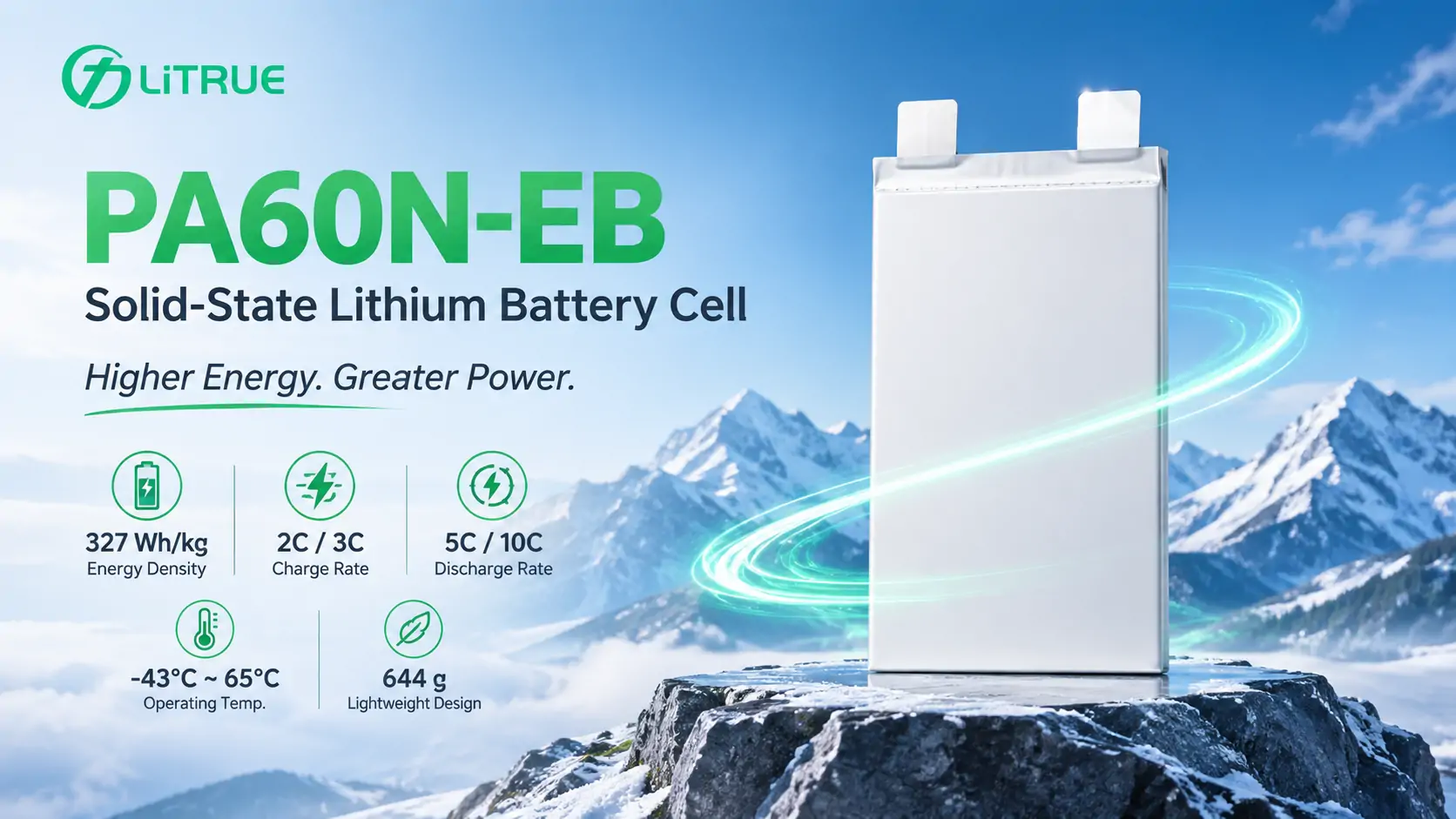
Specification notes: Energy density is specified at cell level. Charging and discharge temperature limits, current derating, and permitted pulse durations must be confirmed for the intended operating conditions.
High Energy Density High-Rate Solid-State Cell Series
Compare all 20 models below by capacity, dimensions, weight, energy density, and current capability. Continuous and pulse rates are listed in charge/discharge order.
| Model | Capacity | Voltage | Weight | Energy Density | Continuous Rate | Pulse Rate | Operating Temp. | Dimension |
|---|---|---|---|---|---|---|---|---|
| PT18N-EB | 18Ah | 3.55V | 208g | 307Wh/kg | 2C/5C | 3C/10C | -43℃~65℃ | 7.1×74×173mm |
| PT22N-P | 22Ah | 3.70V | 290g | 281Wh/kg | 2C/7C | 3C/10C | -43℃~55℃ | 10×74×173mm |
| PT22N-E | 22Ah | 3.55V | 250g | 312Wh/kg | 2C/5C | 3C/10C | -43℃~65℃ | 8.5×74×173mm |
| PT25N-E | 25Ah | 3.55V | 285g | 311Wh/kg | 2C/5C | 3C/10C | -43℃~65℃ | 9.6×74×173mm |
| PT28N-E | 28Ah | 3.55V | 313g | 318Wh/kg | 2C/4C | 3C/10C | -43℃~65℃ | 10.5×74×173mm |
| PT30N-E | 30Ah | 3.55V | 334g | 319Wh/kg | 2C/4C | 3C/10C | -43℃~65℃ | 11.3×74×173mm |
| PT30N-EC | 30Ah | 3.50V | 310g | 339Wh/kg | 2C/4C | 4C/6C | -43℃~65℃ | 10.2×74×173mm |
| PE31N-E | 30Ah | 3.55V | 345g | 319Wh/kg | 2C/4C | 3C/10C | -43℃~65℃ | 9.0×87×188mm |
| PE32N-E | 32Ah | 3.55V | 366g | 310Wh/kg | 2C/4C | 3C/10C | -43℃~65℃ | 9.6×87×188mm |
| PE36N-E | 36Ah | 3.55V | 405g | 316Wh/kg | 2C/3C | 3C/10C | -43℃~65℃ | 10.7×87×188mm |
| PE40N-E | 40Ah | 3.55V | 455g | 312Wh/kg | 2C/3C | 3C/10C | -43℃~65℃ | 12.1×87×188mm |
| PE40N-PB | 40Ah | 3.50V | 434g | 323Wh/kg | 2C/5C | 3C/15C | -43℃~65℃ | 11.5×87×188mm |
| PE30N-EC | 30Ah | 3.55V | 325g | 328Wh/kg | 2C/4C | 3C/10C | -43℃~65℃ | 8.6×87×188mm |
| PE36N-EC | 40Ah | 3.50V | 366g | 344Wh/kg | 1C/3C | 2C/6C | -43℃~65℃ | 9.6×87×188mm |
| PE40N-EC | 40Ah | 3.50V | 403g | 347Wh/kg | 1C/3C | 2C/6C | -43℃~65℃ | 10.4×87×188mm |
| PP45N-E | 45Ah | 3.60V | 548g | 296Wh/kg | 2C/4C | 5C/10C | -43℃~65℃ | 7.1×142×231mm |
| PP54N-E | 54Ah | 3.60V | 655g | 297Wh/kg | 2C/3C | 4C/10C | -43℃~65℃ | 8.3×142×231mm |
| PP65N-E | 65Ah | 3.60V | 777g | 302Wh/kg | 2C/3C | 4C/10C | -43℃~65℃ | 8.3×142×231mm |
| PK50N-E | 50Ah | 3.55V | 570g | 322Wh/kg | 2C/4C | 3C/10C | -43℃~65℃ | 10.5×105×231mm |
| PA60N-EB | 60Ah | 3.51V | 644g | 327Wh/kg | 2C/5C | 3C/10C | -43℃~65℃ | 7.5×161×232mm |
Solution
A battery selected for runtime can still become the limiting component during takeoff, acceleration, or a sustained heavy load. Adding parallel cells to meet those current demands increases pack mass and installation space, even when the application already has enough nominal energy.
PA60N-EB addresses both sides of that design problem with 60Ah capacity, 327Wh/kg specified cell-level energy density, and a 5C continuous discharge rating. At the stated capacity, 5C corresponds to 300A continuous discharge, while 10C corresponds to 600A pulse discharge under the approved test conditions. These ratings give engineers a basis for matching the cell to both sustained loads and short current peaks.
The 7.5 × 161 × 232mm pouch format provides a thin cell option for module development, while 2C continuous charging supports evaluation of faster turnaround charging strategies. Final pack design must account for cooling, cell restraint, connection resistance, and BMS limits. Explore LiTrue’s battery cell range to compare other capacity and rate combinations.
Application Areas
- Heavy-Lift and Industrial UAVs: The combination of 60Ah capacity and 5C continuous discharge supports evaluation for missions with demanding propulsion loads and short takeoff peaks.
- Aviation Development Platforms: The specified 327Wh/kg cell-level energy density provides a basis for assessing energy and mass targets alongside the platform’s current requirements and qualification needs.
- Mobile Robotics and Industrial Equipment: Continuous and pulse discharge ratings help engineers assess repeated motor loads, acceleration events, and changing payload demands.
- Portable High-Power Systems: The 60Ah capacity can support runtime targets while the 5C continuous discharge rating accommodates equipment with substantial sustained current demand.
- Custom Battery Packs: The 3.51V nominal platform and thin pouch format support tailored series-parallel layouts through LiTrue’s battery-pack development services.
FAQs
What current can PA60N-EB deliver?
The cell is rated for 5C maximum continuous discharge and 10C maximum pulse discharge. At 60Ah, these correspond to 300A and 600A respectively. Permitted pulse duration, temperature, cooling, and voltage limits must be confirmed before setting pack protection thresholds.
What are the charging capabilities?
PA60N-EB is rated for 2C continuous charging and 3C pulse charging, equivalent to 120A and 180A at 60Ah. These current ratings do not specify a complete charging time; the approved charging profile, voltage limits, temperature, and final charge stage also determine turnaround time.
Does 327Wh/kg describe the finished battery pack?
No. It is the specified cell-level energy density. Finished pack energy density also includes the mass of the enclosure, BMS, connections, supports, and thermal components, while usable energy depends on the operating voltage window and load profile.
Can PA60N-EB charge and discharge throughout the stated temperature range?
The listed operating range is -43°C to 65°C, but separate charging and discharge limits must be confirmed. Maximum current should not be assumed available throughout that range. Request temperature-specific performance data for the intended application.
Can I request samples and pack integration support?
Contact LiTrue to confirm sample availability, MOQ, lead time, and applicable technical documentation. Share the required pack voltage, continuous current, peak current and duration, runtime, installation space, and operating temperatures with the LiTrue engineering team so the cell and pack configuration can be evaluated together.