
The main advantages of buying batteries direct from the manufacturer are lower cost without a distributor markup, the ability to customize, traceable quality, direct technical support, and clearer responsibility if something goes wrong. The trade-offs are minimum order quantities, longer lead times, and more due diligence on your side.
This guide explains each advantage, the trade-offs to weigh, and how to confirm that a supplier is genuinely the source, so you can decide whether buying direct fits your project.
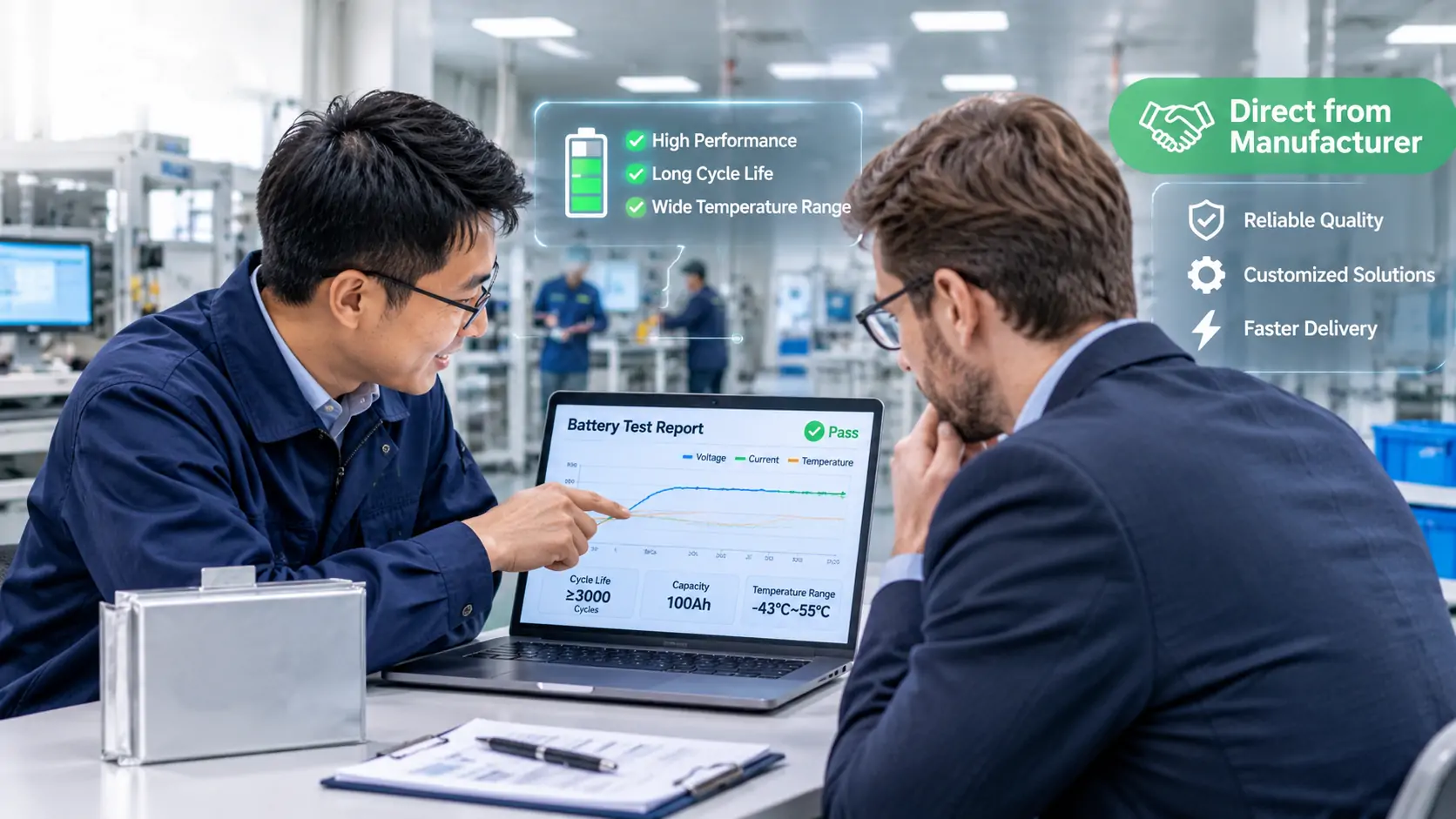
What "Buying Direct From the Source" Means
In the battery industry, the source is the company that actually designs and produces the cells or packs. A distributor buys from one or more factories and resells, and a trading company arranges the sale without making anything itself.
Distributors are not a bad choice. They offer stock, small lots, and quick delivery. But many sellers describe themselves as "factory direct," and not all of them are, so the first job is to verify what kind of supplier you are talking to.
The Main Advantages of Buying Direct
1. Lower Cost Without Distributor Markup
Every reseller between the factory and you adds a margin. Buying direct removes those layers, which can lower your unit cost.
Here is a simple illustration, not a real price. If each reseller adds 15 percent, two layers raise the cost by about 32 percent. Your actual savings depend on volume, specifications, and shipping, so compare total cost rather than unit price alone.
2. Customization and Engineering Access
A manufacturer can adjust capacity, dimensions, tab layout, connectors, rate capability, or temperature range for your project, and it can develop a design from scratch if needed. A distributor can only sell what the factory has already built.
Direct access also means you talk to the engineers who understand the cell, which makes design reviews, testing plans, and troubleshooting far more productive.
3. Traceable Quality and Real Test Data
When you buy from the source, you can ask for lot-level test reports, grading data, and certification documents. If a problem appears later, the manufacturer can trace the batch and find the root cause.
Ask whether the factory runs a certified quality system. ISO 9001 is the world best-known quality management standard, and the International Organization for Standardization notes that certification is voluntary, so a supplier that holds it has chosen to be audited. Also ask for transport test documentation, since the UN Manual of Tests and Criteria, Section 38.3 sets the tests that lithium cells must pass before they ship by air, sea, or road.
4. Direct Technical Support
Questions about charging profiles, temperature limits, or pack design go straight to the people who built the product. That shortens the path from question to answer, and it reduces the risk of acting on secondhand information.
5. Supply Stability and Planning
Direct customers can share forecasts, reserve production capacity, and plan deliveries around their own schedules. You also reduce the risk of receiving relabeled, mismatched, or older-batch cells that sometimes enter secondary markets.
6. Clear Warranty and Responsibility
With one party making and supporting the product, there is no finger-pointing between a distributor and a factory when a claim comes up. Warranty terms, return processes, and failure analysis are all handled by the company that knows the product best.
7. Faster Product Development
Direct relationships let you iterate quickly. You can order samples, test them, send feedback, and receive a revised design without waiting for a middleman to relay messages. As an example, LiTrue product pages list a sample MOQ of 10 pieces and sample lead times of 7 to 15 working days.
Large programs follow the same logic. LiTrue published R&D case with Volkswagen PowerCo covers research, validation, and small-batch production of custom lithium-ion and sodium-ion batteries, which shows how a direct customer relationship can run from specification through pilot builds.
8. Long-Term Partnership and Roadmap Access
A direct customer can get an early look at new cell technology, discuss volume pricing, and plan co-development. Over time, the supplier learns your product and can recommend improvements before you ask.
Trade-Offs to Weigh
Buying direct is not free of friction. Manufacturers usually set minimum order quantities, and production lead times are longer than shipping from a distributor shelf. Bulk lead times on LiTrue product pages, for example, are listed at 45 days, subject to volume and requirements.
You also take on more work. You will need to qualify the product, manage international shipping and customs, and handle payment terms. Lithium batteries are dangerous goods in transport, so documentation and packaging must meet the rules.
Communication across time zones can slow things down, too. Suppliers with local presence help here: LiTrue supports European customers through overseas companies in Prague, Czech Republic, and Madrid, Spain.
When Buying Direct Makes Sense
Direct sourcing is usually the better choice when you need custom specifications, expect repeat or growing volume, need traceable test data for certification, or want engineering support throughout a product life. Our guide to sourcing custom lithium cells covers the qualification steps in more detail.
A distributor is often the better choice for one-off repairs, urgent replacements, very small quantities, or prototypes where speed matters more than cost. Many companies use both: a distributor for convenience and a manufacturer for production.
How to Verify a Supplier Is Really the Source
Ask who designed the cell and who manufactures it. A real manufacturer can describe its production process, show its facility through photos or a video call, and name its engineering team.
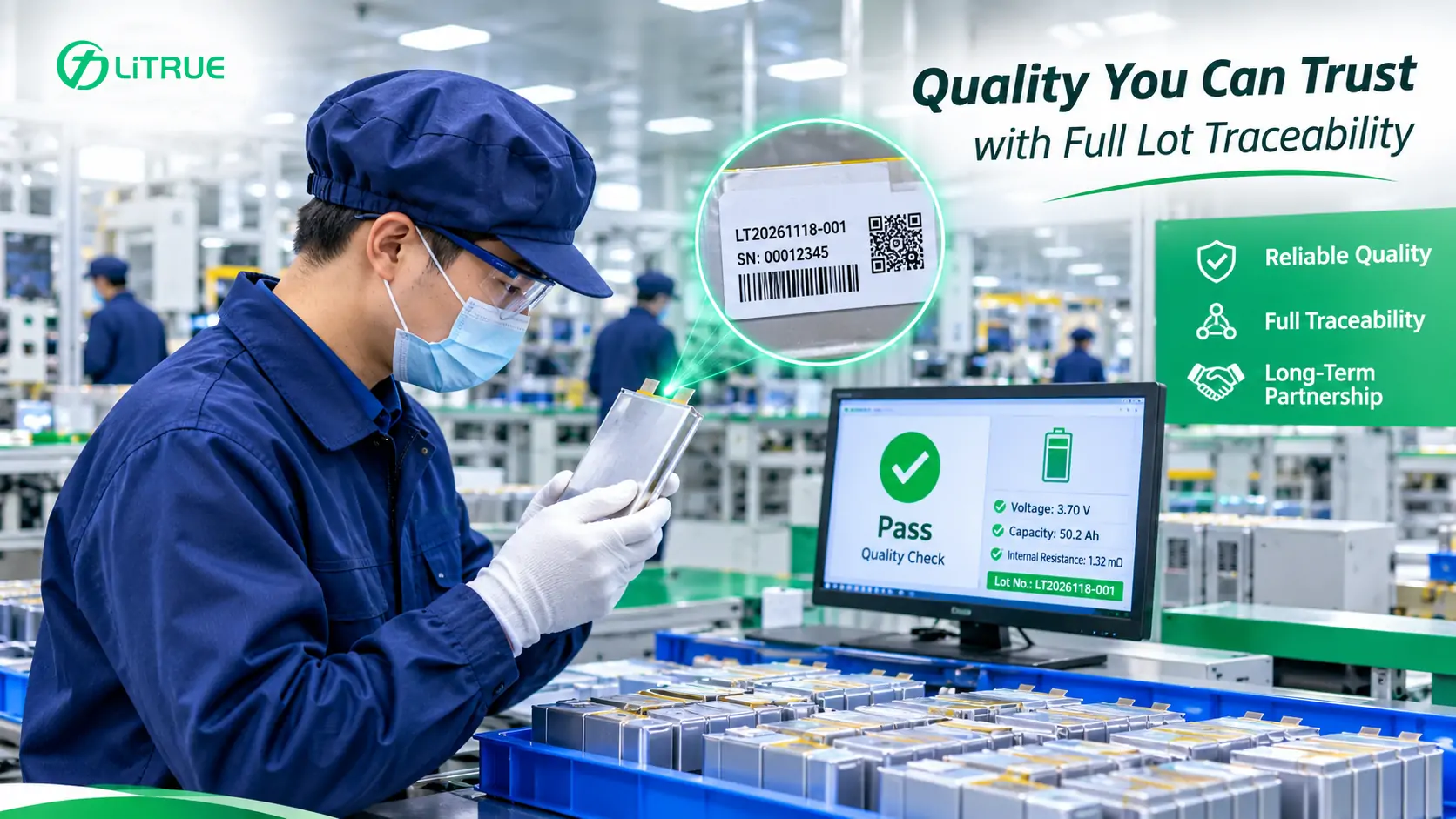
Ask for a business license, certification documents, and cell datasheets with stated test conditions. Request references or case studies, and look for patents, which can show real in-house development.
Finally, order samples before committing to volume. Test them yourself, and compare the results to the datasheet. A supplier confident in its product will welcome that.
How LiTrue Works Directly With Customers
LiTrue is a lithium battery manufacturer headquartered in Luoyang, China, with more than 18 years of R&D experience, over 100 in-house patents, 85+ product series, and more than 230 global partners. It also operates a production base in Bazhong, Sichuan.
The company supplies high-performance lithium cells and custom battery packs, and its product pages describe OEM and ODM development with factory-direct terms. As with any manufacturer, ask for the datasheets, test reports, and certification documents that match your application.
FAQs
Is buying batteries direct always cheaper?
Not always. Direct purchases remove the distributor margin, but minimum orders, shipping, customs, and qualification testing add cost. Compare total cost of ownership, including cycle life and support, rather than unit price alone.
What is an MOQ, and can small buyers still buy direct?
MOQ stands for minimum order quantity. Many manufacturers set a smaller sample MOQ so new customers can test before placing a larger order. LiTrue product pages, for example, list a sample MOQ of 10 pieces.
Is it safe to buy batteries from an overseas manufacturer?
It can be, if you verify the supplier, request certification documents and test reports, order samples first, and confirm that shipping follows dangerous-goods rules. Start small and scale as trust builds.
How do I find out if a seller is a real manufacturer?
Ask who designs and produces the cells, request a facility tour by video, and check for business licenses, certifications, patents, and references. Real manufacturers answer technical questions in detail.
How do I start a direct purchase?
Prepare your voltage, capacity, current, temperature, dimension, and volume requirements, then request a quote and ask for datasheets, certification documents, and sample terms.
Summary
Buying batteries direct from the source gives you lower layered costs, real customization, traceable quality, and direct support. In return, you accept minimum orders, longer lead times, and more diligence up front.
If your project needs custom specifications or growing volume, start with samples, verify the supplier claims, and build the relationship step by step. The savings and the control usually follow.