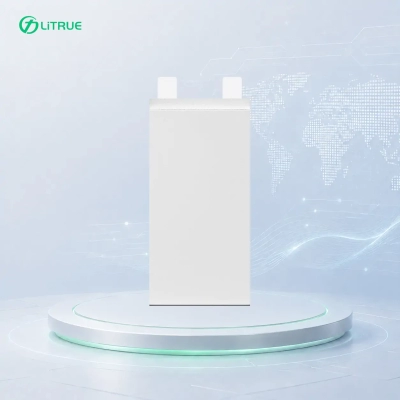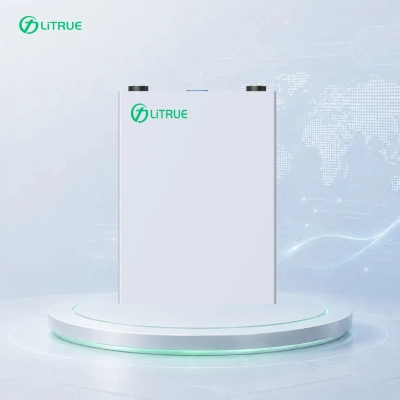
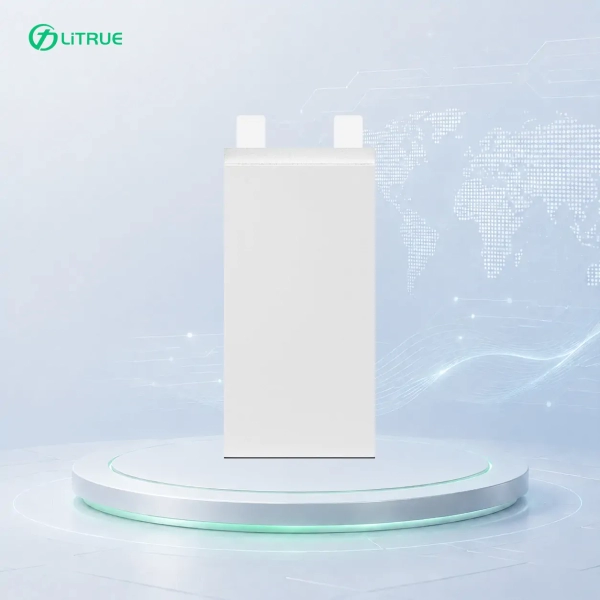
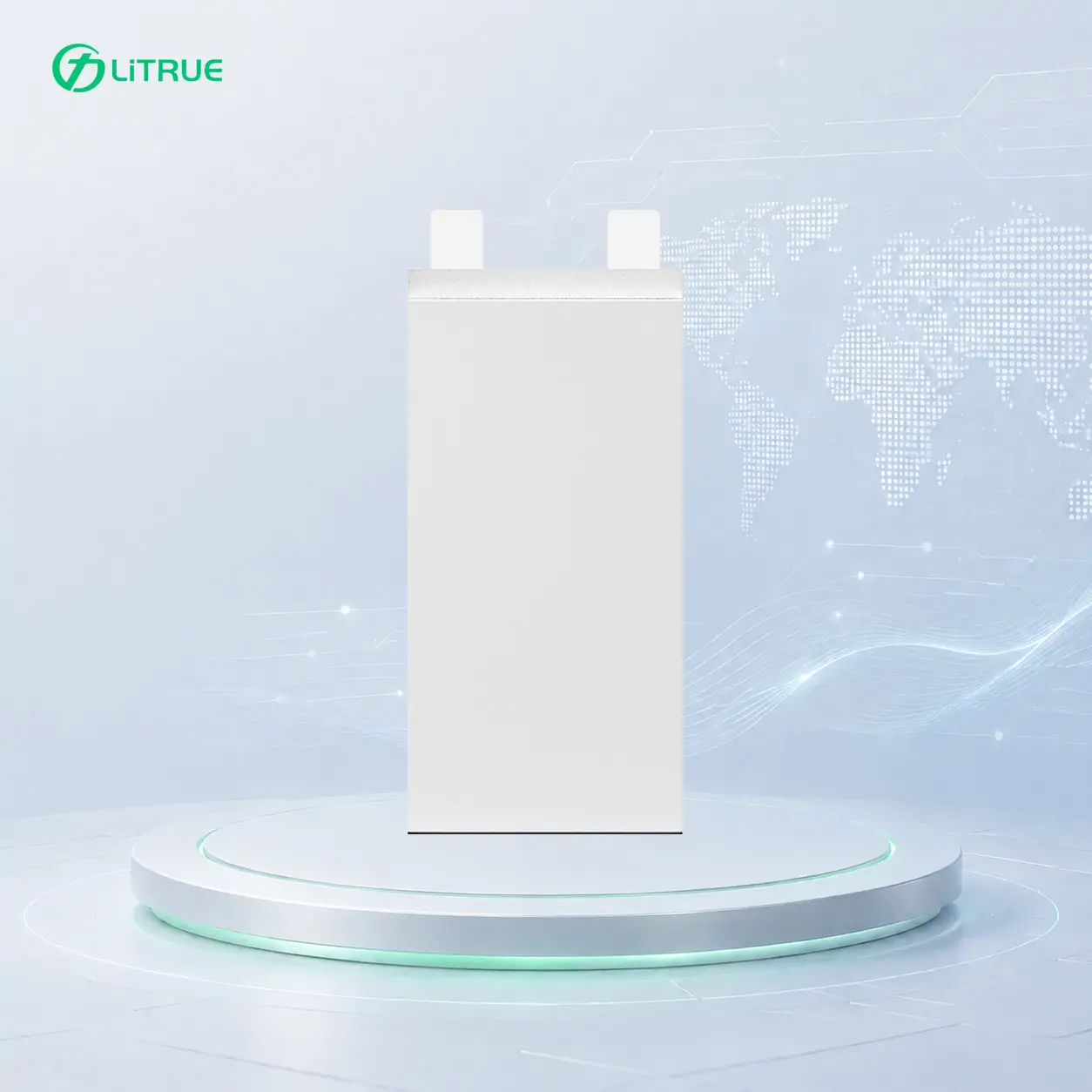
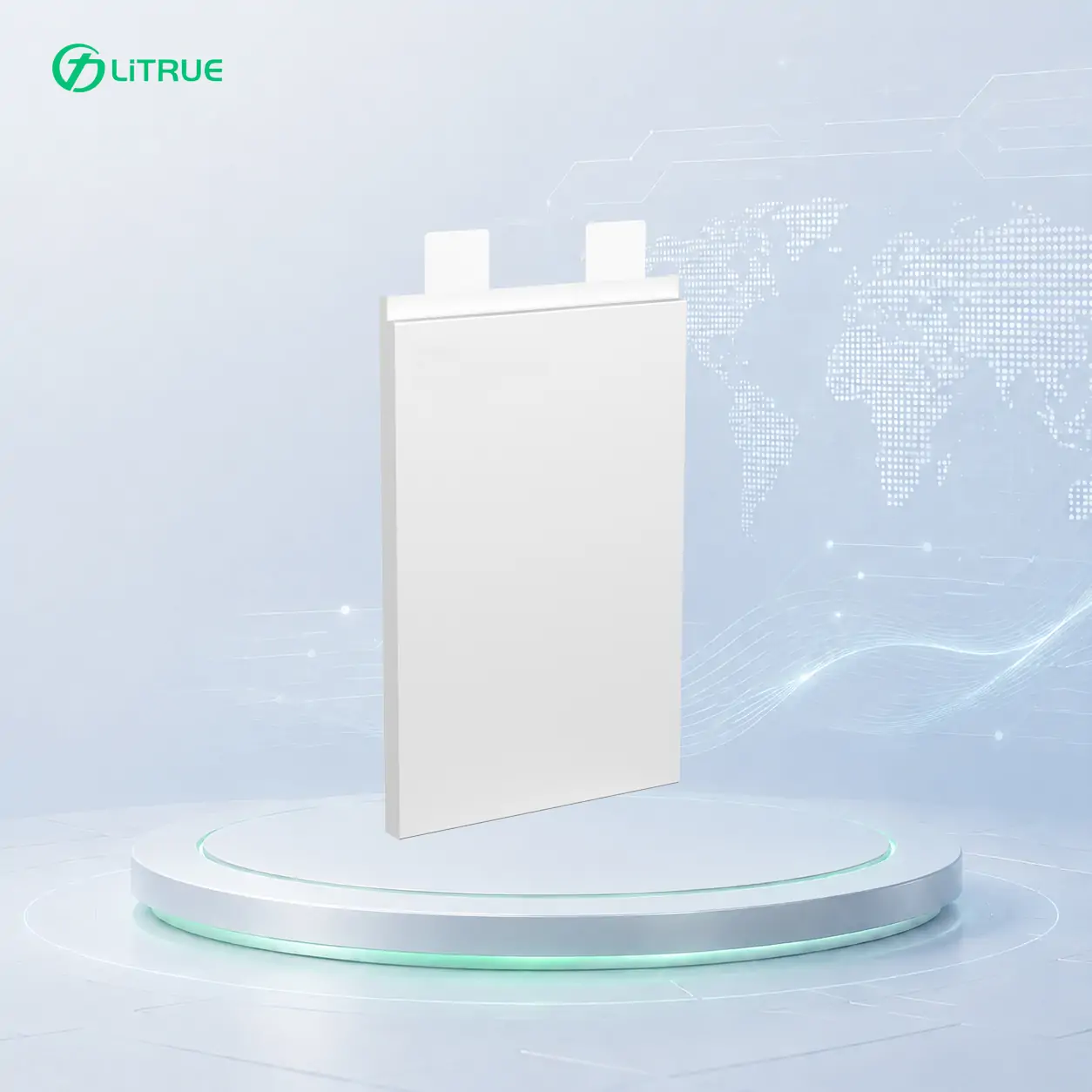
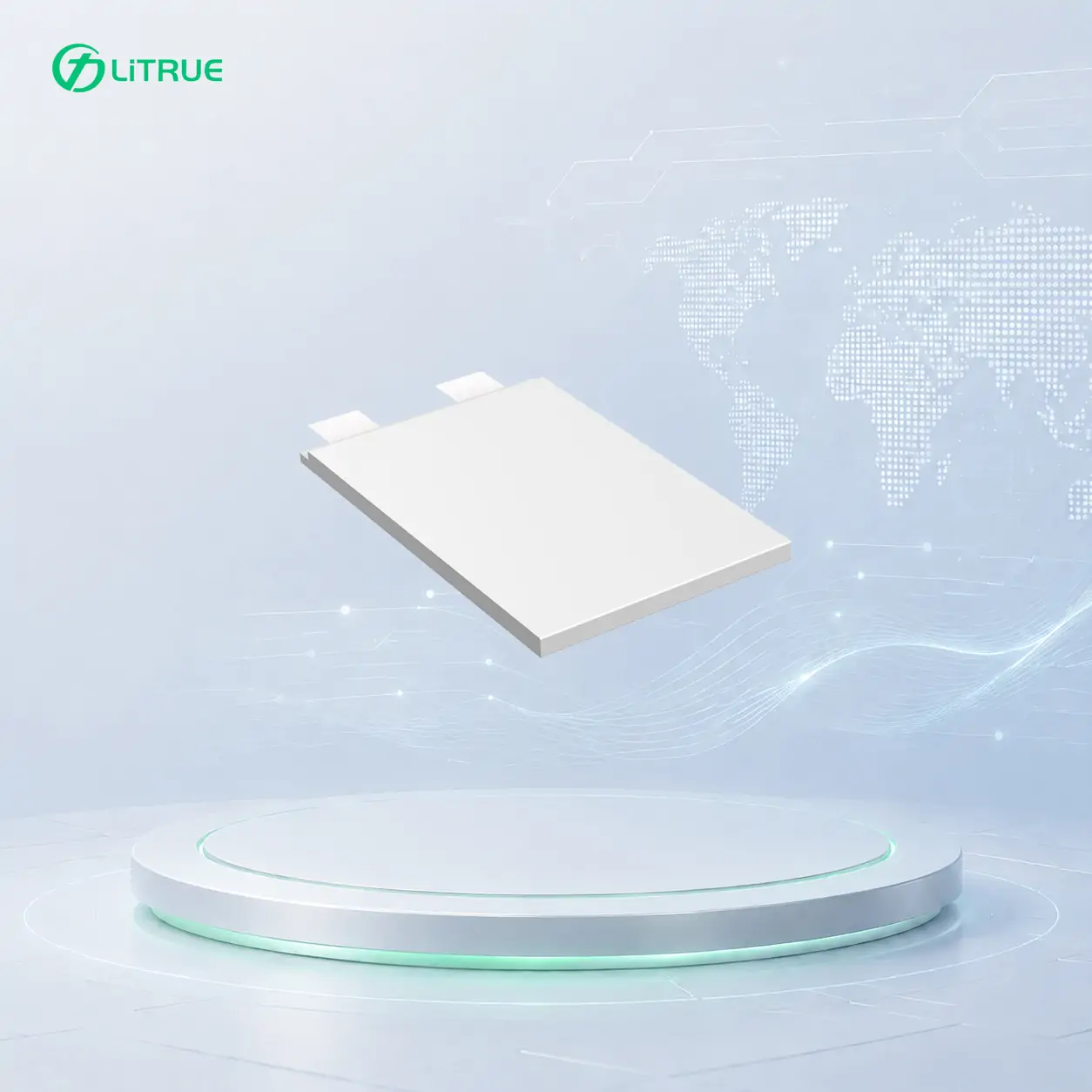
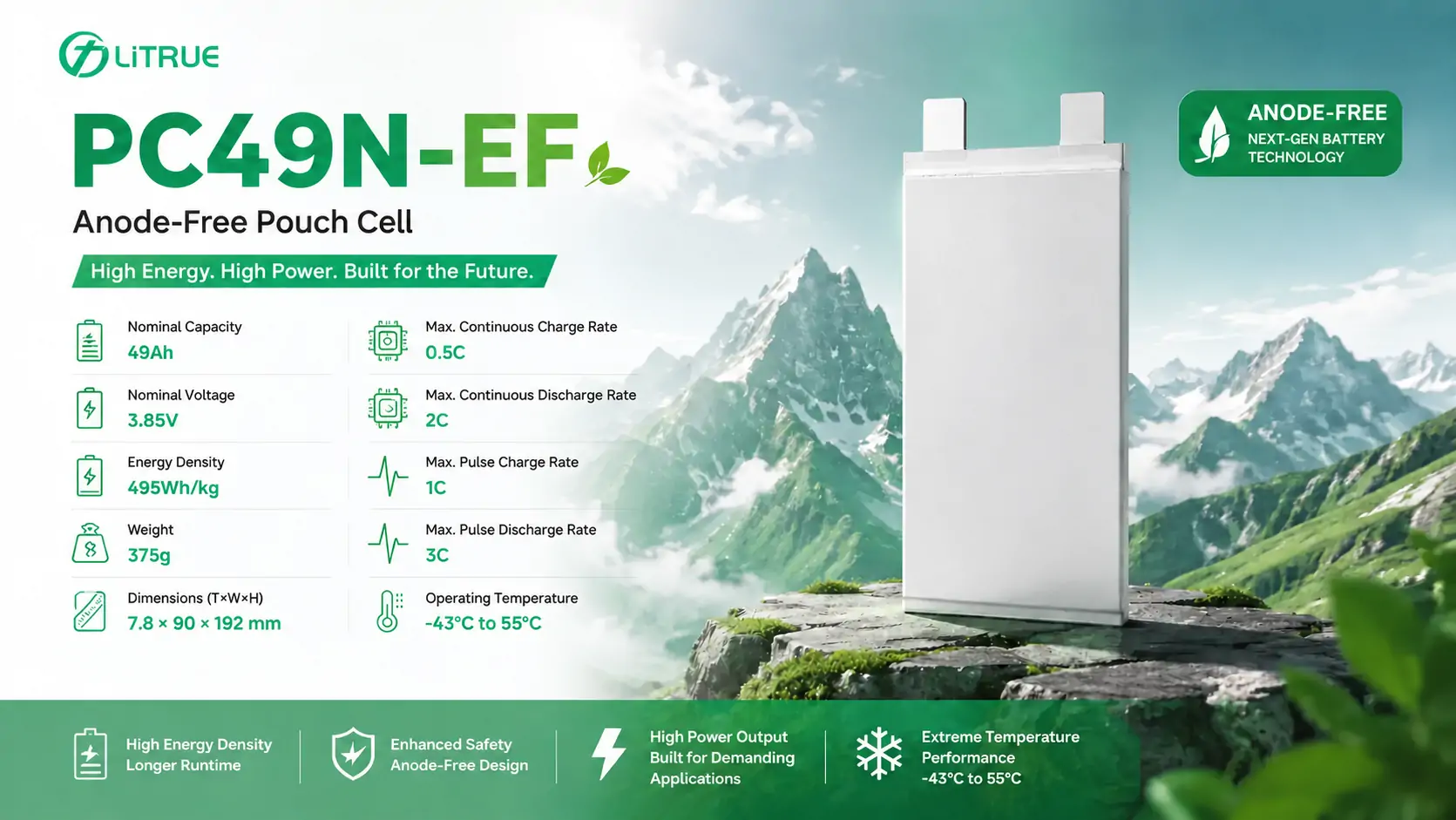
| Model Number | PC49N-EF |
| Classification | Anode-Free Cell |
| Chemical Materials | NMC |
| Cell Structure | Pouch |
| Dimensions (T×W×H, mm) | 7.8 × 90 × 192 |
| Weight (g) | 375 |
| Nominal Capacity (Ah) | 49 |
| Nominal Voltage (V) | 3.85 |
| Energy Density (Wh/kg) | 495 |
| Max. Continuous Charge Rate | 0.5C |
| Max. Continuous Discharge Rate | 2C |
| Max. Pulse Charge Rate | 1C |
| Max. Pulse Discharge Rate | 3C |
| Operating Temperature (°C) | -43 to 55 |
| Design Standards | GB/T 38058-2019, GB 31241-2022 |
| Certification Standards | UN38.3, RoHS |
| Sample MOQ | 10 pcs (Negotiable) |
| Sample Lead Time | 7–15 working days |
| Bulk Lead Time | 45 days (subject to volume & requirements) |
Solid-State Anode-Free Cell Series
anode-free solid-state cell platform is available in various capacity levels, giving pack designers room to balance cell thickness, weight, and energy density before fixing the module layout.
| Model | Capacity | Voltage | Weight | Energy Density | Continuous Rate | Pulse Rate | Operating Temp. | Dimension |
|---|---|---|---|---|---|---|---|---|
| PT25N-EF | 25Ah | 3.85V | 202g | 480Wh/kg | 0.5C/3C | 1C/5C | -43℃~55℃ | 5.4×74×172mm |
| PE40N-EF | 40Ah | 3.85V | 316g | 495Wh/kg | 0.5C/3C | 1C/5C | -43℃~55℃ | 6.3×87×187mm |
| PE42N-EF | 42Ah | 3.85V | 340g | 495Wh/kg | 0.5C/3C | 1C/5C | -43℃~55℃ | 7×87×187mm |
Solution
Conventional NMC pouch cells plateau around 250-300 Wh/kg. Most of that ceiling isn't the cathode — it's the graphite or silicon anode sitting inside the can, adding dead weight and volume that never stores much energy relative to its mass.
The PC49N-EF removes that anode entirely. Lithium metal plates directly onto the bare current collector during the first charge, and a solid electrolyte separator keeps that lithium stable instead of forming dendrites the way a liquid-electrolyte anode-free design would. The result is 495 Wh/kg from a 49Ah pouch cell weighing 375g — roughly double the specific energy of a same-format NMC cell — while the solid electrolyte also gives it a -43°C to 55°C operating window that liquid-electrolyte chemistries generally can't match at the cold end.
That energy density comes with a trade-off worth stating plainly: this is not a high-rate cell. The 0.5C charge / 3C continuous discharge limits reflect the lithium-metal anode's sensitivity to plating current, so it's built for missions where every gram of payload matters more than acceleration or fast turnaround. See LiTrue's full cell lineup for higher-rate alternatives if your application needs both.
Application Areas
- eVTOL & Electric Aircraft: every kilogram saved on the battery is a kilogram of payload or range gained — few applications reward specific energy this directly.
- Long-Endurance & High-Altitude UAVs: the -43°C floor keeps capacity usable at stratospheric altitude and polar operating temperatures where standard NMC cells lose most of their capacity.
- Satellite & Near-Space Payloads: mass-critical power systems benefit from the same energy-per-gram advantage that drives the eVTOL use case.
- Polar & Extreme-Cold Field Equipment: operates down to -43°C without a heating circuit, where liquid-electrolyte cells typically need active thermal management just to function.
- Portable High-Value Instrumentation: scientific and surveying gear where weight budget is fixed and every added gram displaces sensor payload.
FAQs
Why is the PC49N-EF energy density so much higher than a typical NMC or LFP cell?
It has no graphite or silicon anode. In a solid-state anode-free design, lithium metal plates directly onto the current collector on first charge, so nearly all the cell's mass goes toward active energy storage rather than a passive host material. That's how a 375g cell reaches 495 Wh/kg.
Does "anode-free" mean it wears out faster than a conventional cell?
Yes, at this stage of the technology. The cell starts each cycle with a fixed lithium inventory rather than a rechargeable graphite host, so cycle life trails conventional NMC pouch cells — see the flagged range in the spec table above and confirm the exact figure with LiTrue's lab data for your duty cycle.
Can it really run down to -43°C without a heater?
Yes, that's within the stated operating range in the spec table. The solid electrolyte doesn't freeze the way a liquid electrolyte does, which is what allows the cold-end rating conventional cells can't reach without active heating.
What charge rate should I use to protect cycle life?
Stay at or below the 0.5C continuous charge rating in normal operation, reserving the 1C pulse rate for brief events only. Lithium-metal anode-free cells are more sensitive to charge current than graphite-anode cells, and overdriving charge rate is the fastest way to shorten this cell's life.
Can I get samples, and what's the MOQ?
Sample quantities are typically available for engineering qualification on new chemistries like this one, with production MOQs scoped per project. Reach out to LiTrue's applications team to discuss your requirements.