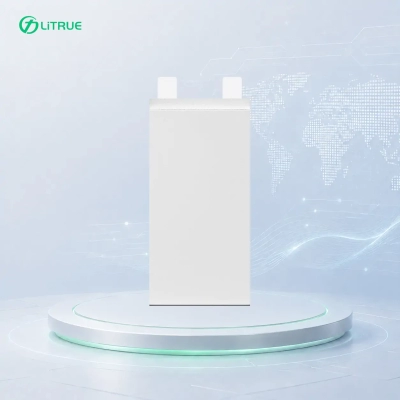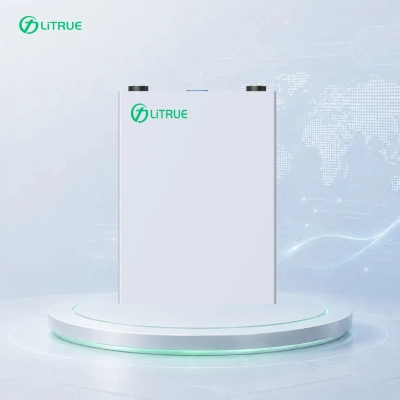
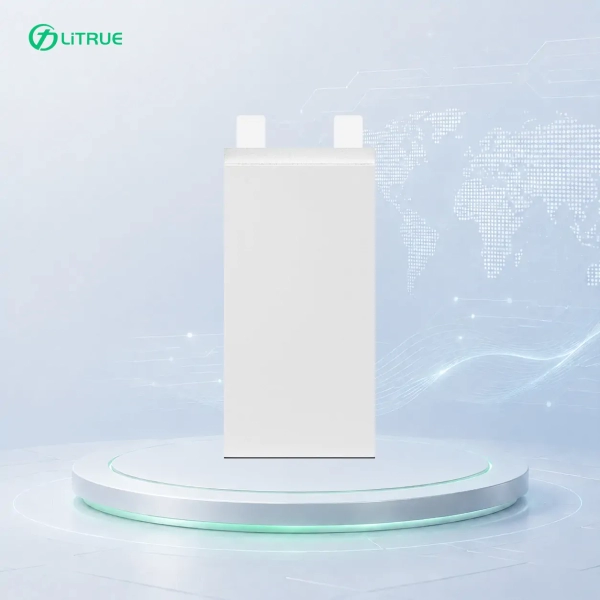
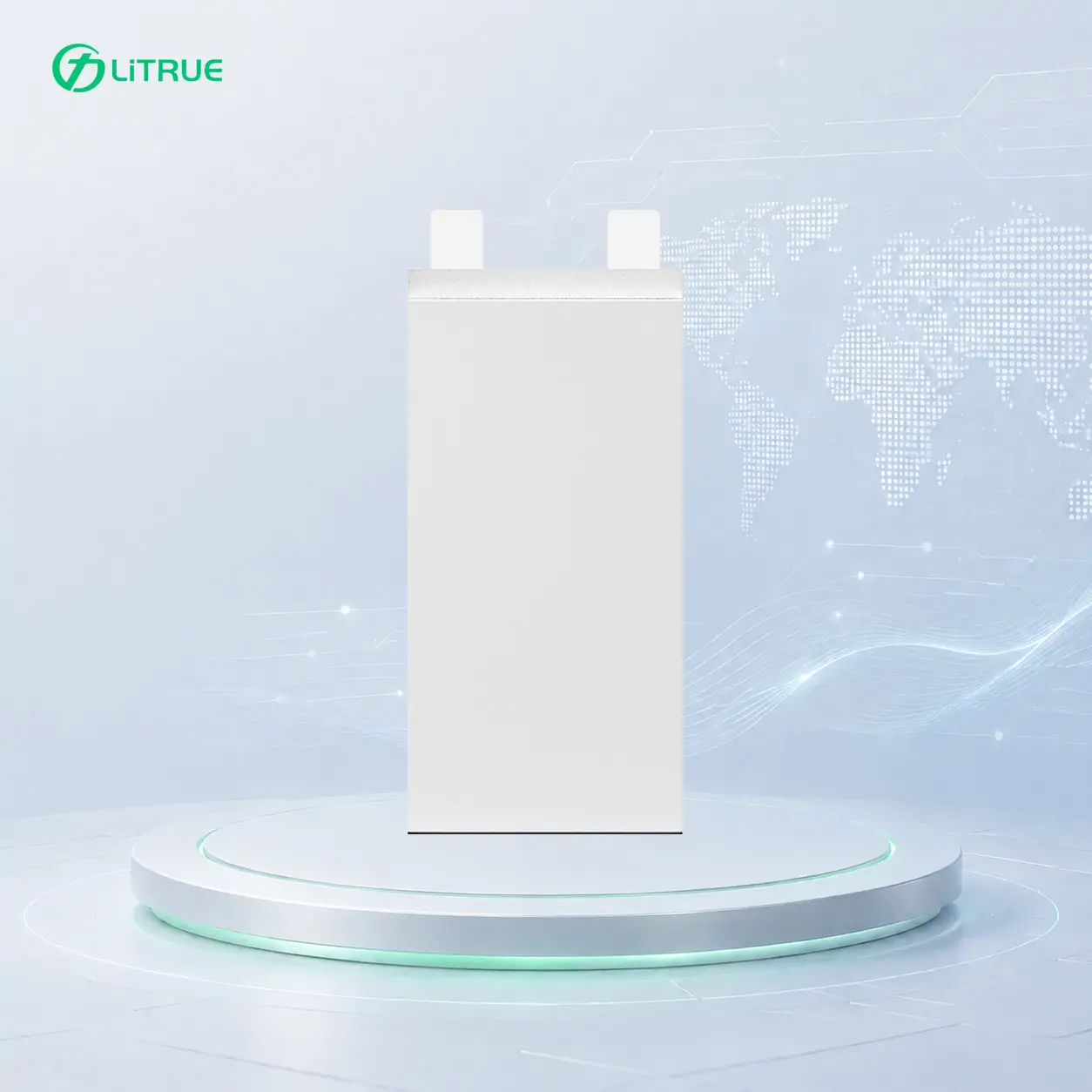
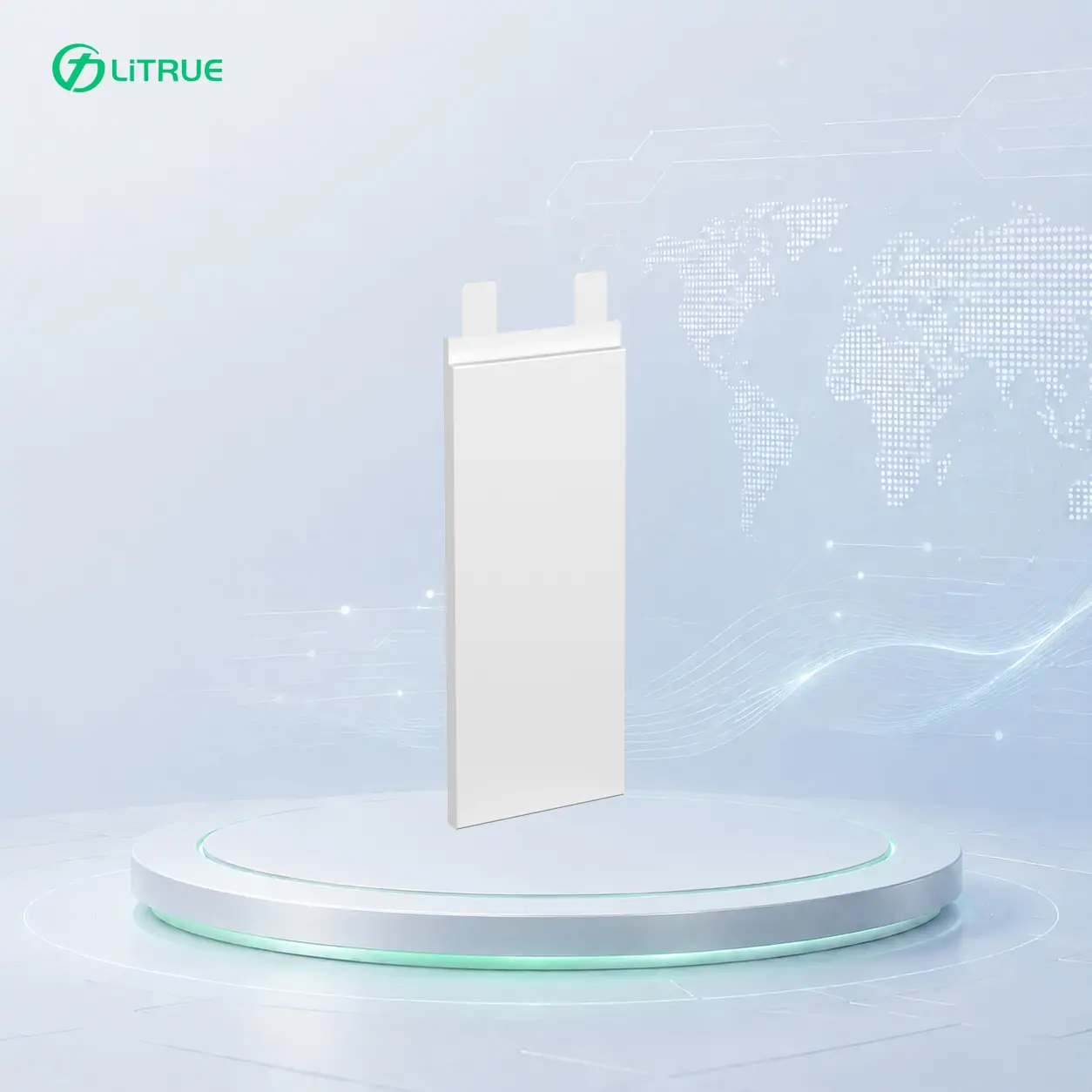
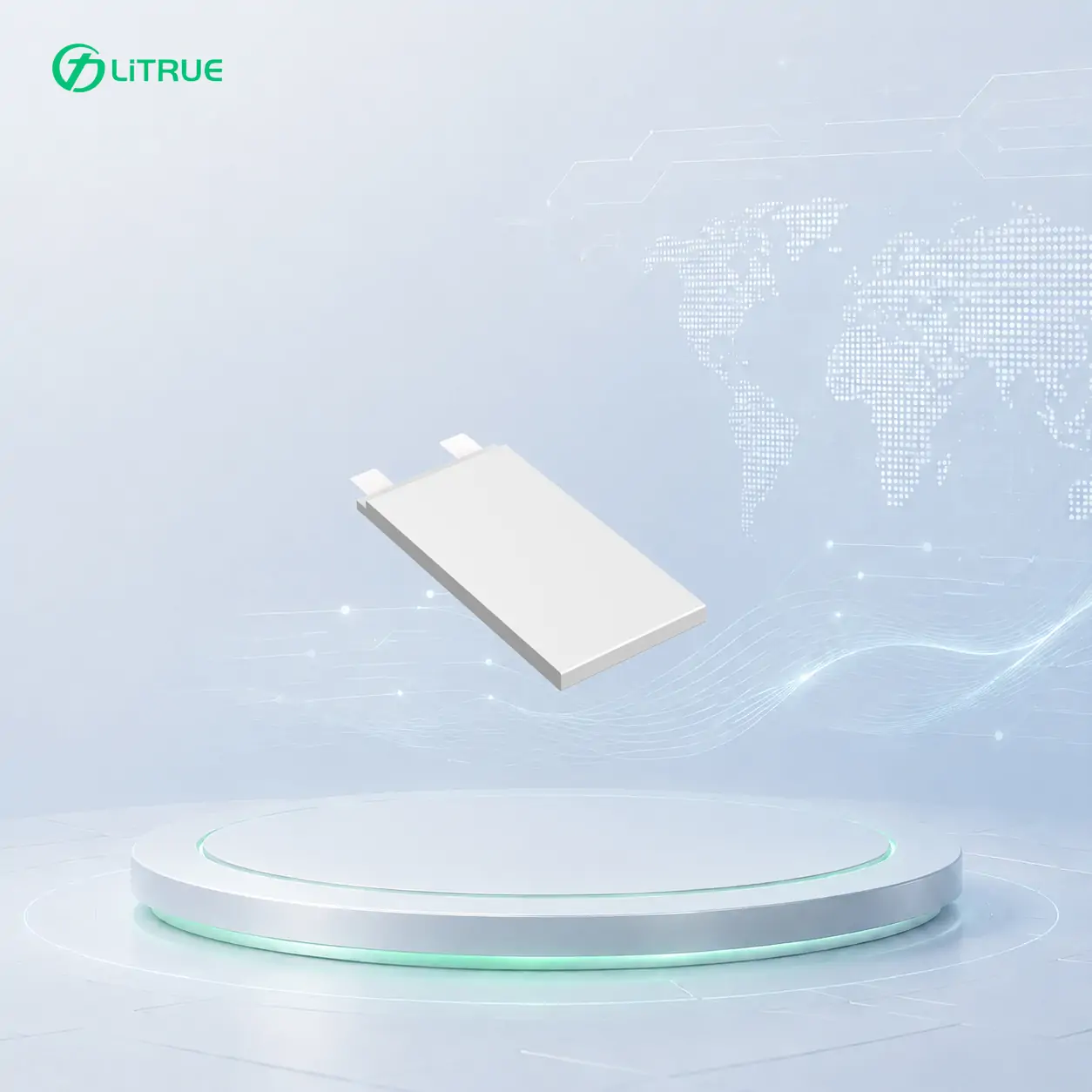
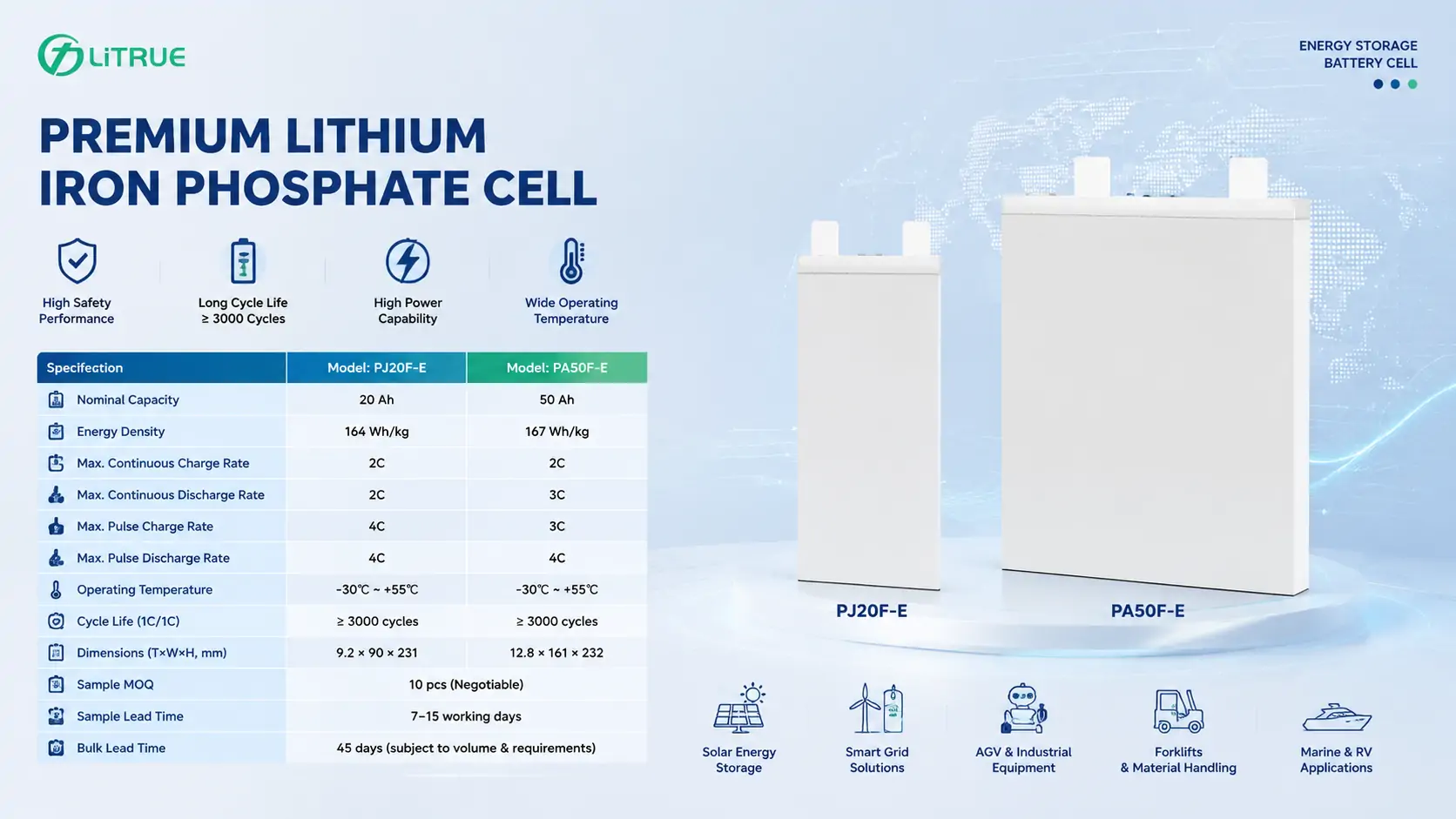
Review the specific data for our 20Ah and 50Ah LFP pouch cells below. Our engineers are fully equipped to design custom battery pack solutions tailored to your specific voltage platforms based on these cells.
| Specification | Model: PJ20F-E | Model: PA50F-E |
|---|---|---|
| Nominal Capacity | 20 Ah | 50 Ah |
| Energy Density | 164 Wh/kg | 167 Wh/kg |
| Max. Continuous Charge Rate | 2C | 2C |
| Max. Continuous Discharge Rate | 2C | 3C |
| Max. Pulse Charge Rate | 4C | 3C |
| Max. Pulse Discharge Rate | 4C | 4C |
| Operating Temperature | -30℃ ~ +55℃ | -30℃ ~ +55℃ |
| Cycle Life (1C/1C) | ≥ 3000 cycles | ≥ 3000 cycles |
| Dimensions (T×W×H, mm) | 9.2 × 90 × 231 | 12.8 × 161 × 232 |
| Sample MOQ | 10 pcs (Negotiable) | |
| Sample Lead Time | 7–15 working days | |
| Bulk Lead Time | 45 days (subject to volume & requirements) | |
Wide Temperature Range Cell Series
LiTrue wide-temperature LFP cell series is built for packs that need stable output across cold, hot, and high-load operating conditions, with model options covering high-rate discharge, long cycle life, and different mechanical envelopes.
| Model | Dimension | Capacity | Voltage | Weight | Continuous Rate | Pulse Rate | Cycle Life | Operating Temp. |
|---|---|---|---|---|---|---|---|---|
| P10E0E5-17500FP | 9.6×140×145mm | 17.5Ah | 3.20V | 409g | 6C/10C | 15C/25C | 20000 | -43℃~55℃ |
| PC20F-T | 12.5×90×192mm | 20Ah | 3.20V | 420g | 2C/3C | 5C/10C | 5000 | -43℃~70℃ |
| PA46F-C | 12.5×161×232mm | 46Ah | 3.20V | 930g | 2C/3C | 3C/4C | 6000 | -43℃~70℃ |
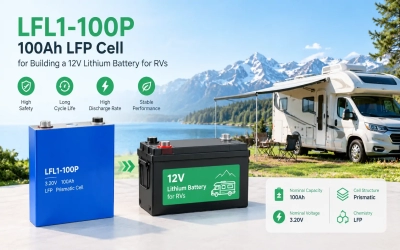
| LFL1-100P | 28.8×173.9×207.6mm | 100Ah | 3.20V | 2200g | 3C/4C | 4C/6C | 3000 | -30℃~55℃ |
| P10B2D5-10000FP | 9.5×112×135mm | 10Ah | 3.20V | 272g | 10C/20C | 20C/50C | 15000 | -43℃~55℃ |
| PM30F-L | 8.8×182×195mm | 30Ah | 3.20V | 620g | 3C/3C | 5C/10C | 1500 | -70℃~55℃ |
| PP33F-L | 10.2×142×232mm | 33Ah | 3.20V | 668g | 2C/3C | 5C/10C | 3000 | -43℃~55℃ |
| AA20F-P | 105.2×148.3×26.7mm | 20Ah | 3.20V | 760g | 10C/75C | 20C/125C | 6000 | -43℃~55℃ |
Solution
Many high-energy pouch cells are comfortable in light-duty cycling, but they struggle when a vehicle or machine asks for repeated acceleration, startup current, or daily deep use. Voltage sag, heat buildup, and short replacement intervals become the real cost, especially in electric two-wheelers, three-wheelers, and hybrid agricultural equipment.
The PJ20F-E and PA50F-E are built for that middle ground: more energy density than standard LFP cells, stronger cycle life than many high-power chemistries, and enough C-rate headroom for real working loads. The 20Ah model reaches 164Wh/kg with 2C continuous discharge, while the 50Ah model reaches 167Wh/kg with 3C continuous discharge. See LiTrue's full range of LFP pouch battery cells for related cell options.
Application Areas
- Electric Motorcycles and Scooters: the PA50F-E supports higher continuous current for acceleration, while the PJ20F-E works well in lighter compact packs.
- Electric Two-Wheelers and Three-Wheelers: ≥3000 cycles at 1C/1C helps reduce battery replacement frequency in daily delivery and commuting fleets.
- Hybrid Agricultural Machinery: the -30°C to +55°C operating range supports outdoor machines that face cold starts, heat, vibration, and long working days.
- Industrial Power Equipment: 4C pulse discharge gives headroom for motor startup and sudden load changes without moving to a heavier prismatic format.
- Custom Battery Packs: the stacked pouch structure gives OEM engineers more layout flexibility for compact modules through LiTrue's custom battery pack development work.
FAQs
What is the difference between PJ20F-E and PA50F-E?
The PJ20F-E is the 20Ah version, with 164Wh/kg energy density and 2C continuous discharge. The PA50F-E is the 50Ah version, with 167Wh/kg energy density and 3C continuous discharge. Both use LFP chemistry and stacked pouch construction.
How much discharge current can these cells support?
For the PJ20F-E, 2C continuous discharge equals about 40A, and 4C pulse discharge equals about 80A. For the PA50F-E, 3C continuous discharge equals about 150A, and 4C pulse discharge equals about 200A. Final pack current still depends on thermal design, tab welding, busbars, and BMS settings.
Are these cells suitable for cold and hot outdoor conditions?
Yes. Both models are rated for -30°C to +55°C operation. Pack-level validation should still be done under the real duty cycle, because low temperature, high current, and enclosure design all affect usable power.
Are these cells better for range or high power?
They sit between pure energy cells and aggressive high-rate cells. They are a good fit when the project needs usable range, long cycle life, and moderate-to-high discharge current in the same pack. If the application is only about extreme pulse power, a dedicated high-rate cell may be a better match.
Can LiTrue build a custom pack with these cells?
Yes. LiTrue can support cell matching, module layout, BMS selection, and pack validation for OEM projects. Send the target voltage, peak current, operating temperature, pack size, and annual volume to the LiTrue engineering team.
Why Partner with LiTrue?
As a specialized manufacturer, LiTrue brings deep expertise to energy-type LFP cell development. We don't just supply cells; we provide OEM peace of mind. Our mature stacked pouch manufacturing process guarantees exceptional consistency across large batches. Every model is validated through strict, long-term cycle life testing before it leaves our facility.
With stable mass production and long-term supply capabilities, we offer complete system-level customization—from individual cells to fully integrated modules equipped with advanced BMS.