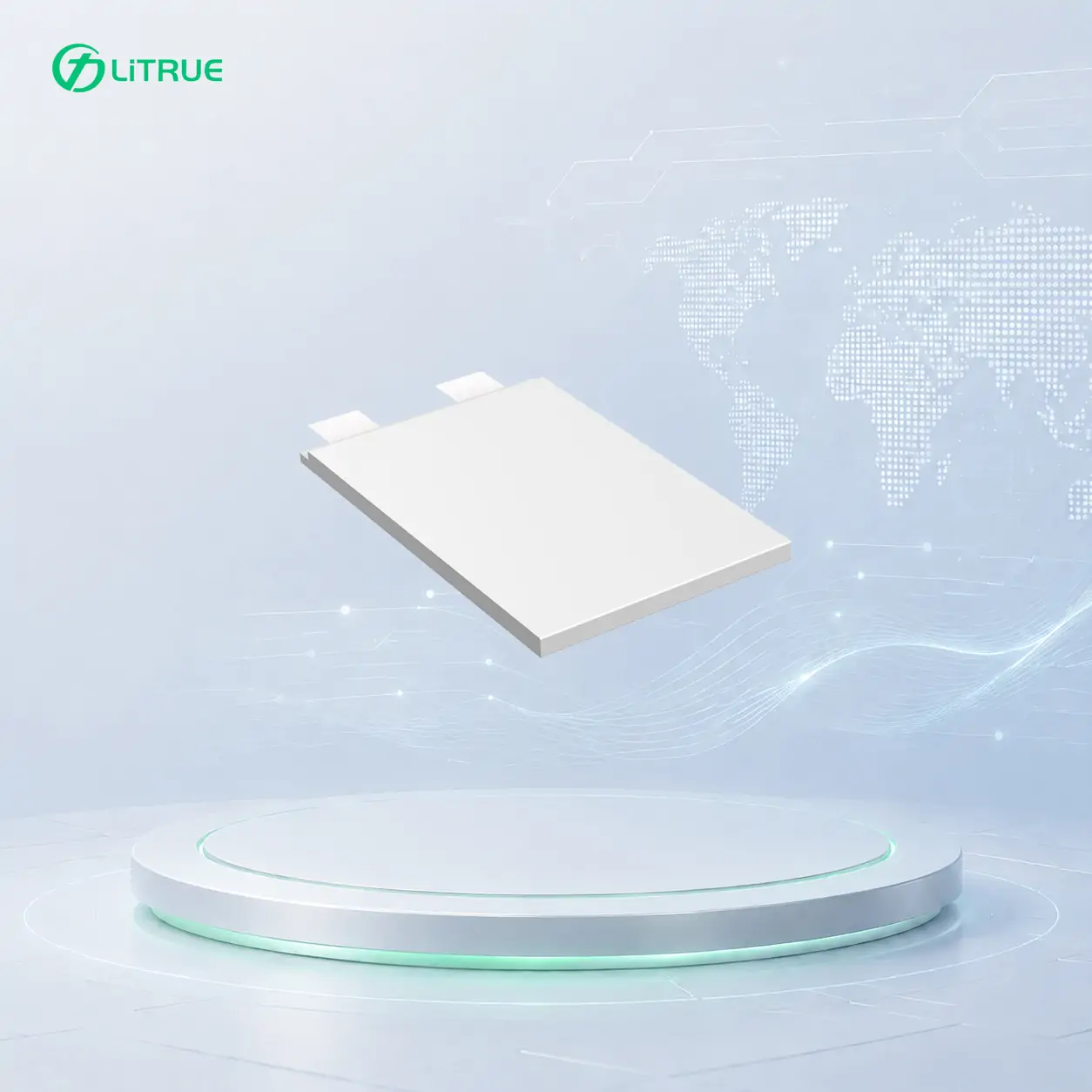
| Field Name | Value |
|---|---|
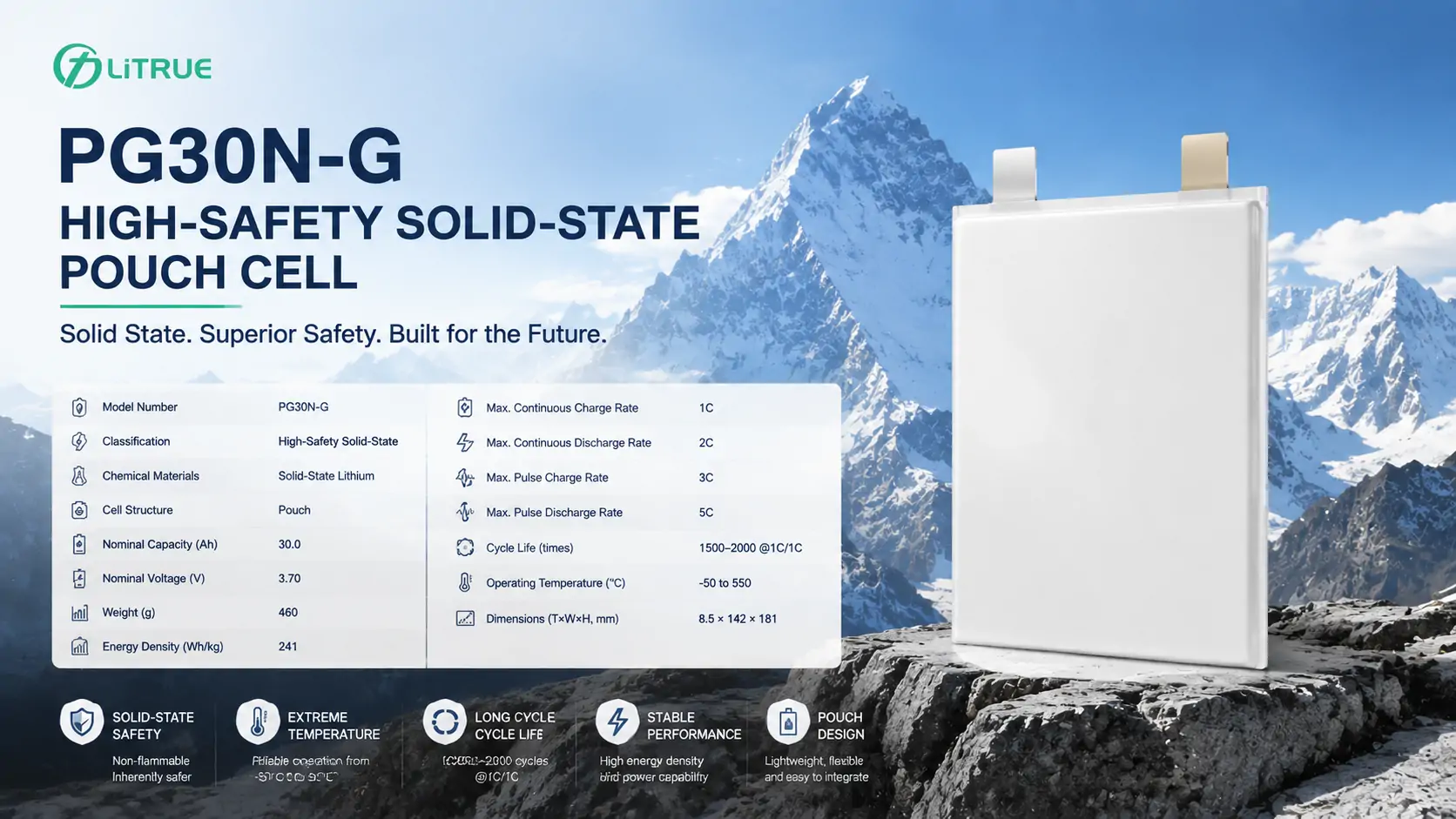
| Model Number | PG30N-G |
| Classification | High-Safety Solid-State |
| Chemical Materials | Solid-State Lithium |
| Cell Structure | Pouch |
| Nominal Capacity (Ah) | 30.0 |
| Nominal Voltage (V) | 3.70 |
| Weight (g) | 460 |
| Energy Density (Wh/kg) | 241 |
| Max. Continuous Charge Rate | 1C |
| Max. Continuous Discharge Rate | 2C |
| Max. Pulse Charge Rate | 3C |
| Max. Pulse Discharge Rate | 5C |
| Cycle Life (times) | 1500–2000 @1C/1C |
| Operating Temperature (°C) | -50 to 55 |
| Dimensions (T×W×H, mm) | 8.5 × 142 × 181 |
| Sample MOQ | 10 pcs (Negotiable) |
| Sample Lead Time | 7–15 working days |
| Bulk Lead Time | 45 days (subject to volume & requirements) |
Other Cells in the High-Safety Solid-State Series
| Model | Dimensions (T×W×H, mm) | Capacity (Ah) | Voltage (V) | Weight (g) | Energy Density (Wh/kg) | Max Continuous C/D | Max Pulse C/D | Operating Temp |
|---|---|---|---|---|---|---|---|---|
| PG30N-G | 8.5×142×181 | 30 | 3.70 | 460 | 241 | 1C/2C | 3C/5C | -50℃~55℃ |
| PG35N-G1 | 8.3×142×181 | 35 | 3.70 | 465 | 280 | 1C/2C | 3C/5C | -50℃~55℃ |
Solution
Most lithium cells rated for sub-zero operation trade away capacity to get there. Liquid electrolyte thickens as temperature drops, internal resistance climbs, and by the time you're at -30°C the usable energy has already collapsed — long before the datasheet's "operating range" runs out. Push into thermal abuse territory instead, and the same liquid electrolyte becomes the failure path for thermal runaway, which is exactly why so many integrators end up over-engineering enclosures and BMS protection just to compensate for the cell itself.
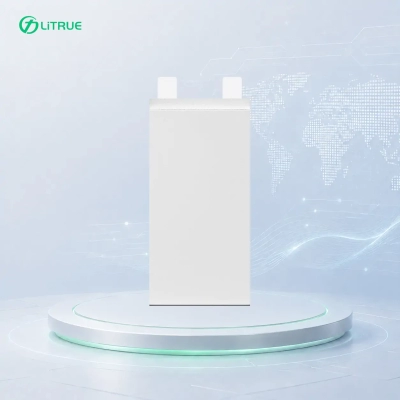
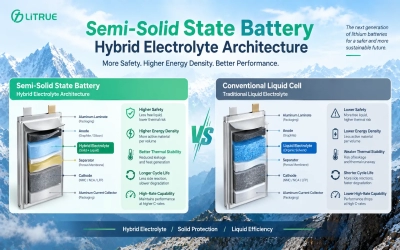
PG30N-G takes a different approach on both fronts. As a solid-state pouch cell, it replaces the flammable liquid electrolyte with a solid-state structure that is inherently more resistant to internal short-circuit propagation and thermal runaway, while still holding a genuinely high 241Wh/kg energy density — not a number that only holds at room temperature. The -50℃ to 55℃ operating window is the same cell across that entire range, not a derated "survival" spec at the cold end. See LiTrue's full range of high-safety and solid-state battery cells for the rest of this lineup.
It's worth being direct about the trade-off: at 1C/2C continuous and 3C/5C pulse, this is not a high-rate power cell. If your application is dominated by hard current pulls rather than safety and cold-weather reliability, a different cell in LiTrue's catalog will serve you better.
Application Areas
- Polar & High-Altitude UAVs: maintains usable capacity down to -50°C, where standard liquid-electrolyte cells have already fallen off the discharge curve.
- Medical & Wearable Devices: the solid-state structure reduces the risk profile around thermal events, which matters when the pack sits close to a person.
- Cold-Chain & Field Sensing Equipment: stays operational through outdoor winter deployments without supplemental heating circuitry.
- Robotics & AGVs in Confined Spaces: the improved safety margin lowers the consequence of a mechanical impact or puncture during operation.
- Aerospace & Defense Ground Equipment: wide -50℃~55℃ range covers extreme-climate deployment without a separate cold-weather cell variant.
FAQs
What makes a solid-state cell safer than a standard lithium pouch cell?
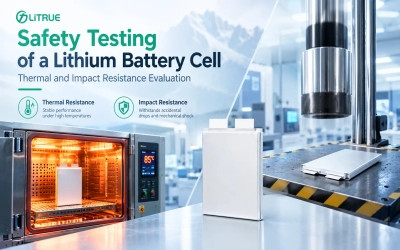
The solid-state electrolyte structure is inherently less prone to the internal short-circuit and thermal runaway pathways that liquid electrolytes are vulnerable to under puncture, overcharge, or thermal abuse. This is the core design intent behind the whole PG-Series — confirm applicable third-party safety test results with LiTrue's engineering team for your specific compliance requirements.
Does the PG30N-G really deliver full capacity at -50°C?
The -50℃ to 55℃ range in the spec table is the rated operating window for the cell as built. Actual usable capacity at the extreme low end will still depend on discharge rate and pack-level thermal management — LiTrue's applications team can advise on system-level design for deep cold-climate deployments.
How does PG30N-G compare to PG35N-G1 in the same series?
They share the same voltage, chemistry, and rate class. PG35N-G1 steps up to 35Ah and 280Wh/kg in a very similar footprint (8.3×142×181mm vs. 8.5×142×181mm), so it's the natural next size up when a project needs more capacity without changing pack architecture.
What pack voltage can I build with the PG30N-G?
At 3.70V nominal, standard series counts map onto common system rails — for example, a 14S string lands near 51.8V. LiTrue can configure series-parallel arrangements to match your target pack voltage and capacity.
Can I get samples, and what's the MOQ?
Sample quantities are typically available for engineering qualification, with production MOQs depending on configuration. Reach out to LiTrue's applications team to scope your project.