
what you'll find in this battery shop guide
Sourcing batteries at scale is rarely straightforward. Whether you are specifying cells for a new drone platform, scaling production for an electric motorcycle line, or engineering a grid-scale BESS installation, the questions that arise at every stage of procurement are remarkably consistent: which chemistry fits the application, what specifications actually matter, and how do you find a supplier you can trust?
At LiTrue, our analysis shows that the majority of OEM procurement delays stem not from supply constraints but from specification uncertainty early in the sourcing process. Engineers and purchasing teams often arrive at the battery shop stage without a clear framework for evaluating cell options, which creates costly back-and-forth and missed production windows.

This guide is built to close that gap.
What this guide covers
Across nine focused sections, you will find direct answers to the most common battery shop questions facing manufacturers and OEMs today, including:
- Battery types and technologies: NMC pouch, LFP prismatic, semi-solid state, and anode-free solid-state cells compared
- Key specifications: energy density, C-rate, cycle life, and what each means for your application
- Procurement fundamentals: MOQs, lead times, custom configurations, and OEM factory-direct sourcing
- Quality and compliance: certifications, testing standards, and what to verify before committing to a supplier
Who this guide is for
This resource is written specifically for drone manufacturers, electric motorcycle brands, BESS providers, logistics equipment manufacturers, and automotive OEMs who need precise, actionable sourcing information rather than general consumer battery advice. Reviewing our comprehensive catalog of industrial battery solutions provides an immediate overview of available architectures.
Battery types and technologies: understanding your options
Every battery shop stocks multiple chemistries, formats, and performance tiers. Understanding the core differences between lithium-ion, LFP, and solid-state technologies is the foundation of any smart procurement decision. The right chemistry depends on your application's energy density requirements, operating environment, and discharge rate demands.
Lithium-ion NMC: high energy density and fast-discharge capability
NMC (nickel manganese cobalt) pouch cells are the dominant choice for applications where energy density and power output take priority. Cells like the 30Ah NMC pouch cell with 5C fast charging and the 50Ah high-rate NMC pouch cell are engineered specifically for demanding discharge profiles in drones, electric motorcycles, and industrial equipment.
Key performance characteristics of NMC pouch cells:
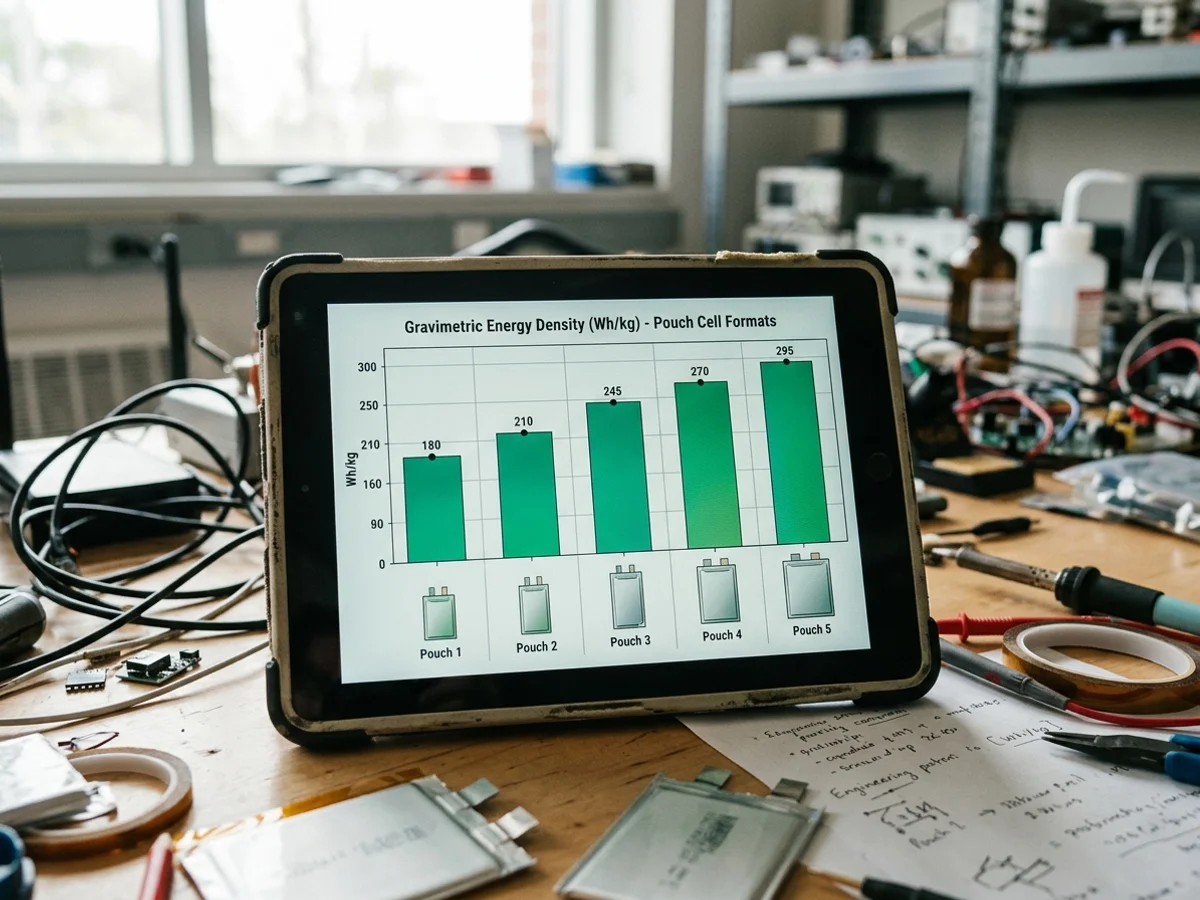
- Energy density: typically 250-300 Wh/kg at cell level for standard NMC
- Discharge rates: high C-rate variants support 5C continuous and 8C pulse discharge
- Operating temperature: generally effective between -20°C and 60°C
- Format advantage: pouch construction reduces dead weight and allows flexible pack integration
LFP: thermal stability for stationary and high-cycle applications
Lithium iron phosphate (LFP) chemistry trades some energy density for significantly improved thermal stability and cycle life. The 100Ah high C-rate LFP prismatic battery cell is well suited to BESS deployments and logistics equipment where longevity and safety under sustained load matter more than weight savings.
LFP cells operate reliably across wide temperature ranges and are a preferred choice for stationary systems where thermal runaway risk must be minimized. Exploring our complete lineup of lithium battery cells helps compare pouch and prismatic formats across chemistries.
Solid-state and anode-free: the performance frontier
Solid-state anode-free technology represents the most significant leap in cell-level energy density currently available to OEM buyers. Cells including the 49Ah 495Wh/kg solid-state anode-free cell, the 40Ah solid-state anode-free cell, and the 25Ah 480Wh/kg anode-free solid-state cell deliver energy densities that conventional NMC cannot approach.
Core advantages of anode-free solid-state cells:
- No graphite anode: eliminates a major source of weight and volume
- Higher energy density: up to 495 Wh/kg at cell level
- Improved safety profile: solid electrolyte reduces flammability risk
- Automotive and aerospace relevance: ideal for weight-critical OEM platforms
The 36Ah semi-solid state NMC pouch cell and 42Ah ultra-high energy density solid-state cell occupy a practical middle ground, offering elevated energy density with manufacturing processes closer to conventional pouch cell production.
Selecting the right battery for your application
Choosing the right cell comes down to matching three core parameters, capacity, voltage, and discharge rate, to your application's actual load profile. Getting this wrong at the design stage costs time, money, and in weight-critical platforms, performance.
How to match capacity and voltage to your needs
Capacity (Ah) determines how long your system runs between charges. Voltage determines pack architecture and motor or inverter compatibility. For drone manufacturers and electric motorcycle brands, both figures directly affect flight time, range, and power delivery.
A useful starting framework:
- Define your energy budget in watt-hours (Wh = Ah × V)
- Map your peak and continuous discharge requirements before selecting cell chemistry
- Account for depth of discharge limits, most lithium cells perform best between 20% and 80% state of charge
Understanding C-rate and fast-charging capabilities
C-rate expresses how quickly a cell can be charged or discharged relative to its capacity. A 1C rate discharges a 30Ah cell in one hour. A 5C rate does it in 12 minutes.
For logistics equipment, industrial vehicles, and BESS applications with tight turnaround windows, high C-rate capability is a practical requirement, not a premium feature. Engineering teams can also explore specialized modules like the 17.5Ah 6C/20C high C-rate LFP pouch cell for high-frequency burst demands.
Energy density requirements by industry
Different industries prioritize different trade-offs:
- Drone and aerospace OEMs: maximum energy density per kilogram to maximize aloft duration.
- BESS and grid storage providers: cycle life and cost per kWh matter more than weight.
- Electric motorcycles and automotive OEMs: a balance of energy density, thermal stability, and pack integration flexibility.
Cost-performance trade-offs
Higher energy density cells carry higher per-cell costs. For volume OEM programs, direct manufacturer relationships offer tiered pricing structures that reduce total pack cost without sacrificing gravimetric performance. Hardware architects can read our latest battery technology blog for in-depth economic comparisons across cell chemistries.
Battery specifications and performance metrics
Understanding battery specifications lets procurement teams and engineers compare cells objectively across suppliers. The metrics below directly affect pack design, system integration, and long-term operational costs for drone platforms, electric motorcycles, BESS installations, and industrial equipment.
What Wh/kg energy density means for your application
Gravimetric energy density, expressed in watt-hours per kilogram, tells you how much usable energy a cell stores relative to its weight. For weight-critical applications like UAVs and electric motorcycles, higher Wh/kg directly extends range or payload capacity.
Continuous versus pulse discharge capabilities
Continuous C-rate defines the sustained current a cell can deliver without thermal runaway or accelerated degradation. Pulse C-rate covers short-duration bursts, which matter for motor startups, regenerative braking, and peak-demand events. Always request both figures from your supplier, not just one.
Cycle life and longevity expectations
Cycle life is typically quoted at 80% depth of discharge to a defined capacity retention threshold, often 80% of initial capacity. Semi-solid and solid-state chemistries generally outperform conventional liquid-electrolyte NMC on cycle count, which reduces total cost of ownership for BESS and logistics applications.
Temperature operating ranges and thermal management
Most lithium pouch cells operate between -20°C and 60°C, but usable capacity narrows at temperature extremes. Pack designers operating in volatile climates often utilize specialized cells such as low-temperature LFP pouch cells or high-temperature LFP cells to protect longevity without over-engineering active cooling systems.
Safety certifications and compliance standards
Reputable battery shops supply cells with documented certifications including UN 38.3 for transport, IEC 62133 for portable applications, and UL 1973 for stationary storage. Request full test reports, not just certificate numbers, before committing to volume orders.
Sourcing and procurement from battery shops
Evaluating a battery shop supplier requires more than comparing price per cell. B2B buyers should assess manufacturing credentials, quality documentation, customization capability, and supply chain reliability before committing to a vendor relationship. The right supplier functions as a technical partner, not just a parts vendor.
How to evaluate battery shop suppliers
Look beyond the product listing and examine the supplier's underlying capabilities:
- Manufacturing certifications: ISO 9001, IATF 16949 for automotive-grade processes, and ISO 14001 for environmental compliance
- Sample and prototype support: Can the supplier provide pre-production samples with full test data?
- Engineering responsiveness: A qualified supplier answers specification questions with data, not marketing language
- Reference customers: Established battery shops serving drone manufacturers, BESS integrators, or automotive OEMs will have verifiable delivery histories
OEM factory direct sourcing advantages
Sourcing factory direct eliminates distributor markups, shortens the communication chain for custom specifications, and gives buyers direct access to production engineers. For high-stakes applications such as electric motorcycles or industrial logistics equipment, this direct relationship is critical when tolerances need adjusting mid-production run. Reviewing verified OEM client case studies illustrates how direct factory collaboration accelerates project timelines.
Bulk ordering and volume pricing considerations
Volume pricing typically activates at defined MOQ thresholds. Buyers should negotiate:
- Tiered pricing across multiple order volumes
- Blanket purchase orders with scheduled releases to manage cash flow
- Consignment or buffer stock arrangements for high-velocity SKUs
Lead times and inventory management
Standard lead times at reputable battery shops range from four to twelve weeks depending on cell chemistry and customization depth. Plan safety stock based on your production cycle, not just average demand. Staying informed through industry-focused battery manufacturing news helps teams anticipate raw material supply constraints.
Quality assurance and testing standards
Request incoming inspection reports, formation data, and capacity grading documentation for every batch. Sourced cells should arrive with traceable lot-level electrochemical data confirming they meet published specification sheets.
Battery maintenance and optimization
Proper maintenance directly determines how many usable cycles you extract from any cell chemistry. For OEMs working with high-value formats like solid-state or high-rate NMC pouch cells, disciplined storage, monitoring, and temperature control are not optional extras. They protect your capital investment and your end-product reliability.
Proper storage conditions for different battery types
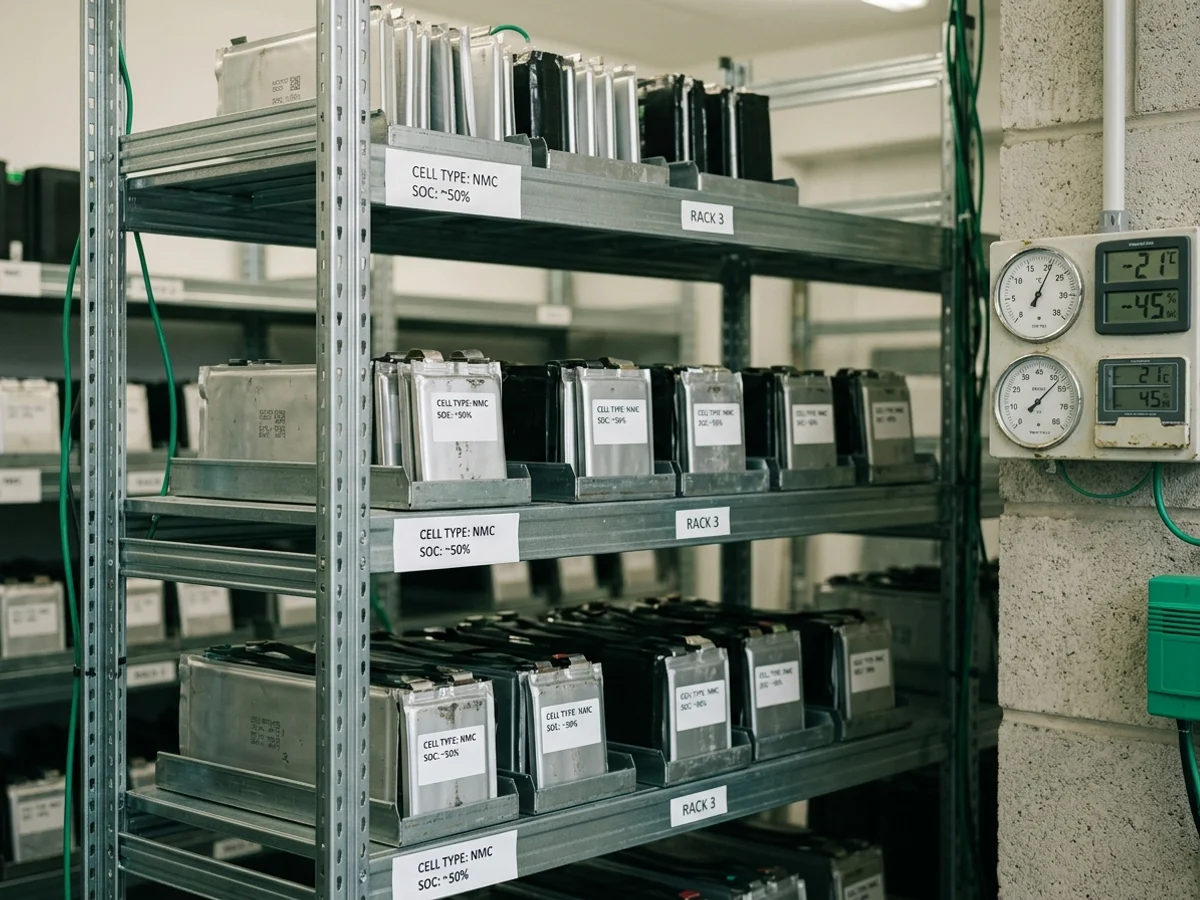
Store lithium cells at 40 to 60 percent state of charge when not in active use. Keep storage environments between 15°C and 25°C with controlled humidity below 60 percent RH. LFP prismatic cells tolerate slightly wider temperature ranges than NMC chemistries, but neither should experience repeated thermal cycling during storage.
Extending battery cycle life and performance
- Avoid full charge and full discharge cycles where your application permits. Keeping NMC cells between 20 and 80 percent SOC meaningfully extends calendar life.
- Match charge rates to cell ratings. High-rate cells are engineered for aggressive duty cycles, but sustained overcharge still degrades them.
- Balance packs regularly to prevent cell-level divergence within multi-cell modules.
Monitoring and diagnostics for battery health
Implement cell-level voltage and impedance tracking through your BMS. Rising internal resistance is the earliest reliable indicator of capacity fade. Log formation baseline data from your supplier, then compare periodic impedance measurements against that reference to catch degradation before it affects system performance.
Temperature management best practices
Keep cells within their rated operating window during charge and discharge. For drone and EV motorcycle applications, active thermal management between 20°C and 35°C preserves both peak power delivery and long-term capacity retention. Avoid charging any lithium chemistry below 0°C without a dedicated low-temperature charge algorithm.
When to replace versus repair batteries
Replace cells when capacity falls below 80 percent of rated capacity, when impedance has risen more than 20 percent above the formation baseline, or when any cell shows voltage divergence exceeding 50mV under load. Pack-level repair is viable for modular BESS configurations where individual cells are accessible. For sealed drone or motorcycle packs, full pack replacement is typically the safer and more cost-effective path.
Industry-specific battery solutions
Different industries impose radically different demands on battery chemistry, form factor, and cycle life. A drone pack optimized for gravimetric energy density would be entirely wrong for a grid-scale BESS, and an automotive OEM cell spec rarely translates directly to industrial logistics equipment.
Drone and UAV battery requirements
UAV applications prioritize energy density and weight above almost everything else. Cells must deliver high pulse discharge rates while keeping pack mass low enough to preserve payload and flight time. Turnkey assemblies such as the 51.8V 28Ah high-discharge NMC drone battery or the specialized 51.8V 28Ah agriculture drone battery provide pre-configured industrial power systems for commercial flight operations.
Electric motorcycle and vehicle applications
Electric two-wheelers and light EVs need cells that balance energy density with thermal stability across variable ambient conditions. Pre-integrated systems like the 74V 48Ah NMC e-motorcycle battery pack or the ruggedized 73.6V 48Ah LFP IP67 battery pack serve builders requiring proven, plug-and-play powertrains.
Energy storage systems for grid and backup
BESS deployments prioritize cycle life, round-trip efficiency, and thermal management over raw energy density. High-capacity LFP prismatic cells remain the industry standard here, offering stable chemistry, long calendar life, and tolerance for partial state-of-charge operation.
Logistics and industrial equipment
Forklifts, AGVs, and warehouse robots need robust cells that handle deep daily cycling and opportunity charging. High-capacity LFP formats with strong C-rate tolerance represent the default choice for this sector.
Automotive OEM battery specifications
OEM programs require cells with validated formation data, tight capacity grading, and traceable quality documentation. For developers designing complete vehicle electrical architectures, sourcing integrated custom lithium battery packs ensures optimized mechanical and electrical integration from prototype to mass production.
Related questions and deeper resources
This section connects you to technical documentation, selection tools, and consultation pathways for deeper research across every battery shop topic covered above.
Technical specifications and datasheets
Full cell-level specifications, including capacity grading tolerances, formation data, and cycle-life curves, are available directly through published manufacturer resources.
Application-specific guides
Detailed guides covering drone endurance optimization, electric motorcycle pack architecture, BESS integration, and industrial equipment duty cycles provide structural guidance during system modeling.
Selection and comparison tools
Comparing key metrics across formats remains essential:
- Energy density (Wh/kg) across solid-state and NMC pouch lines
- C-rate capability for fast-charge and high-pulse applications
- Format compatibility for prismatic versus pouch integration
Consultation and OEM support
To evaluate custom cell geometries, request production lot data, or learn more about our manufacturing background, engaging directly with factory engineers streamlines validation.
Faqs
What is the difference between solid-state and traditional lithium-ion batteries?
Solid-state batteries replace the liquid electrolyte with a solid material, eliminating many of the thermal runaway risks associated with conventional lithium-ion cells. This design also enables higher energy densities, reaching performance levels that liquid-electrolyte designs cannot match.
How do I choose the right battery capacity for my application?
Start by calculating your total energy requirement in watt-hours, then factor in depth of discharge limits, operating temperature, and peak current draw. Matching capacity to your actual load profile prevents both under-sizing and unnecessary weight penalties.
What does C-rate mean and why does it matter?
C-rate expresses how quickly a battery charges or discharges relative to its total capacity. A 5C discharge on a 30Ah cell delivers 150A continuously, so selecting the correct C-rate rating is critical for applications like drones or industrial equipment with high instantaneous power demands.
What is energy density and how does it affect battery performance?
Energy density, measured in Wh/kg or Wh/L, determines how much energy a battery stores per unit of weight or volume. Higher energy density directly reduces system weight, which is especially important for UAVs, electric motorcycles, and portable industrial tools.
How long do industrial batteries typically last?
Cycle life varies significantly by chemistry and operating conditions. LFP prismatic cells typically deliver 2,000 to 4,000 cycles, while NMC pouch cells commonly range from 500 to 1,500 cycles depending on depth of discharge and thermal management quality.
What temperature ranges can different batteries operate in?
Most lithium-ion chemistries operate between -20°C and 60°C, though optimal performance occurs in the 15°C to 35°C range. Solid-state designs generally offer improved stability at temperature extremes compared to liquid-electrolyte alternatives.
How do I calculate the total energy storage I need?
Multiply your average power draw (watts) by the required runtime (hours) to get watt-hours. Add a 20 to 30 percent buffer to account for depth-of-discharge limits, efficiency losses, and degradation over the battery's service life.
What is the difference between continuous and pulse discharge?
Continuous discharge refers to a steady, sustained current draw over an extended period. Pulse discharge involves short, high-current bursts, which is common in robotics and power tools. High-rate cells are specifically engineered to handle these peak demands without voltage sag.
Can I use consumer batteries for industrial applications?
Consumer batteries are not designed for the cycle life, thermal management, or certification requirements that industrial applications demand. OEM-grade cells with documented specifications and traceability are strongly recommended for any professional or safety-critical deployment.
What certifications should I look for in a battery shop?
Prioritize suppliers offering UN38.3 transport certification, IEC 62133 safety compliance, and UL or CE marks where applicable. For automotive and aerospace applications, IATF 16949 and DO-160 compliance may also be required.
How do anode-free batteries improve performance?
Anode-free designs eliminate the graphite or silicon anode layer, replacing it with lithium metal deposited directly during charging. This reduces cell weight and volume, enabling exceptional gravimetric energy density up to 495Wh/kg.
What is the advantage of semi-solid state batteries?
Semi-solid state cells use a gel-like or polymer electrolyte that improves safety and energy density compared to fully liquid designs, while remaining more manufacturable at scale than fully solid-state cells. For volume pricing, sampling requests, or specific application engineering, contact our battery engineering desk to speak with a technical representative.