
why seek AirTag battery replacement alternatives?
Apple's AirTag is a remarkably capable tracking device, but its reliance on a single CR2032 coin cell creates a recurring maintenance burden that consumer users tolerate and enterprise users cannot afford to ignore. At LiTrue, our analysis shows that the moment tracking technology moves from a personal keychain into a fleet, a logistics network, or an industrial asset management system, the economics and performance demands of disposable coin cells break down entirely.
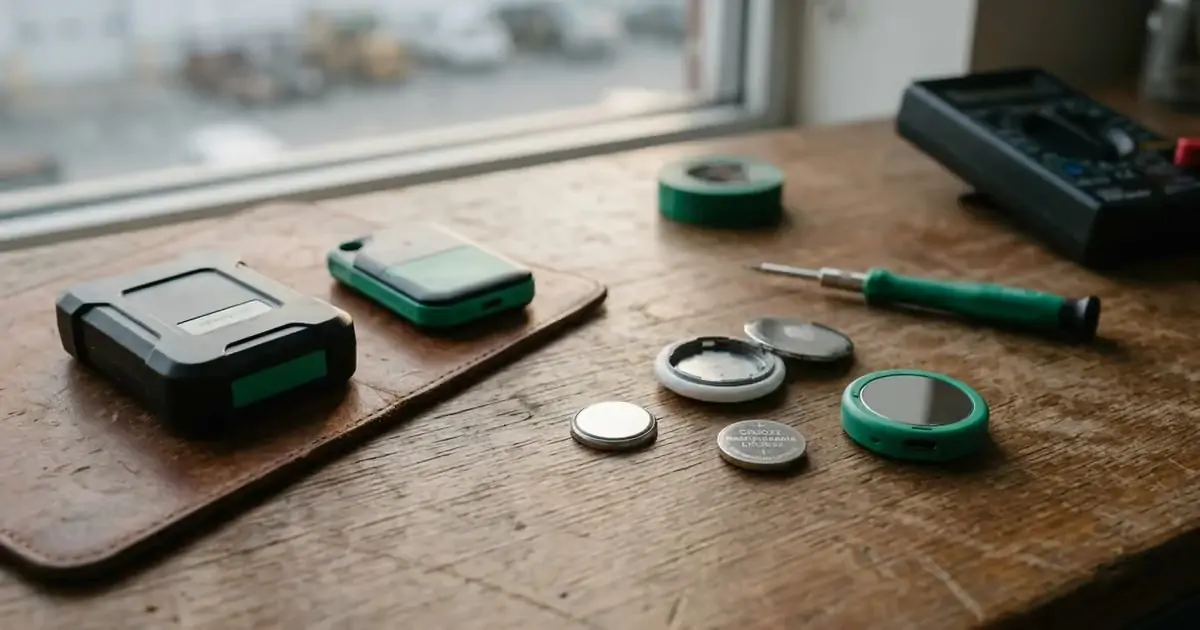
The disposable CR2032 problem at scale
A standard CR2032 cell powers an AirTag for roughly one year under typical use. For an individual user, that means one battery swap per year. For a logistics operator managing hundreds of tracked pallets, vehicles, or high-value assets, that same cycle translates into thousands of replacement events annually, each carrying procurement costs, labor time, and the very real risk of a tracker going dark mid-shipment because a battery was missed.
Total cost of ownership for enterprise and fleet users
Disposable batteries carry a deceptively low unit price that masks their true total cost of ownership. Procurement, inventory management, technician labor, and unplanned downtime all compound over time. Rechargeable lithium solutions, particularly LFP chemistry with its well-documented cycle life advantages and lower long-term cost per kilowatt-hour, offer a structurally different economic model. Research suggests that switching to integrated rechargeable battery packs can reduce tracking-related operational costs significantly over a three to five year horizon.
Why OEMs and industrial users need something different
Drone manufacturers, automotive OEMs, and industrial equipment builders are not looking for a better coin cell. They need tracking and power solutions engineered for extreme temperatures, high vibration environments, and continuous duty cycles. Consumer-grade CR2032 cells simply were not designed for these conditions. The alternatives explored in this article range from enhanced CR2032 options for everyday users all the way to integrated lithium pouch and prismatic cells suited for demanding OEM applications.
Quick comparison table: AirTag battery options at a glance
Choosing the right battery for your AirTag application comes down to four variables: chemistry, upfront cost, operational lifespan, and the environment the cell must survive. The table below maps every major option covered in this article so you can identify the best fit before reading further.
| Battery option | Chemistry | Approx. cost | Lifespan | Best use case |
|---|---|---|---|---|
| Standard CR2032 | Lithium manganese dioxide | $0.50–$2 | 6–12 months | Everyday consumer tracking |
| Premium CR2032 (branded) | Lithium manganese dioxide | $2–$5 | 10–14 months | Moderate-duty personal use |
| Rechargeable CR2032 | LFP variants | $5–$15 + charger | 300–500 cycles | Frequent replacement scenarios |
| NMC pouch cell (integrated) | NMC | OEM pricing | 2–5 years | Drone, EV, industrial asset tracking |
| LFP prismatic cell (integrated) | LFP | OEM pricing | 3,000+ cycles | BESS, logistics, automotive OEM |
Key trade-offs to understand at a glance:
- Disposable CR2032 cells keep costs low but generate recurring replacement labor, particularly problematic at fleet scale.
- Rechargeable options reduce waste but introduce charging infrastructure requirements.
- Integrated NMC and LFP cells deliver the cycle life and thermal resilience that industrial deployments demand, making them the logical choice for teams evaluating industrial lithium battery solutions.
Why look for AirTag battery alternatives?
The standard CR2032 coin cell that ships with every AirTag is a practical choice for casual personal use, but it falls short the moment tracking requirements scale up, move into demanding environments, or intersect with corporate sustainability targets. Understanding exactly where the default solution breaks down helps procurement teams and engineers make a more informed case for alternatives.
Recurring costs and waste at fleet scale
A single CR2032 replacement costs relatively little in isolation. Multiply that across hundreds or thousands of tracked assets, add the labor time required to locate, open, and service each device, and the economics shift quickly. Research suggests the global li-ion battery market is expanding at a strong CAGR, partly because organizations are actively replacing single-use chemistries with rechargeable solutions that reduce both operational overhead and landfill contribution. For logistics operators and industrial equipment manufacturers already managing large asset pools, disposable cells represent a hidden but persistent cost center.
Extreme environments expose the limits of standard coin cells
CR2032 cells are rated for a relatively narrow temperature window. Drone platforms operating at altitude, electric motorcycles exposed to vibration and heat cycles, and outdoor BESS installations in cold climates all push beyond what a standard coin cell can reliably deliver. Capacity drops sharply at low temperatures, internal resistance rises under vibration, and seal integrity can degrade in high-humidity industrial settings. Specially engineered lithium battery cells address these mechanical and thermal stressors directly through robust casings and stable electrolyte matrices.
Sustainability mandates and total cost of ownership
Automotive OEMs and energy storage providers increasingly operate under formal environmental commitments that make single-use battery consumption a compliance concern, not just a preference. Rechargeable lithium cells with cycle lives measured in the hundreds or thousands of charge-discharge cycles dramatically reduce per-cycle material consumption. When total cost of ownership is calculated across a multi-year deployment, the upfront premium of a high-cycle cell is typically recovered well before the midpoint of its service life. With lithium production heavily concentrated in Asia-Pacific, supply chain resilience also favors solutions that extend cell longevity rather than requiring constant replenishment.
LiTrue: enterprise-grade rechargeable lithium cells for asset tracking
For enterprise operations where disposable CR2032 cells simply cannot meet scale, cycle life, or environmental demands, LiTrue offers a direct OEM alternative built around rechargeable solid-state and semi-solid-state lithium chemistry. Rather than replacing individual tracker batteries every few months, fleet operators can integrate LiTrue cells into custom asset-tracking hardware designed for years of continuous service.
Solid-state energy density that redefines tracker endurance
LiTrue's flagship solid-state anode-free cells achieve 495Wh/kg energy density, a figure that fundamentally changes the calculus for miniaturized tracking devices. The 49Ah 495Wh/kg solid-state anode-free cell and the 40Ah solid-state anode-free cell deliver high energy density in compact form factors, giving hardware engineers flexibility without compromising performance. The 42Ah ultra-high energy density solid-state cell and the 25Ah 480Wh/kg anode-free solid-state cell round out the portfolio for applications where pack volume is tightly constrained.
At these energy densities, a tracker module that previously required weekly battery swaps can realistically operate for months between charges, or indefinitely when paired with energy harvesting.
Operating range built for real-world deployment conditions
Standard CR2032 cells begin losing capacity noticeably below 0°C and can fail entirely in sub-freezing logistics environments. LiTrue cells are rated for operation across -43°C to 55°C, covering cold-chain freight, outdoor industrial equipment, and high-temperature automotive compartments within a single cell specification. For drone manufacturers and logistics equipment providers operating across diverse geographies, this thermal window eliminates the need for separate regional battery SKUs.
NMC and LFP chemistry options for different mission profiles
Not every asset-tracking deployment has the same priority. LiTrue addresses this with two distinct chemistry families:
- NMC cells prioritize energy density and high-rate discharge. The 36Ah semi-solid state NMC pouch cell, the 30Ah NMC pouch cell with 5C fast-charging, and the 50Ah high-rate NMC pouch cell suit applications where compact size and rapid charge acceptance matter most.
- LFP cells prioritize cycle life and thermal stability. The 100Ah high C-rate LFP prismatic battery cell delivers long cycle life and thermal stability for heavy-duty asset monitoring and stationary deployments.
Tile: consumer-friendly alternative with longer battery life
Tile trackers offer a compelling air tag battery replacement consideration for consumers who want flexibility beyond Apple's ecosystem. Most Tile models run on standard CR2032 batteries, making replacements straightforward and inexpensive. For budget-conscious buyers, Tile presents a genuinely competitive option worth evaluating on its own merits.
Battery life and replacement frequency
Tile's flagship models advertise up to 12 months of battery life on a single CR2032 cell, placing them on par with AirTag's rated lifespan. In practice, replacement frequency depends heavily on how often the tracker is actively pinged and the ambient temperature of its operating environment. Consumer battery replacement data suggests that real-world usage typically pushes replacements to every 10 to 14 months, consistent with manufacturer estimates for both platforms.
The CR2032 format is universally available at hardware stores, pharmacies, and online retailers, often at a fraction of the cost of specialty cells. A pack of ten CR2032 batteries typically costs under five dollars, making ongoing maintenance negligible.
Range and pricing advantages
Certain Tile models, particularly the Tile Pro, advertise a Bluetooth range of up to 400 feet, which exceeds AirTag's stated 100-foot range under ideal conditions. For industrial or logistics environments where assets move across large floor spaces, this extended range can meaningfully reduce missed pings.
On price, Tile units generally retail below AirTag, with entry-level models available at roughly half the cost. For organizations tracking high volumes of lower-value assets, that per-unit saving compounds quickly across a deployment.
Network limitations to consider
Where Tile falls short is network density. Apple's Find My network draws on hundreds of millions of active iPhone devices, creating a near-ubiquitous detection grid. Tile's community-driven network is smaller and less evenly distributed, which can reduce location accuracy in rural or less populated areas.
Bottom line: For most budget-conscious consumers, Tile is a practical alternative when ecosystem lock-in is not a priority. However, choose AirTag if dense network coverage and seamless iPhone integration are non-negotiable requirements.
Samsung SmartTag 2: integrated tracking with ecosystem lock-in
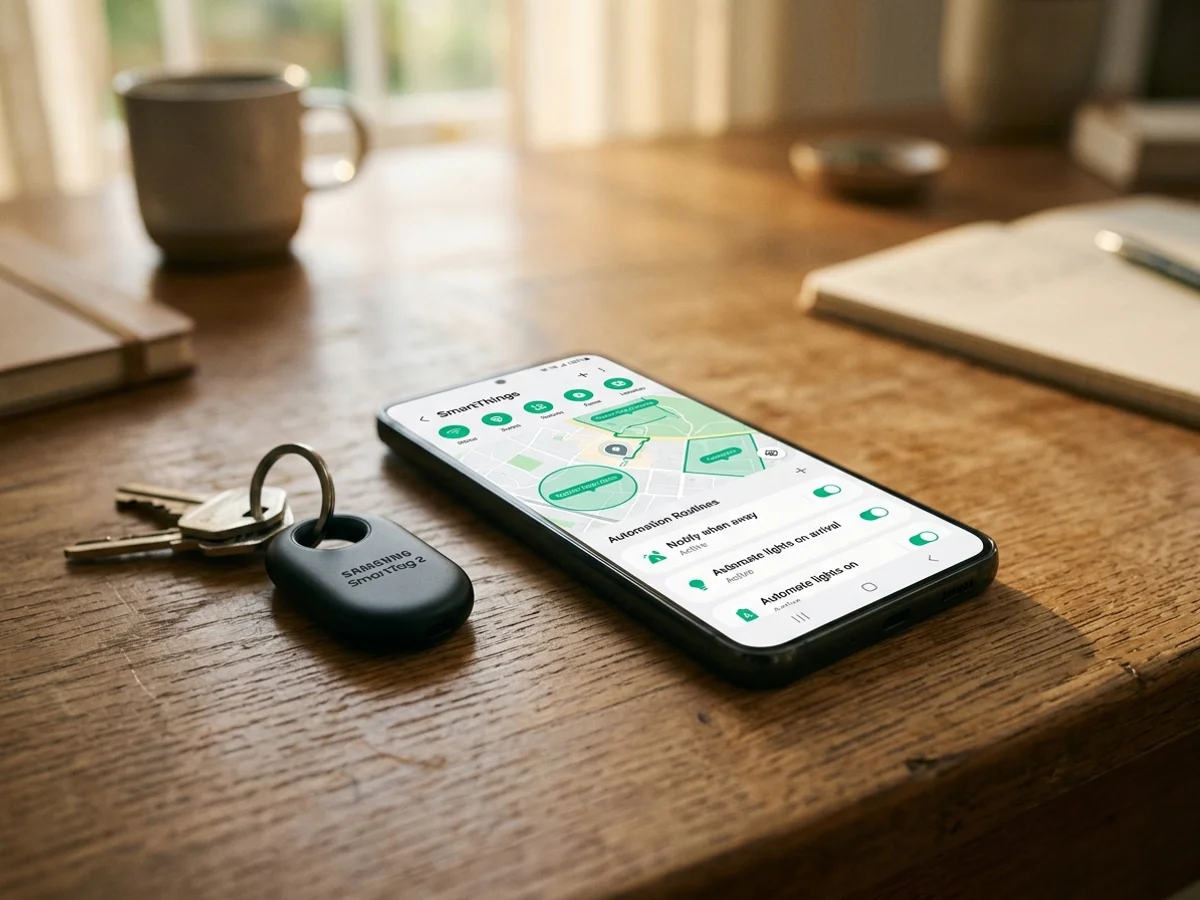
For users already embedded in the Samsung ecosystem, the SmartTag 2 offers a compelling tracking solution that goes beyond simple location awareness. It integrates directly with Samsung SmartThings, enabling automation routines, device pairing, and centralized control that Apple's AirTag and Tile cannot replicate within that environment.
SmartThings ecosystem integration
The SmartTag 2 is purpose-built for Samsung's connected device framework. Users can trigger SmartThings automations when a tag enters or leaves a defined zone, link it to smart home devices, and manage everything from a single dashboard. For logistics operators or fleet managers already running Samsung hardware, this level of integration reduces friction and adds operational value that a standalone tracker simply cannot match.
Battery replacement: familiar but not differentiated
Like the AirTag, the SmartTag 2 runs on a CR2032 coin cell battery, with a replacement schedule that follows a broadly similar annual cycle depending on usage intensity. The process is straightforward: open the rear casing, swap the cell, and close. There is no meaningful advantage over AirTag here in terms of air tag battery replacement convenience or cost.
NFC functionality
One area where the SmartTag 2 pulls ahead is its built-in NFC capability. Users can tap the tag against an NFC-enabled device to trigger predefined actions, adding a layer of interactivity that pure Bluetooth trackers lack. This is particularly useful in structured industrial or warehouse environments where quick device pairing or status checks are routine.
Cross-platform limitations
The SmartTag 2's primary weakness is its narrow compatibility. It requires a Samsung Galaxy device running Android 8.0 or later and the SmartThings app. Non-Samsung Android users and iPhone users are effectively excluded, making it a poor choice for mixed-device teams.
Bottom line: For most Samsung-first users, the SmartTag 2 is the best choice because of its deep SmartThings integration and NFC functionality. However, choose AirTag or Tile if your team operates across multiple device platforms.
Rechargeable lithium pack solutions for fleet and industrial use
For fleet operators, drone manufacturers, and industrial equipment brands, coin-cell-dependent trackers like AirTag represent a fundamental mismatch. The real air tag battery replacement conversation at scale is about moving to rechargeable lithium pack architectures that support telemetry, predictive maintenance, and high-rate discharge demands across entire fleets.
Integrated BMS and fleet telemetry
A battery management system embedded at the cell or pack level transforms a passive power source into an active data asset. Rather than waiting for a tracker to go offline, fleet managers receive continuous state-of-health signals, voltage curves, and temperature readings in real time. This matters enormously for logistics fleets operating hundreds of GPS-enabled assets simultaneously.
LFP chemistry delivers cycle life advantages that NMC cannot match in deep-discharge applications, with research suggesting LFP cells routinely exceed 3,000 to 4,000 full cycles before reaching 80% capacity retention. Over a five-year fleet deployment, that translates directly into lower total cost of ownership through fewer cell replacements and reduced maintenance windows.
Reducing truck rolls through predictive maintenance
Unplanned maintenance is one of the largest hidden costs in fleet operations. When battery health data feeds into a predictive maintenance platform, operators can schedule interventions before failures occur, eliminating reactive truck rolls entirely. Hardware leads can explore our battery technology blog to learn how predictive telemetry algorithms are integrated into modern BMS units.
High-energy-density solid-state cells extend service intervals significantly. Longer intervals mean fewer technician dispatches, lower labor costs, and higher asset uptime across the board.
High-rate discharge for drones and e-motorcycles
Consumer trackers are not designed for the discharge profiles that drones and electric motorcycles demand. Industrial-grade pouch cells address this directly, supporting burst discharge rates that consumer-grade coin cells cannot approach without voltage sag or thermal stress.
ESG alignment and sustainability goals
Rechargeable pack solutions reduce battery waste dramatically compared to single-use CR2032 replacement cycles. For OEMs reporting against ESG frameworks, switching from disposable coin cells to long-cycle rechargeable chemistries produces measurable reductions in battery waste volume per asset per year. Solid-state and semi-solid formats further reduce material intensity per watt-hour, supporting both regulatory compliance and corporate sustainability commitments.
Open-source and DIY tracking alternatives
For engineering teams and technically capable operators who need more control over their tracking infrastructure, open-source and DIY approaches offer a compelling alternative to proprietary air tag battery replacement cycles. These solutions trade convenience for flexibility, enabling custom power architectures, communication protocols, and deployment scales that commercial tags simply cannot match.
Arduino-based GPS trackers with custom battery packs
Arduino and ESP32-based GPS tracker builds allow engineers to specify their own battery chemistry, capacity, and form factor from the ground up. Rather than accepting the CR2032 constraint baked into consumer AirTags, a custom build can integrate a lithium pouch cell sized precisely to the enclosure and duty cycle. Power management firmware can be tuned to balance GPS polling intervals against sleep-state current draw, extending operational life significantly on a fixed energy budget. For high-volume deployments across logistics fleets or industrial equipment, the per-unit cost advantage over proprietary trackers compounds quickly.
LoRaWAN solutions for wide-area coverage
LoRaWAN-based trackers operate at extremely low transmit power, making them well suited to battery-constrained designs. The protocol's long-range, low-bandwidth characteristics mean a small lithium cell can sustain months of periodic position reporting. Custom LoRaWAN nodes can be paired with energy-dense pouch cells, allowing designers to optimize the energy-per-gram ratio for the specific asset class being tracked.
Bluetooth beacon implementations with flexible power management
Low-energy Bluetooth beacon builds offer granular control over advertising intervals and transmit power, directly influencing battery longevity.
Trade-offs to consider
- Engineering overhead: All three approaches require embedded systems expertise and ongoing firmware maintenance.
- Scalability cost: Per-unit savings only materialize at meaningful deployment volumes.
- Regulatory compliance: Custom radio hardware must meet regional certification requirements before field deployment.
Enterprise GPS trackers with integrated power systems
For logistics managers and fleet operators who have outgrown the consumer-grade AirTag ecosystem entirely, enterprise GPS trackers with integrated rechargeable batteries represent a fundamentally different class of solution. These devices eliminate the air tag battery replacement cycle altogether by pairing cellular or satellite connectivity with sealed, field-rechargeable power systems. Reviewing our fleet tracking case studies highlights how enterprise operators transition away from consumer hardware.
Garmin inReach and satellite-connected devices
Garmin's inReach series sits at the premium end of the enterprise tracking spectrum. Rather than relying on Bluetooth proximity or crowd-sourced Find My networks, these devices communicate over the Iridium satellite constellation, delivering real-time location data from virtually any point on the planet. The integrated lithium-ion battery is rechargeable via USB and rated for multi-day continuous operation, making it practical for remote asset tracking, expedition logistics, and high-value cargo monitoring.
Other platforms in this category, including dedicated fleet telematics hardware from providers such as Calamp and Samsara, embed similar integrated power management architectures. Many support hardwired vehicle power with internal battery backup, ensuring continuity even when primary power is interrupted.
Power architecture for professional deployments
The defining characteristic of enterprise-grade trackers is their integrated power management system. Rather than a single replaceable coin cell, these devices typically combine:
- Primary rechargeable cells sized for days or weeks of autonomous operation
- Low-power sleep modes that preserve charge between reporting intervals
- Remote configuration of reporting frequency to extend field life on demand
In our experience at LiTrue, the shift toward integrated, high-density power systems mirrors broader enterprise battery demand trends we see across logistics and industrial equipment customers. Operators increasingly specify cells with predictable cycle life and stable chemistry over raw capacity alone.
Cost and application fit
Upfront costs range from several hundred to several thousand dollars per unit, a significant step above consumer trackers. However, for mission-critical applications where asset loss or supply chain disruption carries substantial financial risk, that premium is routinely justified by operational reliability and the elimination of manual battery servicing at scale.
Feature comparison matrix: detailed side-by-side analysis
Choosing the right battery alternative for AirTag replacement or industrial tracking applications requires comparing several technical dimensions simultaneously. The table and analysis below cut through marketing claims to show where each chemistry and format genuinely excels, and where trade-offs demand careful consideration.
Battery type and chemistry
| Format | Chemistry | Nominal voltage | Energy density | Typical cycle life |
|---|---|---|---|---|
| CR2032 (standard AirTag) | Lithium manganese dioxide | 3V | ~270 Wh/kg | Single-use |
| NMC pouch cell | NMC | 3.6–3.7V | Up to 495 Wh/kg | 800–1,500 cycles |
| LFP prismatic cell | LFP | 3.2V | 180–200 Wh/kg | 2,000–4,000 cycles |
| Semi-solid NMC pouch | NMC (semi-solid) | 3.7V | High energy density | 1,000+ cycles |
| Solid-state anode-free | Anode-free solid-state | 3.7–4V | Up to 495 Wh/kg | Emerging, improving |
NMC chemistry dominates applications where gravimetric energy density is the primary constraint, making it the preferred choice for UAV platforms and compact industrial devices. LFP trades lower energy density for substantially longer cycle life and superior thermal stability, a combination that suits stationary BESS deployments and logistics equipment operating in demanding environments.
Cost per year of operation
CR2032 cells cost roughly $0.50–$2.00 each but require replacement every one to twelve months depending on ping frequency, generating recurring labour and material costs at scale. Rechargeable NMC and LFP alternatives carry higher upfront unit costs but spread that investment across hundreds or thousands of cycles. For fleets of fifty or more tracked assets, research suggests rechargeable integrated solutions reduce total battery expenditure by 60–80% over a three-year horizon.
Operating temperature and environmental durability
- CR2032: Rated typically from -20°C to +60°C, adequate for most indoor logistics
- NMC pouch cells: Perform well from -20°C to +55°C under standard conditions
- LFP prismatic cells: Broader thermal tolerance, with stable discharge down to -30°C in optimised configurations
- Solid-state anode-free cells: Early data indicates improved high-temperature resilience compared to conventional liquid electrolyte designs
Sustainability and waste impact
Single-use CR2032 cells generate persistent lithium and manganese waste. A single tracked asset consuming four cells annually across a 500-unit fleet produces 2,000 spent primary cells per year. Rechargeable NMC and LFP alternatives reduce that waste stream dramatically, aligning with tightening EU battery regulation requirements and corporate ESG reporting obligations increasingly common among automotive OEMs and logistics operators.
How to choose the right AirTag battery alternative
Selecting the right air tag battery replacement comes down to matching five operational variables to your deployment context. The comparison matrix in the previous section surfaces the trade-offs; this section translates those trade-offs into a practical decision framework for procurement teams and engineers.
Assess total cost of ownership over 3-5 years
Unit price is a poor proxy for true cost. A CR2032 cell priced at under a dollar still generates significant cumulative spend across a large fleet. Map out replacement labor, logistics downtime, and procurement overhead across a 36-to-60-month horizon. Rechargeable alternatives typically reach break-even within 12 to 18 months on fleets exceeding 200 tracked assets, after which cost per cycle drops sharply.

Evaluate environmental operating conditions
Temperature range, humidity exposure, and vibration loads all narrow the viable chemistry shortlist. Cold-chain logistics environments below -10°C favor cells with stable discharge curves at low temperatures. High-vibration industrial equipment applications demand robust cell housing. Confirm that any candidate chemistry maintains capacity within acceptable bounds across your specific operating envelope before committing to volume orders.
Consider ecosystem integration requirements
Some tracking platforms are certified exclusively for CR2032 voltage profiles. Before switching chemistry, verify that your asset tracking firmware tolerates the discharge curve of the replacement cell. Rechargeable NMC and LFP cells deliver slightly different nominal voltages that may require hardware or firmware adjustment in tightly integrated systems.
Determine replacement frequency tolerance
Operations with infrequent maintenance windows, such as remote logistics nodes or autonomous drone fleets, benefit most from extended-cycle rechargeable cells. If your maintenance cadence already accommodates quarterly servicing, the operational advantage of rechargeables narrows, and chemistry selection can weight energy density and cost more heavily.
Calculate sustainability impact for ESG compliance
Building on the waste figures established in the previous section, quantify your annual cell disposal volume and map it against your organisation's Scope 3 emissions targets. Rechargeable alternatives reduce both material waste and procurement-related transport emissions, providing measurable data points for ESG disclosures. Automotive OEMs and logistics operators facing EU battery regulation scrutiny should treat chemistry selection as a compliance input, not merely a cost variable.
Switching guide: migrating from disposable to rechargeable solutions
Transitioning from disposable CR2032 cells to rechargeable solutions requires a structured approach. For fleet operators managing dozens or hundreds of AirTags, an unplanned switch creates gaps in asset visibility and unpredictable downtime. A phased, data-driven migration eliminates both risks.
Audit your current AirTag deployment and usage patterns
Begin with a full inventory of every deployed AirTag, its location, replacement frequency, and the personnel responsible for servicing it. Document which units drain fastest, as high-refresh tracking modes and extreme temperatures accelerate consumption. This audit produces the baseline data you need to size a rechargeable solution accurately and identify which units are candidates for early migration.
Calculate true replacement costs and labor hours
Battery cost alone understates the real expense. Factor in:
- Unit cost per CR2032 cell across your annual consumption volume
- Labor time for each swap, including travel to the asset location
- Procurement and logistics overhead for repeat orders
- Disposal and compliance costs tied to battery waste regulations
For large logistics or automotive OEM deployments, labor frequently exceeds material cost. Quantifying this gap makes the ROI case for rechargeable alternatives concrete rather than theoretical.
Evaluate rechargeable lithium pack ROI
Map your calculated annual spend against the upfront cost and projected cycle life of a rechargeable alternative. A pack rated for 500 full cycles amortizes its cost across years of service. Include charging infrastructure in the calculation, but note that for most industrial deployments a simple USB charging station represents a one-time capital expense rather than a recurring variable cost. Payback periods of 12 to 18 months are realistic for mid-size fleets.
Plan a phased migration for fleet deployments
Avoid a simultaneous fleet-wide cutover. Instead, migrate in cohorts:
- Pilot with 10 to 20 high-drain units to validate charging cadence and real-world cycle performance.
- Expand to a full asset class once performance data confirms expectations.
- Retire remaining disposable stock through the final cohort transition.
Establish battery management and charging infrastructure
Assign clear ownership for charging schedules, state-of-charge monitoring, and end-of-life cell retirement. A lightweight battery management log, even a shared spreadsheet, prevents cells from being returned to service at critically low capacity. For larger fleets, integrating charge status into existing asset management platforms closes the loop between battery health and operational readiness.
What we don't recommend: battery alternatives to avoid
Not every battery option on the market deserves a place in your deployment. Some choices introduce safety risks, compliance failures, or hidden costs that far outweigh any short-term savings. The following categories consistently cause problems across industrial and commercial tracking applications.
Counterfeit CR2032 cells
Counterfeit cells are the most common source of premature AirTag failure in fleet deployments. These products frequently ship with inflated capacity ratings, inconsistent internal resistance, and no traceable quality control. Voltage sag under even modest load conditions can trigger false low-battery alerts or cause the AirTag to drop offline entirely, creating gaps in asset visibility at exactly the wrong moment.
Rechargeable CR2032 variants
Rechargeable CR2032 cells operate at a nominal voltage of approximately 3.6V rather than the 3.0V standard. That voltage differential is outside the AirTag's designed operating range and can produce erratic behavior, accelerated component wear, or outright device failure. Consistent voltage output matters more than capacity in this application.
Mixed battery chemistries across a single deployment
Running different cell chemistries or brands across the same tracked asset fleet creates unpredictable replacement cycles, incompatible discharge curves, and maintenance confusion. Standardizing on a single verified cell eliminates these variables.
Ignoring UN38.3 and transport regulations
Any lithium-based battery solution intended for air freight or international logistics must carry UN38.3 certification. Skipping this step exposes your organization to shipment rejection, regulatory penalties, and serious liability in the event of an incident. Tracking global regulatory changes through our battery industry updates ensures ongoing compliance.
Cost-only purchasing decisions
Selecting batteries based solely on unit price ignores total lifecycle cost. A cell that costs 30 percent less but requires twice the replacement frequency delivers negative value, while also increasing labor burden and operational downtime across large fleets.
LiTrue vs. Tile: deep dive comparison for enterprise buyers
For enterprise buyers evaluating tracking and battery solutions at scale, LiTrue and Tile represent fundamentally different philosophies. Tile is a consumer-grade tracking ecosystem built around disposable CR2032 cells and individual device management. LiTrue is an OEM battery manufacturer engineered for industrial deployment, custom cell integration, and fleet-level power management.
Power architecture: rechargeable vs. disposable
Tile's entire product line depends on periodic CR2032 replacement, which works acceptably for a single keychain tracker but creates compounding operational friction across hundreds or thousands of deployed assets. Every replacement event introduces labor cost, downtime risk, and a potential point of failure if a technician installs a substandard cell.
LiTrue's approach eliminates that cycle entirely. By integrating rechargeable pouch cells, prismatic LFP cells, or solid-state anode-free cells directly into OEM hardware, enterprise buyers replace the disposable replacement loop with a managed charge cycle. Products like the 100Ah LFP prismatic cell and high-rate NMC pouch cells are designed for exactly this kind of embedded, long-duration deployment.
Operating temperature range
Tile devices are rated for standard consumer environments. Field deployments in cold-chain logistics, high-altitude drone operations, or outdoor industrial equipment regularly push beyond those boundaries.
LiTrue cells are validated for operation across -43°C to 55°C, covering Arctic warehouse environments, desert logistics corridors, and high-altitude UAV missions without performance degradation. For drone manufacturers and automotive OEMs operating in variable climates, this specification is not a premium feature. It is a baseline requirement. Learn more about our manufacturing background to explore how our QA testing validates these thermal tolerances.
Fleet-wide battery health monitoring
Tile provides individual device tracking through its consumer app. It does not offer fleet-level battery telemetry, predictive maintenance integration, or API access suited to industrial asset management platforms.
LiTrue's OEM model supports battery management system integration from the design stage, enabling real-time state-of-health monitoring, cycle count tracking, and predictive replacement scheduling across entire fleets. For logistics equipment manufacturers and BESS providers managing thousands of cells simultaneously, this visibility directly reduces unplanned downtime.
Total cost of ownership
A disposable cell strategy that requires quarterly replacement across a 500-unit fleet generates significant cumulative cost in parts, labor, and compliance documentation. LiTrue's high cycle-life cells, particularly the 40Ah solid-state anode-free cell rated at 495Wh/kg, substantially reduce replacement frequency, compressing cost per year even when the upfront cell price is higher.
For individual consumers, Tile remains the practical, low-friction choice. For drone manufacturers, electric motorcycle brands, logistics equipment OEMs, and energy storage providers, LiTrue's integrated rechargeable architecture delivers measurably lower total cost and operationally relevant performance at scale.
Conclusion: matching the right battery solution to your mission
Choosing the right air tag battery replacement strategy is not a single decision. It is a function of deployment scale, operating environment, and the total cost your organization is willing to carry across a product's full service life.
Disposable CR2032 still has a place
For low-volume consumer applications, the CR2032 remains a perfectly rational choice. It is universally available, requires no charging infrastructure, and costs almost nothing per unit. If you are tracking a handful of personal items and replacing cells once or twice a year, the economics are straightforward and the convenience is hard to beat.
Rechargeable lithium solutions change the math at scale
Once deployment volumes climb into the hundreds or thousands of tracked assets, the calculus shifts decisively. Rechargeable lithium cells eliminate recurring procurement cycles, reduce field labor, and cut waste disposal obligations. Organizations that lock in rechargeable architectures now position themselves ahead of rising battery disposal regulations.
Extreme conditions demand solid-state engineering
Standard lithium cells degrade under thermal stress, vibration, and humidity. LiTrue's solid-state anode-free cells are engineered specifically for the environments where conventional chemistries fail. Drone manufacturers, automotive OEMs, and logistics equipment builders operating in demanding field conditions gain reliability that disposable cells simply cannot provide.
Total cost of ownership is the only honest metric
Upfront cell price is a poor proxy for value. Evaluate replacement frequency, labor cost, downtime exposure, and sustainability obligations together. Long-cycle batteries with high energy density consistently win that calculation. If you are ready to evaluate custom integrated power solutions for your hardware platform, contact our engineering team for technical consultations and sample evaluation.
Faqs
How often do you need to replace AirTag batteries?
Apple estimates a standard AirTag battery lasts roughly one year under typical use. Heavy use, extreme temperatures, or frequent Precision Finding sessions can shorten that window considerably. Monitoring the battery indicator in the Find My app gives you advance warning before the cell dies in the field.
What battery does an AirTag use, and can I use any CR2032?
AirTags require a CR2032 lithium coin cell. However, as Apple Support documentation notes, "batteries with bitterant coatings may not work reliably," which effectively narrows your reliable air tag battery replacement options to uncoated CR2032 cells from reputable brands.
Why does my AirTag say battery low after a fresh replacement?
A bitterant-coated CR2032 is the most common culprit. The coating interferes with the battery contacts. Swap the cell for an uncoated alternative and the warning typically clears immediately.
Do rechargeable CR2032 batteries work in AirTags?
Rechargeable CR2032 cells deliver a higher nominal voltage (3.6V vs 3.0V) than disposable lithium cells, which can cause unreliable performance, circuit stress, or premature low-battery warnings. Disposable lithium CR2032s remain the recommended choice for consumer AirTags.
Can AirTag batteries leak or cause harm?
Coin cells contain lithium and should never be incinerated or landfilled. Return used cells to a certified electronics recycler or retailer take-back program to comply with local disposal regulations and avoid environmental harm.
Is there an alternative to AirTags that avoids frequent battery changes?
GPS trackers with integrated rechargeable lithium packs, particularly those using high-cycle-life LFP or NMC cells, eliminate disposable cell swaps entirely. Based on our work at LiTrue, purpose-built rechargeable packs consistently outperform coin-cell-dependent devices in total cost of ownership for professional and industrial tracking applications.