
Here's a question we get—a lot: "What is a lithium battery used for, exactly?" And honestly, Most articles give you a generic checklist—phones, laptops, EVs—and call it a day. That's not wrong. It's just incomplete, and for procurement engineers or fleet operators trying to make battery purchase decision, it's useless.
We've spent years on the factory floor at LiTrue, manufacturing NMC and LFP lithium packs that go into agricultural spraying drones, heavy-lift UAV, and industrial inspection systems. when we answer this question,We're pulling from real discharge curves, real field reports, and real conversations with engineers in Southeast Asia, Europe, and North America who pushed these cells to their limits—and told us what broke first.
the chemistry behind why lithium battery power so many categories, which specific applications actually benefit, and how to match battery specs to your use case. By the end, you won't just know what a lithium battery is used for—you'll know which one you need.
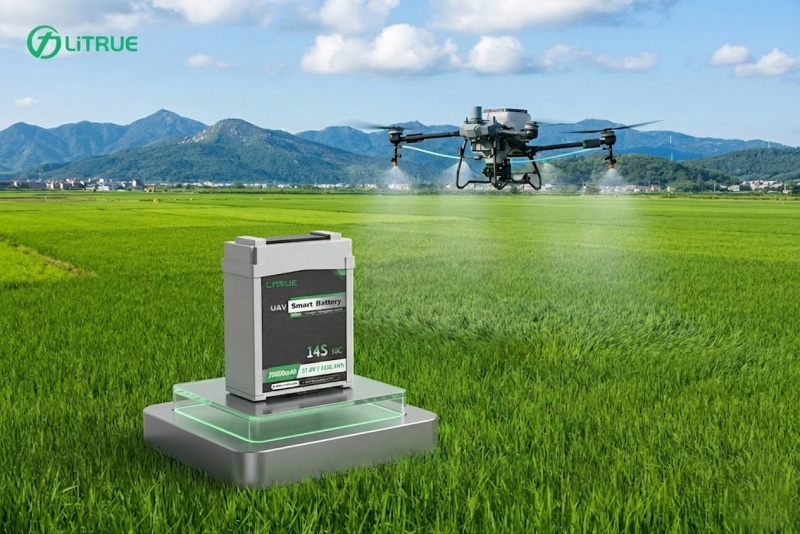
Table of Contents
- Why Lithium? The Chemistry That Changes Everything
- 10 Real-World Applications of Lithium battery
- Deep Dive: Lithium battery for Industrial UAVs & Drones
- Product Spotlight: LiTrue UAV-JP328L (51.8V 28Ah, NMC)
- Product Spotlight: LiTrue UAV-JP220M (51.8V 20Ah Lightweight)
- Product Spotlight: LiTrue UAV-JP228L (Agriculture Drone)
- Battery Comparison: Which LiTrue Pack Fits Your Mission?
- Alternative Chemistries: LFP vs. NMC vs. LiPo
- FAQs
- Summary
Why Lithium? The Chemistry That Changes Everything
Before diving into applications, let's answer the underlying question that nobody asks but everyone should: why did lithium win?
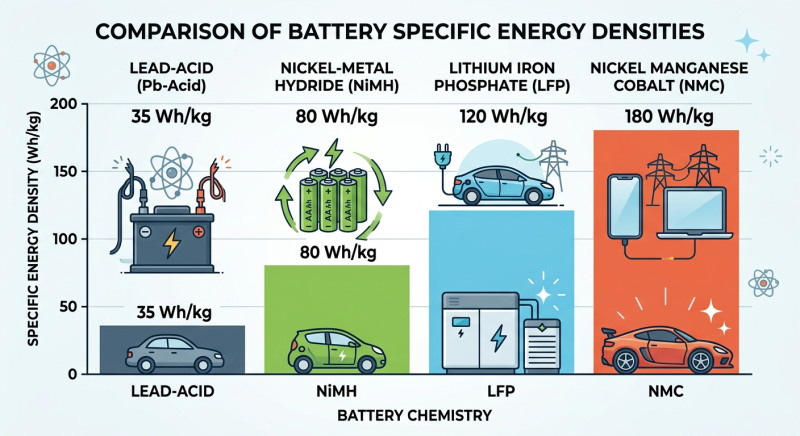
Compared to lead-acid and nickel-metal hydride (NiMH) alternatives, lithium-ion chemistry offers a fundamentally better energy-to-weight ratio. A lead-acid battery might deliver 30–40 Wh/kg. A premium NMC lithium cell hits 150–200 Wh/kg. That's not a marginal improvement—it's a structural shift. For any application where weight and space are constraints (which is almost every modern application), lithium simply wins on physics alone.
But energy density isn't the whole story. Lithium battery also deliver:
A note from the floor: One of our recurring conversations with first-time UAV battery buyers is about discharge rates. They come in asking for "the biggest capacity," but the real question is always the C-rate. A 28Ah battery that can only discharge at 1C gives you 28A. The same 28Ah at 5C gives you 140A of continuous current—which is what a heavy-lift drone motor actually needs at takeoff. Chemistry and configuration both matter. Don't let a single spec number mislead you.
10 Real-World Applications of Lithium battery
The honest answer to "what is a lithium battery used for?" is: anything that moves, communicates, or generates power in a portable or semi-portable format. Here's a grounded look at the ten categories that actually drive global lithium demand—not just the obvious ones.
1. Consumer Electronics (Phones, Laptops, Wearables)
This is the entry point for most people's understanding. Lithium-ion cells in smartphones typically sit in the 3,000–5,000 mAh range at 3.7V nominal. It's a mature, cost-optimized segment—but it's not where the interesting engineering happens anymore.
2. Electric Vehicles (EVs)
The fastest-growing segment by raw battery volume. Modern EV packs range from 40 kWh (compact city cars) to 100+ kWh (long-range trucks). The thermal management challenge here is immense—which is why automotive-grade BMS design is a discipline of its own.
3. Industrial UAV & Commercial Drones
This is where our team spends most of its time. Drone battery operate under extreme stress: high-current discharge spikes at takeoff, wide operating temperature swings (-40°C to +60°C for field units), and physical vibration that standard lithium packs cannot survive.
4. Agricultural Spraying Systems
Crop-spraying drones are a specialized sub-category of UAV that deserves separate mention. They carry heavy liquid payloads (often 10–30 liters), discharge at high C-rates during takeoff, and operate in humid, chemical-laden environments. Standard drone battery fail here. Dedicated agricultural battery—with IP65+ ratings and enhanced BMS protection—are non-negotiable.
5. Grid-Scale Energy Storage (ESS)
Utility-scale lithium installations now measure in gigawatt-hours. LFP chemistry dominates here due to its thermal stability and cycle longevity (3,000+ cycles vs. 1,000 for NMC). The economics only work when battery last 10–15 years in daily cycling service.
6. Marine & Offshore Equipment
Electric boat propulsion, underwater ROVs, and offshore sensor arrays all rely on lithium packs sealed to IP67 or IP68 standards. The combination of saltwater corrosion risk and the impossibility of mid-ocean battery swaps makes reliability the dominant spec, not just energy density.
7. Medical Devices & Portable Diagnostics
Defibrillators, portable oxygen concentrators, and surgical robots all run on lithium. The safety certification requirements here are the most stringent of any segment—IEC 62133, UL 2054, and in many cases, FDA-level compliance.
8. Robotics & Automated Warehousing
AMRs (Autonomous Mobile Robots) in logistics centers run 20+ hours per day. Fast-charge capability (2C or higher) is essential so robots can top up during shift changes without extended downtime. Cycle life is equally critical—a warehouse robot might complete 500+ charge cycles per year.
9. Telecom Infrastructure (Backup Power)
Cell towers and data centers rely on lithium battery as UPS (Uninterruptible Power Supply) systems, replacing traditional lead-acid VRLA banks. The weight reduction alone—70–80% lighter per kWh—makes the transition economically justified even before you factor in cycle life advantages.
10. Power Tools & Professional Field Equipment
High-drain professional tools (angle grinders, jackhammers, survey equipment) demand burst current that cheap cells cannot supply. 18V and 21V tool platforms from major manufacturers are standardizing on lithium packs engineered for 30A+ pulse discharge in a sub-1kg form factor.
Deep Dive: Lithium battery for Industrial UAVs & Drones
Let's be specific. If you landed on this page because you're sourcing battery for a commercial UAV platform—inspection drones, mapping drones, delivery drones, or agricultural sprayers—here's what actually matters in your spec evaluation.
Voltage Platform: 48V vs. 51.8V vs. 66.6V
Most mid-size commercial UAVs operate on either a 12S (44.4V nominal) or 14S (51.8V nominal) platform. Larger heavy-lift platforms—particularly those carrying 15+ kg payloads—are migrating toward 18S (66.6V). Higher voltage allows the same power delivery at lower current, which means less heat in motor windings and ESCs, and longer component life overall. It's not always about raw capacity.
C-Rate: The Number Most Buyers Ignore
A drone drawing 4,000W at takeoff from a 51.8V pack requires roughly 77A of continuous current. If your battery is rated at 50A continuous, you're already in thermal stress territory at takeoff—before the mission even begins. Industrial UAV battery need genuine 5C–10C continuous ratings with verified peak discharge specs. "Up to" numbers in marketing copy are not the same as certified engineering data.
BMS Quality: The Silent Differentiator
A battery management system (BMS) is the brain of any lithium pack. In UAV applications, a BMS failure mid-flight means a crash—potentially over crops, infrastructure, or people. Drone battery from reputable manufacturers integrate CAN bus communication with the flight controller, providing real-time cell voltage balancing, temperature monitoring, and fault alarms. This is not optional. It's the difference between a power system and a liability.
Environmental Ratings for Field Conditions
IP65 is the floor for any battery operating outdoors. Agricultural drones face pesticide spray, rain, and mud. Inspection drones fly in coastal humidity. An unrated battery casing will corrode, seal failure will follow, and lithium + moisture is not a combination you want near a flight crew.
Product Spotlight: LiTrue UAV-JP328L — 51.8V 28Ah High-Discharge NMC Drone Battery
What This Battery Is — And Who It's Actually Built For
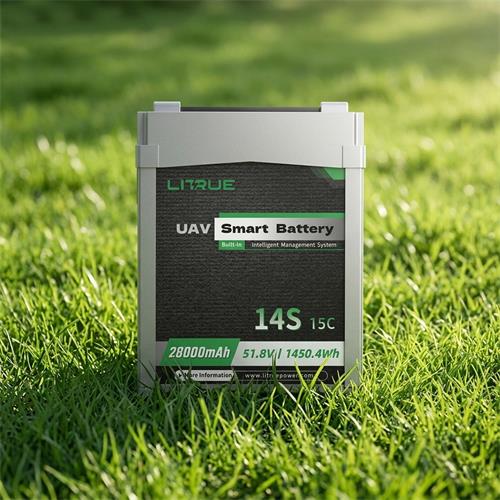
The UAV-JP328L is LiTrue flagship high-discharge pack for heavy-lift industrial drones. It runs a 14S1P NMC configuration at 51.8V nominal, delivers 28Ah of capacity, and stores 1.45 kWh of total energy in an 8.7 kg enclosure measuring 238×129×332 mm.
The numbers that actually define this battery in the field: 140A continuous discharge and a 280A peak discharge for up to 10 seconds. That's a 10C burst rating. For a drone lifting a 20 kg payload in a 40°C summer field, that instantaneous current headroom is what separates a controlled takeoff from a brownout and crash.
Unique Selling Points
- 10C peak discharge (280A for 10s)—one of the highest-rated packs in the 51.8V class
- Fast recharge: 56A continuous / 84A peak (84A peak for 30s at 25°C)
- CAN bus BMS with overcharge, over-discharge, and over-current alarms
- IP65 sealed housing; operational altitude up to 5,000 meters above sea level
- Discharge temperature range: −40°C to +60°C
- ≥1,000 cycle life at 1C/1C rate
- Certified: RoHS, UL 2054, UN38.3; designed to GB/T 38058-2019, GB 31241-2022, GB/T 38930-2020
Technical Specifications
| Specification | Value |
|---|---|
| Model | UAV-JP328L |
| Configuration | 14S1P (NMC) |
| Nominal Voltage | 51.8V |
| Operating Voltage Range | 42V – 60.9V |
| Nominal Capacity | 28Ah |
| Nominal Energy | 1.45 kWh |
| Max Continuous Discharge | 140A |
| Peak Discharge | 280A @ 10s / 25°C |
| Max Continuous Charge | 56A |
| Peak Charge | 84A @ 30s / 25°C |
| Cycle Life | ≥1,000 @ 1C/1C |
| Discharge Temperature | −40°C to +60°C |
| Charge Temperature | 0°C to +55°C |
| Protection Level | IP65 |
| Working Altitude | ≤5,000 m |
| Dimensions (mm) | 238 × 129 × 332 |
| Weight | 8.7 kg |
| Communication | CAN Bus |
| Certifications | RoHS, UL 2054, UN38.3 |
Audience Intent Match
This battery is right for you if: You operate heavy-lift UAVs (aerial survey, LiDAR mapping, cargo delivery) that require sustained high-current output during load-carrying flight. It's also the right pick for operators working at elevation—the 5,000m altitude rating is not standard across the industry.
This battery is not the right fit if: You're running a lightweight filming drone under 7 kg where adding 8.7 kg of battery is physically impossible, or if your primary concern is cycle longevity rather than peak power output (in that case, an LFP chemistry pack will outlast NMC by a factor of 2–3x in total cycles).
Limitations
The UAV-JP328L does not offer a wireless communication interface—the BMS uses CAN bus, which requires a wired integration with your flight controller's protocol. For operators using flight systems without native CAN support, an adapter will be required. Additionally, at 8.7 kg, this pack is not suitable for sub-10 kg drone platforms where weight budget is the primary engineering constraint.
✅ Pros
- Class-leading 280A peak discharge (10C)
- IP65 sealed for outdoor/field use
- 5,000m altitude certified
- Fast 56A recharge (operational uptime)
- Full international safety certifications
- Wide discharge temp range (−40°C to +60°C)
⚠️ Cons
- 8.7 kg — heavy for smaller platforms
- CAN-only communication (no wireless)
- 1,000 cycle life (LFP offers more)
- NMC chemistry requires careful thermal management in storage
Similar product: The UAV-JP228L shares the same 51.8V 28Ah NMC spec but is ruggedized specifically for agricultural spray environments with enhanced chemical-resistance housing.
Product Spotlight: LiTrue UAV-JP220M — 51.8V 20Ah Lightweight Drone Battery
When Gram-Counting Matters More Than Raw Capacity
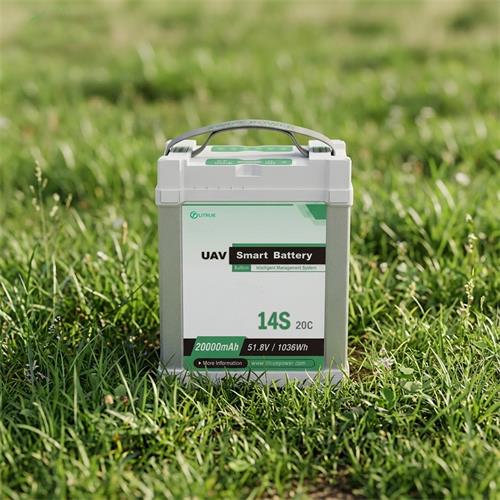
Every UAV engineer eventually confronts the weight-energy tradeoff. The UAV-JP220M is LiTrue answer to that problem. At 6.8 kg for a 1.036 kWh / 20Ah pack—housed in a 172×110×245 mm shell—this is the battery you choose when the drone frame simply cannot accommodate an 8–9 kg power unit.
It runs the same NMC 1P14S chemistry as the JP328L but at 20Ah. The continuous discharge is 50A (with 100A peak for 10s), and fast-charge tops out at 40A continuous / 60A peak. That's a tighter performance envelope than the JP328L—but on a drone where the battery IS the payload weight limit, this is exactly the right tradeoff.
Unique Selling Points
- 6.8 kg total weight — 2 kg lighter than the 28Ah variant
- Compact 172×110×245 mm footprint for tight drone airframes
- IP65 rated; −40°C to +60°C discharge range
- CAN bus BMS with overcharge / over-discharge / over-current protection
- 40A fast charging (60A peak) for fleet uptime management
- Certified to RoHS, UL 2054, UN38.3
Audience Intent Match
Right for you if: You operate aerial photography, infrastructure inspection, or precision mapping drones where sensor payload takes priority over battery size—and where the mission profile doesn't demand the extreme 10C burst discharge of the JP328L.
Not right for you if: You're running a heavy-lift platform or an agricultural sprayer with a full liquid tank at takeoff. In those scenarios, 50A continuous discharge will be insufficient and you should step up to the JP328L or JP228L.
✅ Pros
- Lightest 51.8V NMC pack in LiTrue lineup
- Compact form factor fits more airframes
- IP65 rated for field operations
- Fast 40A charge for fleet cycling
⚠️ Cons
- 50A continuous discharge limits high-load use cases
- 20Ah means shorter flight endurance vs 28Ah variants
- NMC chemistry (not LFP) — lower total cycle count
Product Spotlight: LiTrue UAV-JP228L — 51.8V 28Ah Agriculture Drone Battery
Built for the Conditions Nobody Else Plans For
Agricultural drone battery fail more often than any other UAV category. Why? Because they're drenched in pesticide overspray, exposed to 40°C summer heat for 8-hour field days, and cycled 3–5 times daily during peak farming seasons. Standard packs just aren't designed for that.
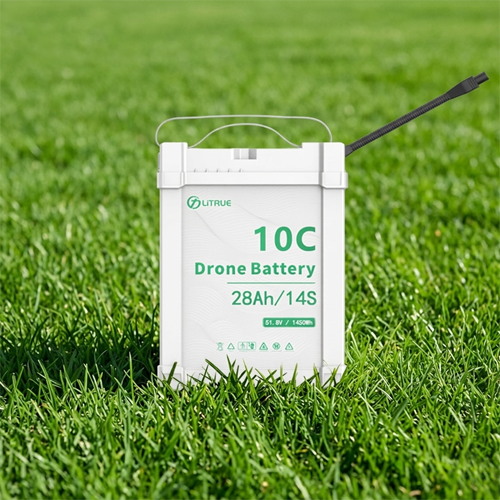
The UAV-JP228L shares the core 51.8V 28Ah NMC spec with the JP328L (1.45 kWh, 280A peak discharge) but is purpose-engineered for agricultural deployment. The IP65 enclosure is tested specifically against the chemical and moisture exposure patterns of crop-spraying operations—not just generic rain resistance. The BMS is tuned to manage the dynamic load pattern of a drone whose weight changes dramatically as the pesticide tank drains during a spray run.
Key Agricultural Advantages
- 280A peak discharge (10C for 10s) — handles full-tank heavy-lift takeoffs without voltage sag
- 56A continuous / 84A peak charging (2C) — swap-and-recharge between field runs in under 30 minutes
- ≥1,000 cycles at 1C/1C — designed for high-frequency daily agricultural cycling
- +60°C discharge tolerance — reliable in peak summer field conditions
- CAN bus BMS with real-time protection; certified to GB/T 38058-2019, GB 31241-2022, GB/T 38930-2020
✅ Pros
- Engineered for pesticide / moisture exposure
- High 10C peak discharge for heavy payload takeoffs
- 2C fast charge turnaround for field operations
- Certified design standards for agriculture UAV
- Dynamic BMS tuned for variable spray load
⚠️ Cons
- Heavier form factor (comparable to JP328L at ~8.7 kg)
- NMC chemistry: store at −20°C to +25°C to preserve capacity
- Not designed for indoor or non-agricultural commercial UAV use cases
Battery Comparison: Which LiTrue Pack Fits Your Mission?
Here's a side-by-side breakdown of the three NMC drone battery models covered above, plus the high-voltage 66.6V option for operators on larger platforms. Use this table as your first filter before requesting spec sheets.
| Spec | UAV-JP220M (Lightweight) |
UAV-JP328L (High-Discharge) |
UAV-JP228L (Agriculture) |
UAV-JP330L (Heavy-Lift 66.6V) |
|---|---|---|---|---|
| Voltage | 51.8V | 51.8V | 51.8V | 66.6V |
| Capacity | 20Ah | 28Ah | 28Ah | 30Ah |
| Energy | 1.036 kWh | 1.45 kWh | 1.45 kWh | ~2 kWh |
| Max Continuous Discharge | 50A | 140A | 140A | Higher voltage platform |
| Peak Discharge | 100A (10s) | 280A (10s) | 280A (10s) | High-voltage platform |
| Weight | 6.8 kg | 8.7 kg | ~8.7 kg | Contact for specs |
| IP Rating | IP65 | IP65 | IP65 | IP65 |
| Cycle Life | ≥1,000 | ≥1,000 | ≥1,000 | ≥1,000 |
| Best For | Filming / Mapping | Heavy-Lift Industrial | Crop Spraying | Large Platform UAV |
The UAV-JP330L operates on the 66.6V (18S) platform—a higher-voltage architecture that reduces operating current for the same power delivery, extending ESC and motor life in large-format UAVs. If your platform is stepping up from 14S to 18S, this is the LiTrue model to evaluate.
Alternative Chemistries: LFP vs. NMC vs. LiPo — Choosing Based on Mission Profile
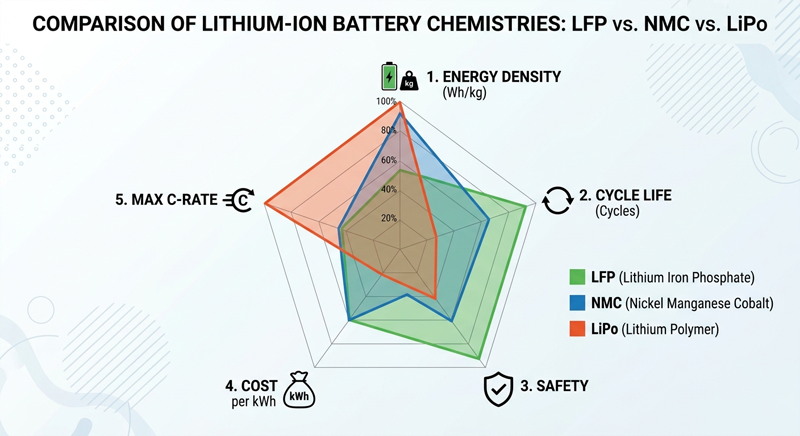
NMC isn't the only answer. Depending on your actual operational priorities, other lithium chemistries may be a better technical match. Here's an honest breakdown:
LFP (Lithium Iron Phosphate)
LFP cells sacrifice some energy density (roughly 120–135 Wh/kg vs. 150–200 Wh/kg for NMC) in exchange for dramatically higher cycle life and thermal stability. If your operation cycles battery 5+ times per day, year-round—think utility inspection fleets or ESS backup systems—LFP's 3,000+ cycle life at 1C/1C means your total cost per cycle drops significantly over a 3–5 year fleet lifecycle. For UAV applications specifically, LFP makes sense when endurance per charge is less critical than total battery lifespan.
LiPo (Lithium Polymer)
LiPo packs are common in the hobbyist and racing drone market because they're cheap, lightweight, and can deliver extraordinary C-rates (30C+ in some consumer cells). The downside? They're fragile. LiPo cells are prone to puffing, puncture sensitivity, and thermal runaway if charged improperly. For professional industrial UAV operations where safety and reliability are non-negotiable, LiPo is generally not a suitable choice—despite its performance numbers on paper.
NMC (Nickel Manganese Cobalt) — The Industrial Sweet Spot
NMC hits the best balance for most commercial drone applications: 150–200 Wh/kg energy density, 140A–280A peak discharge capability in properly engineered packs, and a 1,000+ cycle life with adequate BMS management. It's the chemistry behind all four LiTrue UAV models covered in this article—and for good reason. The operational envelope covers the majority of real-world industrial UAV scenarios without the fragility of LiPo or the weight penalty of LFP.
FAQs
What is a lithium battery used for in industrial drones specifically?
Industrial drone battery are used to power electric motors, flight controllers, onboard sensors (cameras, LiDAR, multispectral imagers), and payload systems (sprayer pumps, delivery mechanisms). The battery defines flight time, payload capacity, and mission range. In agricultural spraying drones, for example, a 51.8V 28Ah NMC pack like LiTrue UAV-JP228L provides the burst current needed for full-tank takeoffs and the sustained discharge required to complete a 10–15 acre spray run on a single charge.
How long does a lithium drone battery last?
Lifespan depends on chemistry, usage intensity, and storage conditions. NMC packs engineered for industrial UAV use—like the LiTrue UAV-JP328L—are rated for ≥1,000 cycles at 1C/1C. Under moderate field use (2–3 cycles per day), that translates to roughly 1–2 years of operational life before capacity drops below 80%. LFP chemistry extends that to 3,000+ cycles, which is why it's increasingly used in fleet applications where long-term TCO matters more than per-flight performance.
What does IP65 mean for a drone battery?
IP65 means the battery is completely dust-tight (the "6") and protected against water jets from any direction (the "5"). For field-deployed UAVs—especially agricultural drones exposed to pesticide spray, rain, and high humidity—IP65 is the minimum acceptable rating. Some marine and offshore drone applications require IP67 (temporary submersion) or IP68 (continuous submersion), which requires a different housing specification.
Can a lithium battery be used in extreme cold?
Yes, with the right engineering. Standard lithium-ion cells struggle below 0°C—charging at sub-zero temperatures causes lithium plating on the anode, which permanently degrades capacity. However, industrial UAV battery like LiTrue product line are designed to discharge (not charge) at temperatures as low as −40°C. Charging is restricted to 0°C–55°C. For cold-climate operations, this means pre-warming battery before recharging—a common procedure in Arctic survey and cold-weather infrastructure inspection workflows.
What certifications should I require when sourcing lithium drone battery?
For international shipping and commercial operation, the minimum certifications to require are: UN38.3 (transport safety testing), RoHS (hazardous substance compliance), and UL 2054 or IEC 62133 (cell and pack safety). For operations in regulated airspace, check whether your regional aviation authority (FAA, EASA, CAAC) has specific battery certification requirements for commercial UAV operations. LiTrue UAV battery line carries UN38.3, RoHS, and UL 2054 certifications, with design compliance to Chinese national standards GB/T 38058-2019, GB 31241-2022, and GB/T 38930-2020.
What is the difference between NMC and NCA lithium battery?
Both are nickel-based lithium chemistries with high energy density. NMC (Nickel Manganese Cobalt) includes manganese for improved thermal stability—making it the preferred choice for industrial applications where safety and thermal management are priorities. NCA (Nickel Cobalt Aluminum) offers slightly higher energy density and is used by some EV manufacturers, but its thermal stability is lower than NMC. For commercial UAV applications, NMC remains the dominant chemistry choice for this reason.
Summary:
Lithium battery power the modern world's most demanding portable and semi-portable energy applications: from consumer electronics to grid-scale storage, from EV propulsion to industrial UAV systems operating at 5,000 meters above sea level.
For commercial and industrial drone operators, the chemistry of choice is NMC—and the decision factors that actually move the needle are C-rate (not just raw capacity), BMS intelligence, and environmental sealing.
If you're past the research phase and ready to request specs, our engineering team can provide full test data, custom configuration options, and OEM pricing on all models. We manufacture, engineer, and certify everything in-house—no middlemen, no mystery cells.