
A UAV battery looks simple from the outside. A case, a connector, a label, a few numbers. In real flight, it is much less forgiving. If the battery cannot match the motor load, payload weight, voltage platform, and working environment, the drone may still take off — but it will not behave the way your customer expects.
At LiTrue, we usually start a UAV battery selection project with uncomfortable questions. What is the full-load current? How much payload is real payload, not brochure payload? Is the aircraft hovering, climbing, spraying, mapping, or fighting wind along a power line? What charger will the operator use in the field? These details decide whether a battery pack is a good fit or just a neat-looking part in a quotation.
This guide is written for drone manufacturers, fleet operators, procurement teams, and engineers comparing commercial UAV lithium battery options. We will explain chemistry, capacity, C-rate, voltage, BMS protection, connector design, field durability, and when a custom UAV battery makes more sense than an off-the-shelf pack.
Table of Contents
- Visual References
- Common Pitfalls: What Buyers Often Miss in UAV Battery Selection
- Product Deep Dive: The 51.8V 28Ah High-Discharge NMC Battery
- Comparative Analysis: Battery Chemistries vs. Pack Types
- FAQs
- Summary: Making the Right Power Choice
Visual References
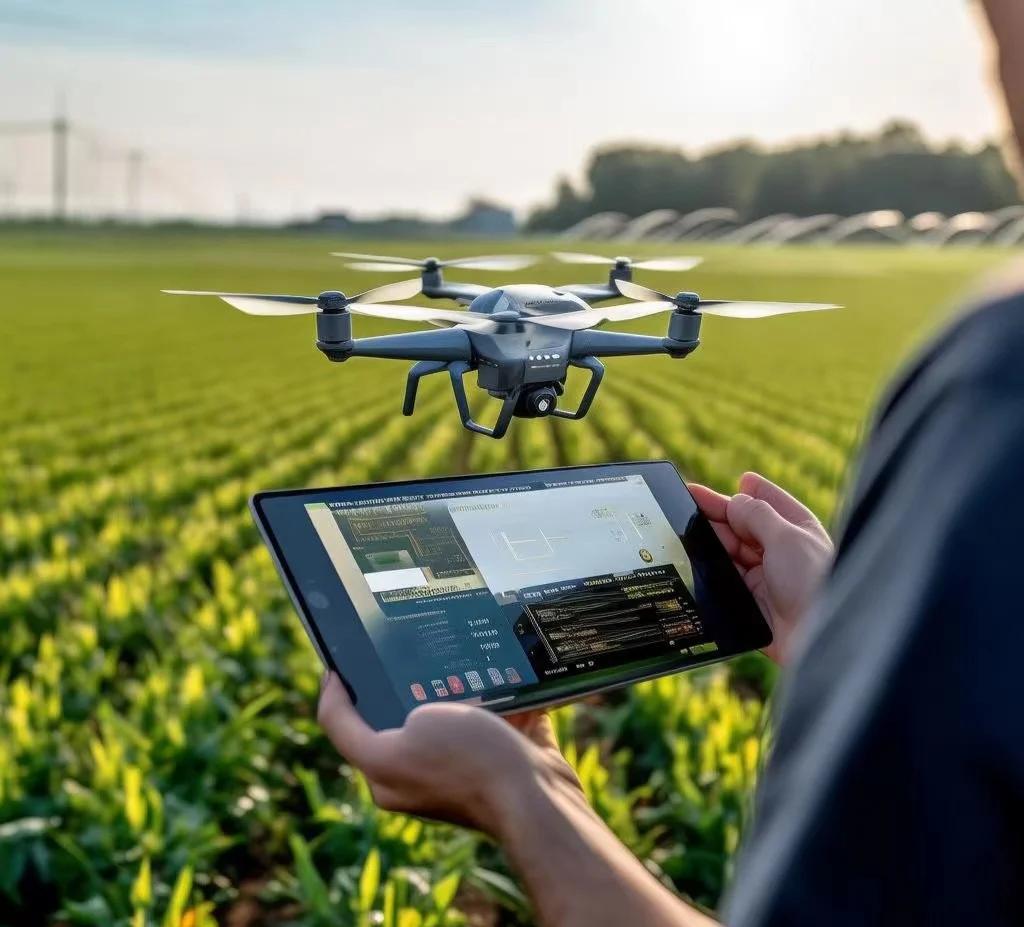
Common Pitfalls: What Buyers Often Miss in UAV Battery Selection
Key features of a commercial drone battery
A serious drone battery should be selected by system fit, not by one large number. Capacity matters, yes. But Ah alone can mislead you. A 28Ah pack at 51.8V stores much more energy than a 28Ah pack at 22.2V. Before comparing flight time, convert capacity into watt-hours or kilowatt-hours.
For industrial UAVs, we normally check eight items first: nominal voltage, operating voltage range, nominal energy, product weight, maximum continuous discharge current, peak discharge current, charging current, and communication function. Then we check the physical side: dimensions, connector type, cable outlet, enclosure strength, IP rating, heat path, and locking method.
The high-rate battery cell inside the pack matters more than many buyers expect. A cell that looks attractive on energy density may not support repeated high-current bursts. Heavy-lift drones, agricultural sprayers, inspection UAVs, and logistics drones do not draw current gently. They pull hard during takeoff, turning, climbing, braking, and wind correction.
Missing features that cause field failures
Weak UAV battery packs often fail in places that a catalog photo cannot show. The BMS may lack CAN communication. The connector may heat under repeated high current. The enclosure may not handle dust, chemical mist, or wet hands. The internal current path may be designed for a lab test, not a drone carrying a real payload.
We have seen buyers focus only on “more Ah” and then lose flight time because the larger battery pushed the aircraft beyond its efficient lift range. We have also seen aircraft teams use adapters to force a connector match. It works on a bench. In the air, extra resistance becomes heat, voltage drop, and one more failure point.
The truth you should know before choosing a lithium battery
The best UAV battery is not always the largest, lightest, or cheapest one. The right pack is the one that fits the aircraft’s power demand, physical structure, operating temperature, charging routine, and safety requirements. A mapping UAV and a crop-spraying UAV may both use lithium battery technology, but their battery stress profiles are not the same.
Lithium-ion batteries are widely used because they offer strong energy per unit mass compared with older rechargeable systems; the U.S. Department of Energy also notes their high energy per unit mass and volume in modern applications. For UAVs, that advantage is only useful when the pack can also discharge safely under load. Energy density gets the drone in the air. Current delivery keeps it there.
Product Deep Dive: The 51.8V 28Ah High-Discharge NMC Battery
For a practical example, we will use one real LiTrue product: the 51.8V 28Ah UAV Lithium Battery High Discharge NMC Drone Battery, model UAV-JP328L. It is a 14S1P NMC pack designed for commercial and industrial UAV applications.
Unique Selling Points
- 51.8V nominal voltage: fits UAV platforms built around a 14S power system.
- 28Ah capacity and 1.45 kWh nominal energy: gives industrial UAVs a useful working energy base.
- 140A maximum continuous discharge: supports sustained high-current loads.
- 280A peak discharge for 10 seconds at 25℃: helps during takeoff, climbing, wind correction, and short power bursts.
- 56A maximum continuous charging: supports faster pack rotation for commercial fleets.
- CAN communication: allows compatible flight controllers to read battery status data.
- IP65 protection: gives the pack better resistance to outdoor dust and water spray.
- -40℃ to +60℃ discharge temperature range: supports wider operating conditions.
- RoHS, UL 2054, and UN38.3 certification standards: supports global transport and customer compliance review.
Audience Intent Match: Who should evaluate this product?
The UAV-JP328L is suitable for commercial drone manufacturers, industrial inspection UAV builders, heavy-lift drone integrators, mapping platforms with higher payloads, and logistics UAV projects that need a high-discharge 51.8V pack. It is also useful for teams that want a finished pack with BMS protection, CAN communication, IP65 housing, and defined certification standards.
This is not the best match for every drone. If your aircraft is a small camera drone, this pack is too large. If your platform uses 18S or another high-voltage architecture, the 51.8V platform will not fit without redesign. If your main mission is lightweight crop scouting, you may get better results from a smaller energy-to-weight-focused pack.
Performance Evaluation by key decision factors
Energy and weight: The UAV-JP328L provides 1.45 kWh nominal energy and weighs 8.7 kg. That combination makes sense for industrial drones where the pack must support more than light hovering. Still, your aircraft decides the actual flight time. Propeller efficiency, motor matching, payload, wind, cable length, and pilot behavior all change the result.
Discharge current: The 140A maximum continuous discharge rating should be used for mission planning. The 280A peak discharge rating is useful headroom, but it should not become your normal operating point. In our factory review, we prefer to size the battery around real continuous load and keep peak current for demanding moments.
Charging: The battery supports 56A maximum continuous charging and 84A peak charging for 30 seconds at 25℃. For fleet operators, charging is part of productivity. A powerful pack still creates downtime if the charger plan, cooling interval, and spare-pack quantity are poorly designed.
BMS and safety: The pack includes overcharge, over-discharge, and over-current protection alarms. CAN communication helps the aircraft receive battery information instead of relying only on voltage. For a commercial UAV, that can make operator decisions more predictable.
Environment: IP65 protection, discharge from -40℃ to +60℃, and working altitude up to 5000 m make this pack a better fit for outdoor work than soft PVC-wrapped batteries. That does not remove the need for clean connectors, careful charging, and correct mounting.
Design & Usage
The UAV-JP328L measures 238 × 129 × 332 mm and uses an operating voltage range of 42V to 60.9V. Before selecting it, check your battery bay drawing, lock position, cable outlet, center of gravity, airflow, connector clearance, and removal path. Battery replacement speed matters in real field work. A pack that is hard to remove after every flight will frustrate operators quickly.
This battery is designed for users who need stronger current output and system-level battery data. Typical use cases include heavy-lift agricultural drones, aerial mapping UAVs, industrial inspection drones, and logistics delivery platforms.
Customization: when a custom lithium battery is the better choice
A standard pack is useful when your aircraft already matches the voltage, size, connector, and current range. If not, a custom lithium battery may save time later. LiTrue can evaluate pack dimensions, connector layout, cable direction, enclosure structure, CAN protocol, label design, packaging, and OEM lithium battery delivery requirements.
To start properly, send motor specifications, ESC model, payload weight, target flight time, battery bay dimensions, current estimate, charger model, working temperature, IP requirement, certification target, and annual quantity. This gives the engineering team enough information to recommend either an existing product or a custom battery packs solution.
Limitations: what this battery does not include
The UAV-JP328L is not a bare lithium pouch cells product for in-house assembly. It is not an 18S high-voltage pack. It is not designed for ultra-small consumer drones. Charging below 0℃ is outside the stated charging temperature range, so cold-region operators need charging rules or thermal planning.
The product data also does not replace flight validation. Every UAV platform has its own current curve, airflow, vibration, cable loss, and operating pattern. Test the battery on the actual aircraft before scaling procurement.
Pros & Cons
| Pros | Cons |
|---|---|
| 1.45 kWh nominal energy in a finished UAV battery pack | 8.7 kg weight is not suitable for small camera drones |
| 140A continuous and 280A peak discharge for demanding UAV loads | Only fits UAV systems designed around a 51.8V / 14S platform |
| CAN communication supports smarter battery monitoring | Cold charging below 0℃ needs separate planning |
| IP65 housing supports outdoor commercial use | Connector and aircraft-side sealing still need review |
| RoHS, UL 2054, and UN38.3 support global business requirements | Flight time must be confirmed on the real UAV platform |
Need a 51.8V high-discharge UAV battery for an industrial drone platform? View the product page or contact LiTrue engineers for pack matching and OEM quotation support.
Similar Product
If your UAV does not match this 51.8V pack, LiTrue can evaluate lighter UAV lithium battery models, agriculture-focused drone battery packs, higher-voltage platforms, high-rate lithium cells, or lithium cells for custom development.
Comparative Analysis: Battery Chemistries vs. Pack Types
| Option | Best Use Case | Main Advantage | Main Tradeoff |
|---|---|---|---|
| NMC UAV lithium battery | Commercial drones needing energy density and high discharge | Good balance of weight, energy, and current output | Needs proper BMS, thermal design, and protection logic |
| LiPo drone battery | FPV, hobby drones, smaller high-power aircraft | High discharge ability and flexible pack formats | Often needs careful handling and may lack hard-case protection |
| LFP pouch cells pack | Projects focused on cycle life and thermal stability | Good safety margin and long-cycle potential | Lower energy density than many NMC UAV packs |
| High-voltage UAV battery | Large heavy-lift drones and logistics UAVs | Can reduce current for the same power demand | Requires matching ESCs, motors, charger, and BMS |
| Lead-acid battery | Ground equipment, low-cost stationary use | Low purchase cost | Too heavy for practical UAV flight |
| Solid-state NMC battery | Future-focused development programs | Potential for higher energy and safety improvements | Availability, cost, and maturity vary by supplier |
For technical background, buyers can review the U.S. Department of Energy’s overview of lithium-ion battery energy characteristics. For shipping and compliance planning, the UN Manual of Tests and Criteria is relevant because lithium battery transport commonly involves UN38.3 testing.
FAQs
1. How do I choose the right UAV battery?
Start with voltage, current demand, payload weight, battery bay size, target flight time, charger plan, operating temperature, and BMS communication needs. Do not choose by Ah alone. Convert Ah into Wh, then compare energy, weight, and discharge current together.
2. What is the difference between capacity and energy?
Capacity is measured in Ah or mAh. Energy is measured in Wh or kWh. Energy equals voltage multiplied by capacity. A 28Ah battery at 51.8V stores much more energy than a 28Ah battery at 22.2V.
3. How do I calculate the required C-rating?
Divide the required current by the battery capacity in amp-hours. If a drone needs 140A and the battery is 28Ah, the continuous requirement is 5C. Add margin because real aircraft loads change during takeoff, wind correction, and payload movement.
4. Why does voltage matching matter?
ESCs, motors, chargers, and flight controllers are designed for specific voltage ranges. Too little voltage gives weak propulsion. Too much voltage may damage electronics. Always match the battery voltage platform to the aircraft design.
5. Should I use adapters for drone battery connectors?
For high-current UAVs, avoid adapters when possible. Adapters add resistance and heat. A direct connector match is cleaner, safer, and easier to validate during discharge testing.
6. What certifications should I ask from a lithium battery supplier?
Ask about UN38.3 for transport, RoHS for restricted substances, and UL 2054 where applicable. Certification does not replace flight testing, but it helps with shipment, buyer approval, and compliance review.
7. When should I request a custom UAV battery?
Request a custom UAV battery when the standard pack does not match your voltage, shape, connector, current demand, BMS protocol, enclosure target, or certification plan. Customization is common for OEM drone manufacturers.
8. Is NMC or LFP better for drone batteries?
NMC is often selected for UAVs because it offers strong energy density and discharge performance. LFP can be attractive when cycle life and thermal stability matter more than pack weight. The right choice depends on the aircraft and mission.
Summary: Making the Right Power Choice
A UAV battery should be chosen as part of the aircraft power system, not as a separate accessory. Voltage, energy, current, weight, BMS communication, connector design, enclosure protection, charging routine, and certification all matter. Miss one of them, and the problem usually appears later in flight testing or customer use.
For commercial drones using a 51.8V / 14S platform, the LiTrue UAV-JP328L gives buyers a concrete reference point: 28Ah capacity, 1.45 kWh nominal energy, 140A continuous discharge, 280A peak discharge, CAN communication, IP65 protection, and RoHS, UL 2054, and UN38.3 certification standards.
If your drone has special payload, voltage, enclosure, communication, or environmental requirements, LiTrue can support custom UAV battery development from early evaluation to OEM production. Send the aircraft data before the battery bay is finalized. That is the moment when a good battery decision is still easy to make.