
An agricultural drone battery works harder than most buyers expect. It is not powering a light camera drone that takes pretty field photos for ten minutes. It is lifting liquid fertilizer, pesticide, pump systems, nozzles, radar modules, controllers, and sometimes a frame still wet from the previous flight. On a hot afternoon, with a full tank and a pilot trying to finish one more field before rain, the battery becomes the part everyone depends on.
At LiTrue, we often see the same problem during early UAV battery matching: the drone maker sends a target capacity, such as 28Ah or 30Ah, but leaves out the current curve, payload weight, tank volume, charger plan, and enclosure space. On the surface, the battery choice looks simple. In the field, it is not. A crop-spraying drone can pull hard current during takeoff, then repeat short bursts every time it turns at the end of a row. That repeated stress is where weak packs reveal themselves through voltage sag, early low-voltage alarms, heat, swelling, or poor cycle life.
This guide is written for agricultural UAV manufacturers, smart farming service providers, fleet operators, and procurement teams comparing UAV lithium battery solutions. We will look at payload weight, C-rate, voltage platform, enclosure protection, working temperature, BMS communication, and OEM customization from the factory side.
Table of Content
- Media Placeholder
- Overview: What Most Buyers Miss About Agricultural Drone Batteries
- Product Deep Dive: 51.8V 28Ah Agriculture Drone Battery
- Alternative Battery Options Compared
- Agricultural Drone Battery FAQs
- Summary
Media Placeholder
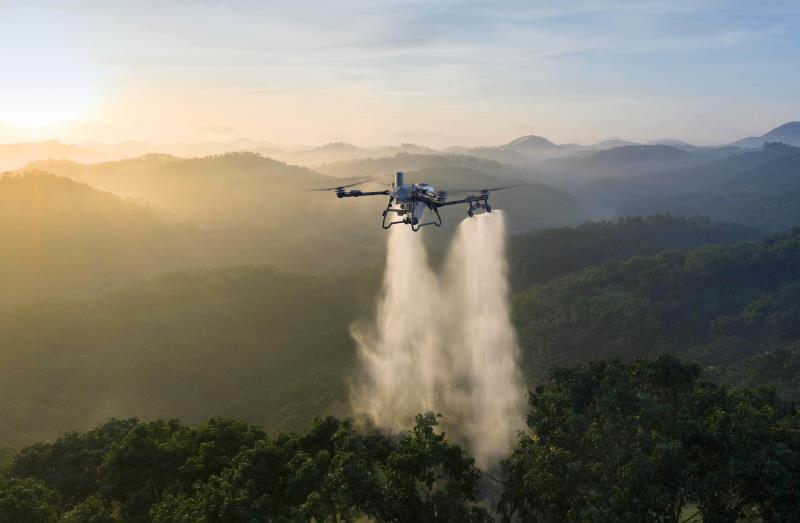
Overview: What Most Buyers Miss About Agricultural Drone Batteries
Key features that matter in a crop spraying drone battery
A crop spraying drone battery should be evaluated by more than capacity. Capacity tells you how much charge the pack stores, but it does not tell you whether the pack can keep voltage stable when the drone lifts a full tank. For spraying UAVs, the practical buying checklist includes nominal voltage, operating voltage range, nominal energy, weight, continuous discharge current, peak discharge current, charging current, IP protection, BMS communication, and temperature range.
The C-rate is especially important. Agricultural drones do not draw power in a calm, even pattern. The battery faces high current during takeoff, turning, climbing, braking, and correcting drift in wind. Liquid payload adds another problem: the tank contents shift. That sloshing changes aircraft balance and forces the motors to respond fast. A weak battery may still pass a simple bench test but fail to feel stable in real field work.
For OEM projects, the high-rate battery cell inside the pack matters as much as the outer case. A finished custom battery pack should be designed around cells, BMS, busbar structure, connectors, enclosure, thermal path, and vibration control together. If one part is treated casually, the field result will show it.
Missing features buyers often discover too late
Many agricultural UAV battery problems are not obvious during quotation. A pack may have enough energy, but no CAN communication. Another pack may have good discharge numbers, but its connector is exposed to fertilizer mist. Some batteries are wrapped in soft PVC, which can be acceptable for controlled indoor use, but farming is not controlled. Morning dew, pesticide residue, dust, muddy hands, truck-bed charging, and summer heat all punish the pack.
One detail we ask customers to confirm early is the charger routine. A fleet operator may buy six drones and only enough chargers for light work. During peak spraying season, batteries are rotated all day. If charging current, heat dissipation, and spare-pack quantity are not planned, downtime appears even when the battery itself is correctly designed.
The truth you should know before selecting a model
The best agricultural drone battery is not always the largest one. More capacity means more weight. More weight means more motor load. More motor load means higher current and more heat. At some point, a larger battery stops helping and starts stealing payload or flight efficiency.
The right model depends on your aircraft. A 10-liter scouting and spot-spraying UAV does not need the same battery as a 30-liter crop sprayer. A 40-liter heavy-lift drone may need a higher-voltage platform. A drone used in southern summer fields needs stronger heat tolerance than one used in cool, dry conditions. This is why LiTrue’s engineering team asks for real aircraft data before recommending a custom UAV battery.
Product Deep Dive: 51.8V 28Ah Agriculture Drone Battery
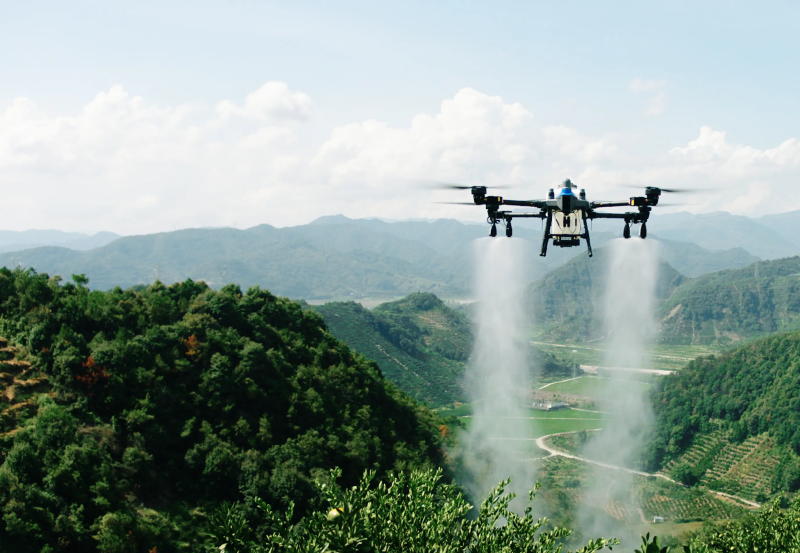
For the main product example, we will use the 51.8V 28Ah Agriculture Drone Battery UAV-JP228L. It is a 14S1P NMC battery pack developed for crop spraying UAVs, seeding drones, and smart farming platforms that need high discharge output and field-ready protection.
Unique Selling Points
- 51.8V nominal voltage: suitable for common 14S agricultural UAV power systems.
- 28Ah nominal capacity and 1.45 kWh nominal energy: a practical energy level for crop spraying drones carrying demanding working payloads.
- 140A maximum continuous discharge: supports sustained motor load during spraying missions.
- 280A peak discharge for 10 seconds at 25℃: gives the drone short power bursts during takeoff, turning, climbing, and wind correction.
- 56A continuous charging current: supports faster battery rotation during busy farming periods.
- CAN communication: allows the battery management system to share status with compatible UAV controllers.
- IP65 protection: helps the pack resist dust, water spray, mud exposure, and agricultural field handling.
- -40℃ to +60℃ discharge temperature range: gives wider field-use coverage across cold mornings and hot summer operations.
- 1000 cycles at 1C/1C: supports fleet operators who care about total operating cost, not just purchase price.
Audience Intent Match: Who Is This Product For?
The UAV-JP228L is designed for buyers who need an agricultural drone battery for real crop spraying work. It is a good match for drone manufacturers building 14S plant protection UAVs, service teams operating multi-drone spraying fleets, smart farming companies upgrading battery systems, and OEM buyers who need a hard-case lithium battery with high discharge capability.
This product also fits teams that want a finished pack rather than bare lithium cells. If your company does not want to manage cell matching, welding, BMS design, enclosure structure, CAN communication, and transport documentation in-house, a finished UAV lithium battery from a lithium battery manufacturer is the cleaner path.
It is not the right match for every drone. If your UAV is mainly used for crop mapping with a light camera payload, a lighter battery may improve endurance. If your aircraft uses an 18S high-voltage architecture, a 51.8V pack will not match the system. If your battery bay is smaller than 172 × 110 × 286 mm, you need either mechanical redesign or a custom pack shape.
Performance Evaluation by Key Decision Factors
Payload and energy: The UAV-JP228L stores 1.45 kWh of nominal energy. That matters when the drone is not only flying but also carrying liquid, pump hardware, spray lines, sensors, and control modules. Still, battery energy does not guarantee a specific flight time. Propeller efficiency, tank weight, aircraft frame, flight speed, wind, and spraying pattern all change the result.
Discharge rate: The pack supports 140A maximum continuous discharge and 280A peak discharge for 10 seconds at 25℃. For agricultural drones, this is where the battery earns its place. Peak current helps the aircraft handle demanding moments, but the continuous current rating is the number your engineers should use for real mission planning. Design around continuous load first, then treat peak discharge as a working reserve.
Voltage platform: A 51.8V nominal voltage means this battery belongs to a 14S architecture. Many crop spraying UAVs use this platform because it balances availability, controller compatibility, and pack size. For ultra-heavy drones, higher voltage may reduce current and heat, but it also requires compatible ESCs, motors, chargers, and BMS integration.
Charging and fleet rotation: The UAV-JP228L supports 56A continuous charging and 84A peak charging for 30 seconds at 25℃. In field operations, this affects how quickly a team can rotate packs. One battery in the air, one cooling, one charging, and one waiting is a common rhythm for busy crews. The exact spare quantity depends on field size, charger output, ambient temperature, and flight time.
Field protection: IP65 protection is important because agricultural drones work around water, dust, fertilizer, and chemical spray. It does not mean the battery should be abused or soaked carelessly, but it gives the pack a better field-use foundation than exposed soft packs. Connector sealing and aircraft-side mounting still need review.
Temperature: Charging is specified from 0℃ to +55℃, while discharge is specified from -40℃ to +60℃. This difference is not a typo; it is battery reality. A pack can often discharge in colder conditions than it can safely charge. If your team operates in winter or high-altitude regions, charging rules must be included in operator training.
BMS communication: CAN communication helps the aircraft read battery state and protection status. For commercial UAVs, this reduces guesswork. A smart BMS with overcharge, over-discharge, and over-current protection alarms gives the flight controller and operator better information before a fault becomes a field incident.
Design & Usage: How the Battery Is Used in Real Farming Work
The UAV-JP228L uses an NMC chemistry and 1P14S configuration. Its dimensions are 172 × 110 × 286 mm, and the product weight is 10 kg. That weight should be checked against payload, motor thrust margin, and aircraft center of gravity. In our experience, the mechanical fit is often where a project slows down. A battery that performs well electrically still needs the right handle position, locking structure, connector direction, cable length, and replacement speed.
In daily spraying work, operators care about simple things: the pack must lock in place, report status, discharge without sudden sag, tolerate heat, and go back to charging without drama. Good design is not only the cell. It is also how a tired operator handles the battery after twenty flights.
Customization: How Custom Product Shapes Are Built
LiTrue can support custom UAV battery development for agricultural drone manufacturers. Customization may include battery dimensions, connector type, cable outlet direction, enclosure design, BMS protocol, CAN communication details, label language, packaging, and bulk delivery planning.
For a serious OEM lithium battery project, we recommend sending motor specifications, ESC model, target tank volume, estimated full-load current, battery bay drawing, charger specification, flight time target, operating temperature, certification needs, and annual quantity forecast. With that information, the factory can judge whether an existing model works or whether a custom lithium battery pack is a better choice.
Limitations: What This Product Does Not Solve
The UAV-JP228L is not a lightweight scouting-drone battery. It weighs 10 kg, which makes sense for agricultural spray platforms but may be too heavy for mapping drones. It is also not an 18S high-voltage battery. If your aircraft is designed around 66.6V, you should not force a 51.8V pack into the system.
Another limitation: IP65 does not remove the need for correct maintenance. Fertilizer residue, connector contamination, impact damage, and poor charging habits can still shorten battery life. A good battery reduces risk; it does not excuse careless operation.
Pros & Cons
| Pros | Cons |
|---|---|
| 1.45 kWh nominal energy for crop spraying UAV workloads | 10 kg weight is not ideal for small mapping drones |
| 140A continuous and 280A peak discharge for heavy-load operation | Only suitable for UAVs designed around a 51.8V / 14S platform |
| IP65 protection for dusty, wet, and chemically exposed farming environments | Connector and aircraft-side sealing still need engineering review |
| CAN communication supports smarter battery status monitoring | Charging below 0℃ is not within the stated charging temperature range |
| 1000 cycles at 1C/1C helps fleet operators manage long-term cost | Final flight time must be confirmed on the actual drone platform |
CTA: Building or upgrading a crop spraying UAV? View the UAV-JP228L Agriculture Drone Battery or contact LiTrue engineers for OEM pack matching, connector selection, and bulk quotation support.
Similar Product(s)
If your aircraft does not match this model, LiTrue can also evaluate lighter UAV lithium battery designs, higher-voltage smart drone battery platforms, or packs using different lithium cells. For early research, you can review LiTrue’s lithium cells and battery products pages before sending your aircraft data.
Alternative Battery Options Compared
| Battery Type | Best Use Case | Main Advantage | Main Tradeoff |
|---|---|---|---|
| 51.8V agricultural NMC battery | Standard crop spraying UAVs and seeding drones | Good balance of energy, discharge output, and pack size | May be too heavy for scouting drones |
| Lightweight UAV lithium battery | Crop mapping, multispectral imaging, field surveying | Better flight efficiency with light payloads | Lower suitability for liquid payload and high current bursts |
| High-voltage UAV battery platform | Large agricultural drones with higher payloads | Can reduce current for the same power demand | Requires matching ESCs, motors, charger, and BMS system |
| LFP pouch cells battery pack | Projects focused on safety margin and cycle life | Good thermal stability and long-cycle potential | Lower energy density than many NMC packs |
| Custom lithium battery pack | OEM agricultural UAV designs with special space or protocol needs | Can match enclosure, connector, BMS, and aircraft structure | Requires engineering input and validation time |
There is no shortcut here. A lithium battery supplier should not recommend a battery only from tank size. The better process starts with power demand, aircraft layout, operating environment, charging routine, and safety documentation. For chemistry background, you can review NMC lithium battery chemistry. For transport testing context, see the UN Manual of Tests and Criteria, which covers lithium battery transport testing such as UN38.3.
Agricultural Drone Battery FAQs
1. What battery is best for an agricultural spraying drone?
The best battery depends on the drone’s voltage platform, payload, current demand, battery bay size, and operating temperature. For many 14S crop spraying UAVs, a 51.8V high-discharge NMC battery with IP65 protection and CAN communication is a practical choice.
2. Why does a crop spraying drone need high peak discharge?
A spraying drone carries shifting liquid payload. During takeoff, turning, braking, and wind correction, the motors may demand short bursts of high current. If the battery cannot provide that current, voltage may sag and trigger early alarms or unstable flight behavior.
3. Is a heavier battery always better for longer flight time?
No. A heavier battery stores more energy only if the added weight does not overload the aircraft. Once battery weight forces the motors to work harder, flight time gains shrink or disappear. Always compare energy, weight, payload, and motor efficiency together.
4. What does IP65 mean for an agricultural drone battery?
IP65 means the enclosure is dust-tight and protected against water jets under defined test conditions. For farming use, it helps protect against dust, moisture, and field handling. It does not mean the battery should be submerged or left covered in chemical residue.
5. Should agricultural UAVs use NMC or LFP battery chemistry?
NMC is often selected when energy density and discharge performance are priorities. LFP pouch cells may be preferred when cycle life and thermal stability are higher priorities. The right choice depends on the UAV design and mission profile.
6. How many cycles should an agriculture drone battery last?
Cycle life depends on cell chemistry, discharge depth, charging current, temperature, and maintenance. The UAV-JP228L is specified at 1000 cycles at 1C/1C. Real fleet life will vary if packs are overheated, over-discharged, or charged before cooling.
7. Can LiTrue make a custom agricultural drone battery?
Yes. LiTrue can support custom lithium battery development for UAV OEMs, including pack shape, connector layout, CAN communication, BMS settings, enclosure design, and certification planning. The process starts with your aircraft and mission data.
8. What information should I send before requesting a quote?
Send the UAV voltage platform, motor and ESC specifications, tank capacity, target flight time, expected current draw, battery bay dimensions, connector preference, charger plan, operating temperature, certification needs, and annual order estimate.
Summary
An agricultural drone battery should be selected as part of the aircraft power system, not as a simple accessory. The battery must match payload, discharge current, voltage platform, enclosure protection, BMS communication, charging routine, and the real conditions of farming work.
For crop spraying UAVs using a 51.8V / 14S platform, the LiTrue UAV-JP228L offers a focused set of specifications: 28Ah capacity, 1.45 kWh nominal energy, 140A continuous discharge, 280A peak discharge, CAN communication, IP65 protection, and a discharge temperature range from -40℃ to +60℃. Those numbers make it a strong candidate for agricultural drone manufacturers and fleet operators who need high-rate field performance.
If your drone has a different payload, voltage system, enclosure space, or working environment, LiTrue can help evaluate a custom UAV battery instead. Share your aircraft data with our engineering team early. It is easier to adjust the battery design before mass production than to solve voltage sag, overheating, or poor fit after the UAV is already in the field.