
A drone battery is not just a removable power source. In a commercial UAV, it decides whether the aircraft climbs smoothly with a full payload, whether the sprayer finishes one field without voltage sag, and whether your after-sales team spends the next season answering complaints about swollen packs, short runtime, or BMS alarms.
We see this problem often from the factory side. A buyer sends a motor power table, a target flight time, and a rough pack size. On paper, the numbers look acceptable. Then the real aircraft arrives: longer cable runs, a heavier gimbal, dusty field use, summer charging in a van, and pilots who push the throttle harder than the spreadsheet assumed. That is where a mismatched UAV lithium battery starts to show its weakness.
This guide is written for drone manufacturers, integrators, agricultural UAV brands, inspection drone builders, and purchasing teams comparing custom UAV battery options. We will look at energy, discharge rate, weight, pack structure, BMS communication, working temperature, certification, and the uncomfortable tradeoffs that do not appear in simple product listings.
Table of Content
- Media Placeholder
- Drone Battery Overview: What Most Buyers Miss
- Product Deep Dive: 51.8V 28Ah High Discharge NMC UAV Battery
- Alternative Battery Options Compared
- Drone Battery FAQs
- Summary
Media Placeholder
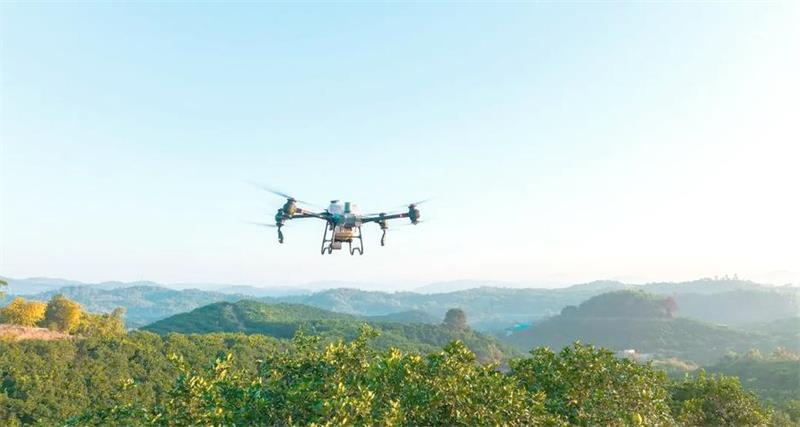
Drone Battery Overview: Key Features, Missing Features, and the Truth You Should Know
Key features a commercial drone battery should have
For industrial UAVs, the first number most buyers ask about is capacity. That is understandable, but Ah alone is a weak way to compare packs. A 28Ah battery at 51.8V stores far more energy than a 28Ah pack at a lower voltage. You should calculate watt-hours or kilowatt-hours before comparing flight endurance.
A serious UAV lithium battery should be evaluated by at least eight factors: nominal voltage, operating voltage range, nominal energy, weight, continuous discharge current, peak discharge current, charging current, and communication protocol. For heavy-lift drones, the high-rate battery cell inside the pack matters as much as the outer label.
From our engineering desk, the most common sizing mistake is treating “maximum motor current” as a rare event. In agricultural spraying, windy inspection sites, and logistics prototypes, current spikes happen repeatedly. If the battery cannot support those peaks without sharp voltage drop, the drone may still fly, but the pilot will feel lazy throttle response and shorter runtime.
Missing features that many buyers discover too late
Some drone battery packs look fine in a quotation but miss details that matter in field use. For example, a pack may have enough capacity but no CAN communication, leaving the flight controller blind to pack status. Another pack may discharge well in a lab but use an enclosure that does not handle mud, fertilizer mist, or repeated connector plugging.
Also check whether the supplier can support custom lithium battery requirements beyond the cell itself. Connector type, cable length, mounting position, enclosure shape, BMS data protocol, label language, packaging, and UN38.3 transport documents all affect mass production. A low unit price can become expensive if your team has to redesign the battery bay after pilot testing.
The truth: the “best” drone battery is mission-specific
There is no single best drone battery for every aircraft. A surveying UAV wants lower weight and stable endurance. A crop sprayer wants high discharge, fast charging, sealing, and chemical exposure resistance. A logistics drone may need higher voltage to reduce current and improve system efficiency. A long-endurance inspection platform may prefer energy density over peak current.
If a lithium battery manufacturer recommends one pack before asking about payload, propeller size, motor power, flight profile, working temperature, and charging routine, be careful. Battery matching is engineering work. It should feel a little inconvenient at the beginning. That inconvenience prevents expensive mistakes later.
Product Deep Dive: 51.8V 28Ah High Discharge NMC Drone Battery
For this guide, we will use one product as the detailed example: the 51.8V 28Ah UAV Lithium Battery High Discharge NMC Drone Battery, model UAV-JP328L. It is a 14S1P NMC pack designed for commercial and industrial UAV use.
Unique Selling Points
- 51.8V nominal voltage and 28Ah capacity: suitable for UAV platforms built around a 14S voltage architecture.
- 1.45 kWh nominal energy: a useful energy level for drones that need more than light-duty inspection runtime.
- 140A maximum continuous discharge: built for high-torque motor demand rather than casual consumer drone use.
- 280A peak discharge for up to 10 seconds at 25°C: helpful during takeoff, wind correction, loaded climbing, and short power bursts.
- CAN communication: allows system-level battery data exchange with compatible UAV controllers.
- IP65 enclosure: a better fit for outdoor commercial work than exposed soft packs.
- Discharge temperature range from -40°C to +60°C: useful for customers operating in cold regions or hot agricultural seasons.
- RoHS, UL 2054, and UN38.3 certifications: supports compliance and international transport planning.
Audience Intent Match: Who Should Evaluate This Product?
This battery fits buyers who are evaluating a wholesale UAV battery for industrial platforms where current output matters. Typical users include agricultural drone manufacturers, industrial inspection UAV builders, logistics UAV prototype teams, and integrators who need a pack with known dimensions, high discharge capability, and BMS communication.
It is also a reasonable reference model for teams moving from generic lithium pouch cells to finished custom battery packs. Instead of asking only “how many Ah can we fit,” the engineering conversation becomes more practical: Can the pack supply repeated current peaks? Can it report pack status? Can the enclosure survive the job site? Can the supplier modify pack shape and connector layout?
This product is not for every drone. If your UAV is a compact mapping drone where every gram affects flight time, an 8.7 kg pack may be more battery than you need. If your aircraft uses a higher-voltage architecture, such as an 18S system, a 51.8V pack may not match your power electronics. If the project needs extremely low-temperature charging below 0°C, you must discuss heating strategy or charging limits with the engineering team.
Performance Evaluation by Key Decision Factors
Energy and runtime: The UAV-JP328L provides 1.45 kWh nominal energy. In field terms, that gives manufacturers a stronger base than small lightweight packs, especially when the drone carries spraying tanks, industrial cameras, or inspection equipment. Runtime still depends on aircraft efficiency. Two drones using the same battery can show very different flight times if one has poor propeller matching or too much frame drag.
Discharge capability: The 140A continuous discharge rating is the figure to study first for heavy-duty use. Peak discharge of 280A for 10 seconds helps during short high-load events, but you should not design a mission that depends on peak current every minute. We usually tell customers to size continuous current for the real working load and use peak current as a safety margin, not as a routine operating point.
Weight: The product weight is 8.7 kg. That weight is acceptable for larger industrial UAVs, but it has to be modeled against payload and frame capacity. A battery with more energy can still reduce useful work if it forces you to remove payload or fly with poor balance. During pack selection, weigh the real payload, not the brochure payload.
Charging: The pack supports 56A maximum continuous charging and 84A peak charging for up to 30 seconds at 25°C. For fleet operators, charging current affects how many spare packs are required during a workday. Fast charging is useful, but heat management and charger matching must be planned. We have seen customers buy enough aircraft but too few chargers, then blame the battery for downtime.
Temperature: The listed charging temperature is 0°C to +55°C, while discharge is -40°C to +60°C. That difference matters. A battery may discharge in cold weather but still require controlled charging conditions. This is one of those details that saves trouble in northern markets.
BMS and communication: CAN communication is a major advantage for commercial UAVs. A pack that communicates state of charge, alarms, and protection status helps the aircraft make better decisions. The product also includes overcharge, over-discharge, and over-current protection alarms.
Enclosure and field use: IP65 protection helps when the drone works around dust, light spray, and outdoor handling. For agricultural UAVs, the enclosure and connector sealing should be discussed together. The pack body can be rated, but poor connector integration can still create field failures.
Design & Usage: How This Battery Fits Real UAV Work
The UAV-JP328L uses a 14S1P NMC configuration, with dimensions of 238 × 129 × 332 mm. That shape should be checked against your aircraft battery bay, locking method, cable exit direction, and center of gravity. In a drone, battery placement is not just packaging. A few centimeters can change balance, cooling, and maintenance speed.
In practical use, this pack makes the most sense for UAVs that need strong discharge and predictable system data. Think of a sprayer lifting with liquid payload, an inspection drone holding position in gusty wind, or a logistics UAV that needs short high-power bursts during climb. For these aircraft, high-rate lithium cells and pack-level BMS design matter more than a nice-looking shell.
Customization: How Custom Product Shapes Are Built
LiTrue can support custom UAV battery development around voltage, capacity, enclosure, connector, communication, and pack dimensions. In early-stage projects, the better path is to share the drone’s motor data, ESC specification, estimated current curve, available battery bay space, target runtime, charging routine, and operating environment.
From there, the factory can evaluate whether an existing pack is close enough or whether a custom lithium battery pack is needed. Customization may include cable direction, connector type, mounting interface, label design, BMS protocol adjustment, enclosure modification, and packaging for international shipment. For OEM lithium battery projects, this is often where the supplier relationship becomes more valuable than a catalog price.
Limitations: What This Product Does Not Solve
The UAV-JP328L is not a universal answer. It is not the lightest option for small mapping drones. It is not a high-voltage 66.6V pack for aircraft designed around that architecture. It is not a bare lithium pouch cell for buyers who only want cells for in-house pack assembly. It also should not be charged below 0°C unless a separate thermal strategy is engineered.
Another limitation is that the published data cannot replace your own flight validation. Battery specs tell you what the pack can deliver under defined conditions. Your drone’s airflow, cable loss, controller logic, and mission profile decide the final result.
Pros & Cons
| Pros | Cons |
|---|---|
| 1.45 kWh energy in a finished UAV battery pack | 8.7 kg weight may be too heavy for compact survey drones |
| 140A continuous and 280A peak discharge support demanding motor loads | 51.8V architecture does not fit every UAV platform |
| CAN communication helps flight controller integration | Charging is limited to 0°C to +55°C |
| IP65 protection supports outdoor industrial work | Still requires connector and aircraft-side sealing review |
| RoHS, UL 2054, and UN38.3 certifications support global business use | Final flight time must be verified on the actual aircraft |
CTA: Need a high discharge drone battery for an industrial UAV platform? View the UAV-JP328L product page or contact LiTrue engineers for pack matching, connector options, and OEM quotation support.
Similar Product(s) as Reference
If your aircraft does not match this 51.8V 28Ah high-discharge pack, you may need a lighter UAV battery for mapping, a higher-voltage smart drone battery for heavy-lift platforms, or a more agriculture-focused sealed pack. You can review LiTrue’s broader product range and lithium cells category when planning a different system architecture.
Alternative of Comparison: Other Drone Battery Choices
| Battery Option | Best For | Main Advantage | Main Tradeoff |
|---|---|---|---|
| High-discharge NMC drone battery | Agricultural, inspection, logistics, heavy-duty UAVs | Higher current output and good energy density | Needs careful thermal and safety management |
| Lightweight NMC UAV lithium battery | Surveying, mapping, camera drones | Better payload-to-energy balance | May not support repeated high-current work |
| High-rate LFP cells pack | Applications needing cycle life and thermal stability | Good safety profile and long cycle potential | Lower energy density than many NMC designs |
| Wide-temperature lithium cells pack | Cold-region or hot-region UAV projects | Better fit for harsh environments | May require custom design and validation |
| Solid-state NMC battery concept | Future-focused UAV development | Potential energy and safety improvements | Availability, cost, and maturity vary by supplier |
For many OEMs, the real choice is not “NMC or LFP” in the abstract. It is whether the chemistry, cell format, BMS, enclosure, and charging plan match the mission. Commercial drone battery selection should start with aircraft data, not with a catalog filter.
External technical references can also help your team align terminology. For chemistry background, see the overview of NMC lithium battery chemistry. For transport-related testing context, review the UN Manual of Tests and Criteria, which includes lithium battery transport test requirements such as UN38.3.
FAQs About Choosing a Drone Battery
1. What is the most important specification when choosing a drone battery?
Do not choose by Ah alone. Start with voltage, nominal energy, continuous discharge current, peak discharge current, weight, BMS communication, and working temperature. For commercial UAVs, current output and pack weight often decide whether the aircraft feels stable under load.
2. How do I know if I need a high-rate battery cell?
You need a high-rate battery cell if your drone has high motor current, heavy payload, aggressive takeoff demand, spraying operation, strong wind exposure, or repeated climb cycles. If the pack voltage drops sharply during these moments, the cells may not be suitable.
3. Is NMC better than LFP for UAV lithium battery packs?
NMC usually offers higher energy density, which helps flight endurance and payload balance. LFP pouch cells may offer stronger thermal stability and cycle life in some designs. The better choice depends on your aircraft weight limit, discharge demand, safety target, and working environment.
4. Can LiTrue build a custom UAV battery instead of using a standard model?
Yes. For a custom UAV battery project, LiTrue can evaluate voltage, capacity, enclosure size, connector layout, BMS communication, discharge current, and certification requirements. The best starting point is to provide motor data, ESC data, target flight time, battery bay dimensions, and expected operating temperature.
5. Why does my drone fly shorter than the battery capacity suggests?
Possible reasons include overweight payload, inefficient propellers, high wind, poor motor matching, voltage sag, cold temperature, battery aging, or a flight profile with too many climb and hover-heavy sections. A battery calculation should always be verified through real aircraft testing.
6. What certifications should a drone battery supplier provide?
For international business, ask about UN38.3 transport testing, RoHS, UL 2054 where applicable, and any market-specific documentation your customer requires. Certification does not replace engineering validation, but it makes shipping, compliance review, and buyer approval easier.
7. Should I buy from a lithium battery supplier or assemble packs myself?
If your team has battery engineering, BMS design, welding, enclosure, testing, and certification capability, in-house assembly may work. If not, a lithium battery supplier with UAV pack experience can reduce risk. For most drone OEMs, the pack is too close to flight safety to treat as a simple accessory.
8. What information should I send before asking for a wholesale UAV battery quote?
Send voltage platform, target capacity or energy, continuous and peak current demand, battery bay size, maximum weight, connector requirements, communication protocol, charging method, operating temperature, certification needs, and annual quantity forecast. The more complete the input, the more useful the quotation.
Summary
A commercial drone battery should be selected like a flight component, not a spare part. The right pack must match voltage, current, weight, temperature, communication, enclosure, certification, and the way pilots actually use the aircraft. That last part matters more than many spec sheets admit.
For industrial UAVs that need strong discharge output, CAN communication, IP65 protection, and a 51.8V platform, the LiTrue UAV-JP328L is a practical model to evaluate. For smaller, higher-voltage, cold-weather, or cycle-life-focused projects, a custom battery packs discussion may be the better starting point.
LiTrue works as a lithium battery manufacturer for UAV brands, industrial equipment companies, and OEM battery buyers. If your team is comparing lithium pouch cells, high-rate lithium cells, or finished UAV packs, share your aircraft data with our engineers before locking the battery design. It is much cheaper to adjust the pack on the drawing table than after the drone is already in production.