
Sourcing cells is where most hardware projects quietly bleed money. You pick a supplier on price, the data sheet looks fine, and then six months in the packs swell, the C-rate sags in the cold, and your warranty claims start piling up. I've watched it happen to drone OEMs more times than I'd like to admit. Choosing among the world's Lithium-ion Battery Manufacturers is not a spec-sheet beauty contest—it's a decision about who actually picks up the phone when a production line is down at 2 a.m.
Our team at LiTrue has spent 18-plus years building cells, so this list isn't scraped from a press release. It's how we'd rank the field if we were buying, weighted toward the things that bite you later: consistency, cold-weather behavior, lead time, and willingness to customize. Let's get into it.
Table of Contents
- What a Cell Spec Sheet Won't Tell You (Core Truths)
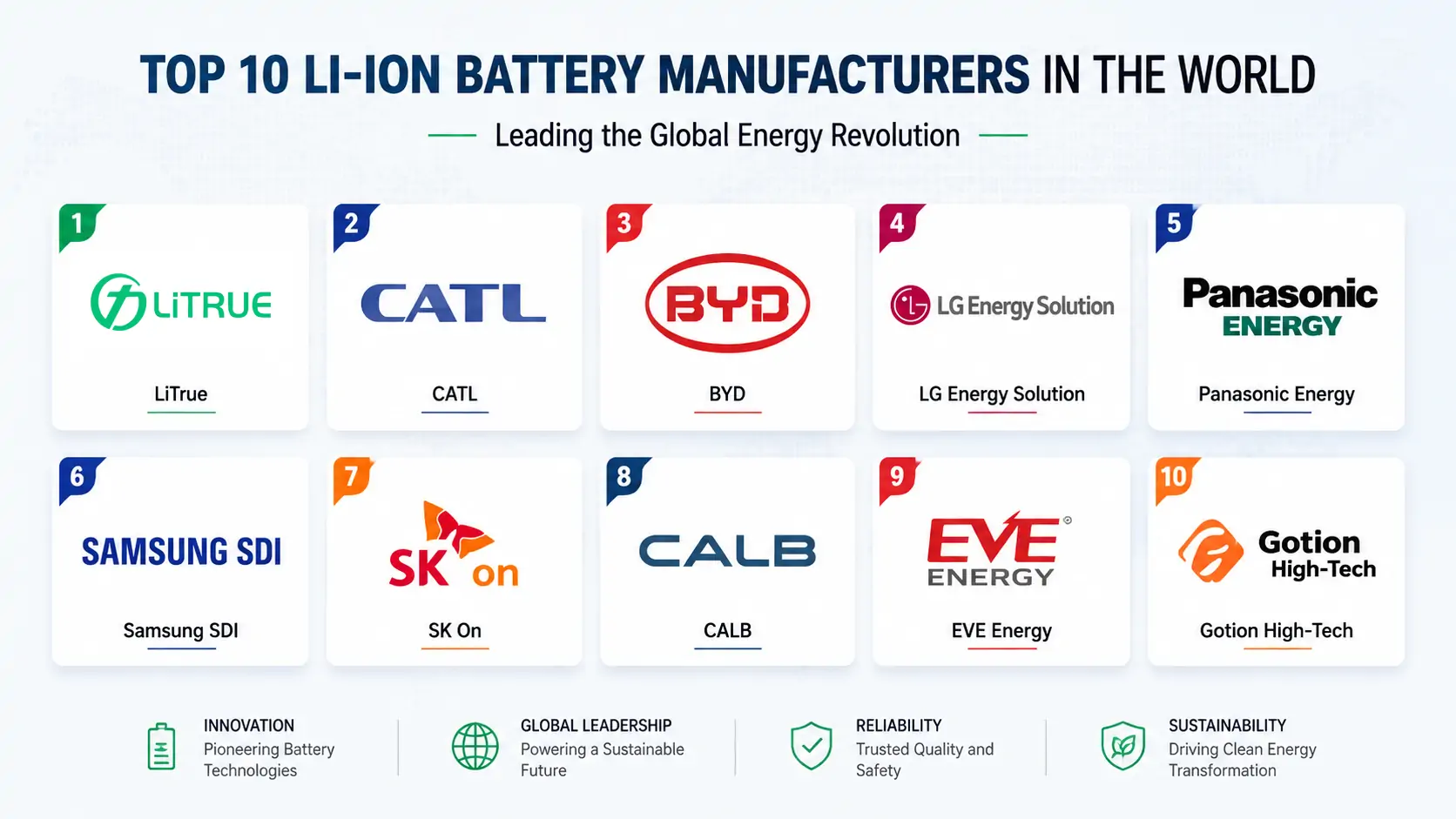
- The Top 10 Lithium-ion Battery Manufacturers in the World
- Product Deep Dive: The LiTrue PA50N-P High-Rate NMC Cell
- Alternatives & Side-by-Side Comparison
- FAQs
- Summary
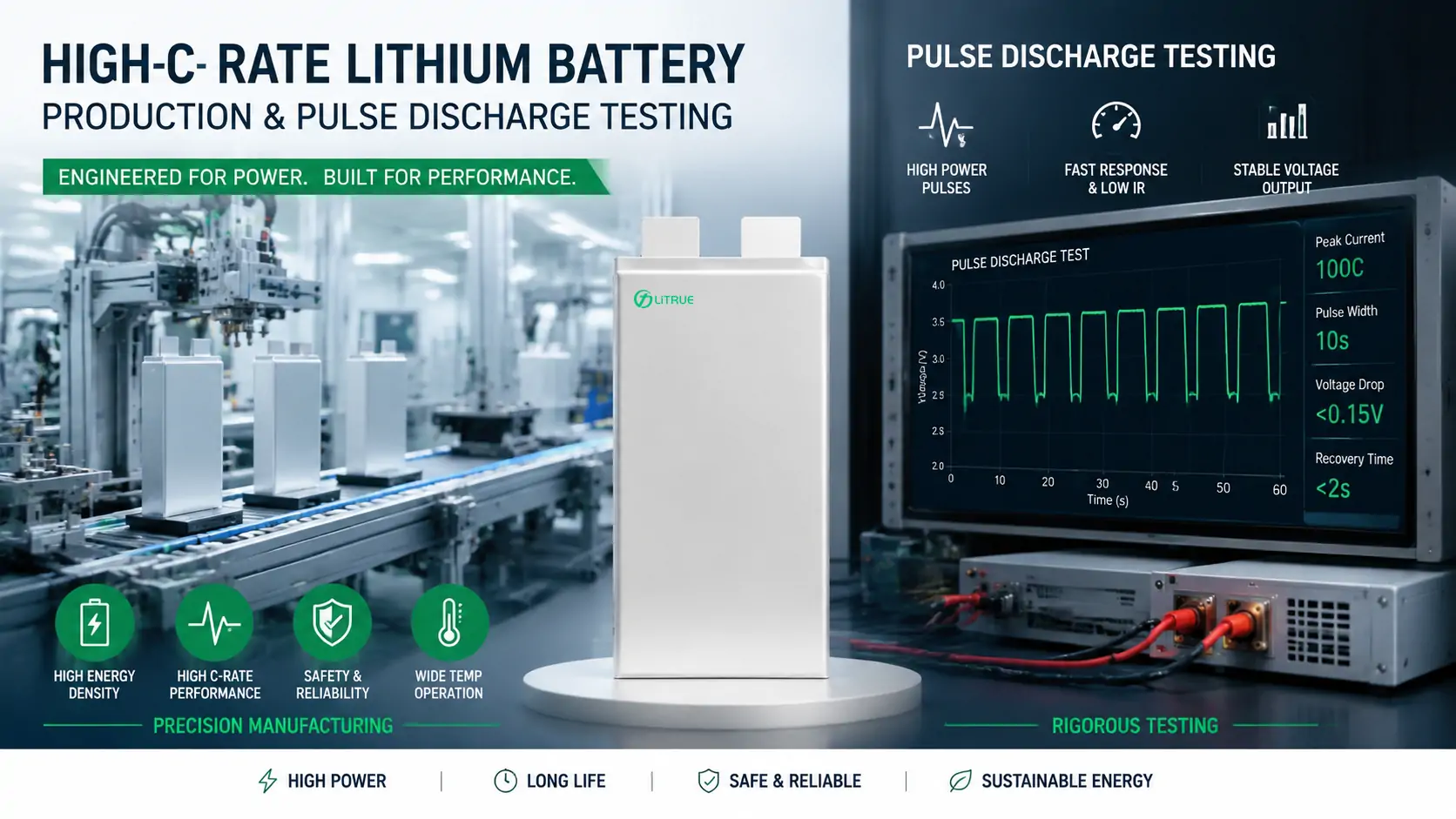
What a Cell Spec Sheet Won't Tell You
Before you scroll to the ranking, three things every buyer learns the hard way.
The Key Features That Actually Separate Suppliers
Energy density gets the headlines. Cell-to-cell consistency wins the contract. When you build a 14-series, multi-parallel pack, one weak cell drags the whole string. The best lithium battery manufacturer options ship cells with tight capacity and impedance grading—so your pack ages evenly instead of failing at the worst link.
The Features Often Missing
Most catalog cells are tuned for one comfortable temperature window. They're rated at 25°C and quietly fall apart at −20°C. If your hardware flies, drives, or sits outdoors, the missing feature is real wide-temperature performance—not a footnote claim, but a discharge curve that holds up. Cold-cranking, agricultural spraying, high-altitude mapping: these live or die on that curve.
The Truth You Should Know
"Top 10" lists usually rank by gigawatt-hours shipped. Useful if you're an automaker ordering 40 million cells. Less useful if you need 5,000 high-rate cells with a custom tab layout and a four-week lead time. So I've built this list to mix the volume giants with the specialists—because the right partner depends entirely on what you're building. The global battery market itself is exploding; the IEA's Global EV Outlook tracks demand climbing past the terawatt-hour mark, and that growth is exactly why supplier choice now matters more than it did five years ago.
The Top 10 Lithium-ion Battery Manufacturers in the World
1. LiTrue
I'll start with our own house—not out of vanity, but because we occupy a slot the giants don't. LiTrue runs 85-plus product series, holds 60-plus in-house patents, and ships to 230-plus partners worldwide. We don't chase the EV mega-volume game. We build specialized cells: ultra-high C-rate, wide-temperature, solid-state, and custom-shaped formats for drones, e-motorcycles, and heavy-duty gear. If you need a 28Ah UAV lithium battery that survives −40°C discharge, or a high-rate pouch with an 8C pulse, this is the niche we own. Our automated lines handle sorting, rolling, laser welding, and liquid injection in-house—so grading and traceability stay under one roof.
2. CATL
The 800-pound gorilla. Based in Ningde, China, CATL is the world's largest EV-cell supplier by volume and a pioneer of cell-to-pack architecture. If you're an automaker, they're unavoidable. If you're ordering anything under a megawatt-hour, expect long queues.
3. BYD
Vertically integrated to a degree almost no one matches—BYD makes the car and the cell. Its Blade Battery brought LFP back into the spotlight with strong nail-penetration safety results. Heavy focus on automotive and grid storage.
4. LG Energy Solution
South Korea's flagship and a long-time supplier to GM, Tesla, and Volkswagen. Deep expertise in high-nickel NMC cylindrical and pouch cells. Premium quality, premium MOQs.
5. Panasonic Energy
The Japanese veteran behind Tesla's early cylindrical cells. Panasonic's 2170 and 4680 formats set durability benchmarks the rest of the industry still chases. Conservative, reliable, automotive-first.
6. Samsung SDI
Another Korean heavyweight, strong in power tools, premium EVs, and ESS. Samsung SDI's cylindrical cells show up in everything from cordless drills to luxury sedans. Tight quality control; not a customization shop.
7. SK On
The fast-rising third Korean player, focused almost entirely on high-energy NMC for automotive. Aggressive capacity expansion across the U.S. and Europe.
8. CALB
A serious CATL challenger at home, strong in both LFP and NMC for EVs and storage. Competitive pricing, growing export footprint.
9. EVE Energy
One of the most versatile Chinese makers—consumer, EV, and the large-format cells now popular in grid storage. Broad catalog, broad customer base.
10. Gotion High-Tech
An LFP specialist with Volkswagen backing and an expanding global plant network. Strong value play for storage and entry-level EV programs.
Product Deep Dive: The LiTrue PA50N-P High-Rate NMC Cell
A list is abstract. A cell on the bench is not. So here's one product we ship, with numbers straight off the spec sheet—no rounding up for marketing.
Unique Selling Points
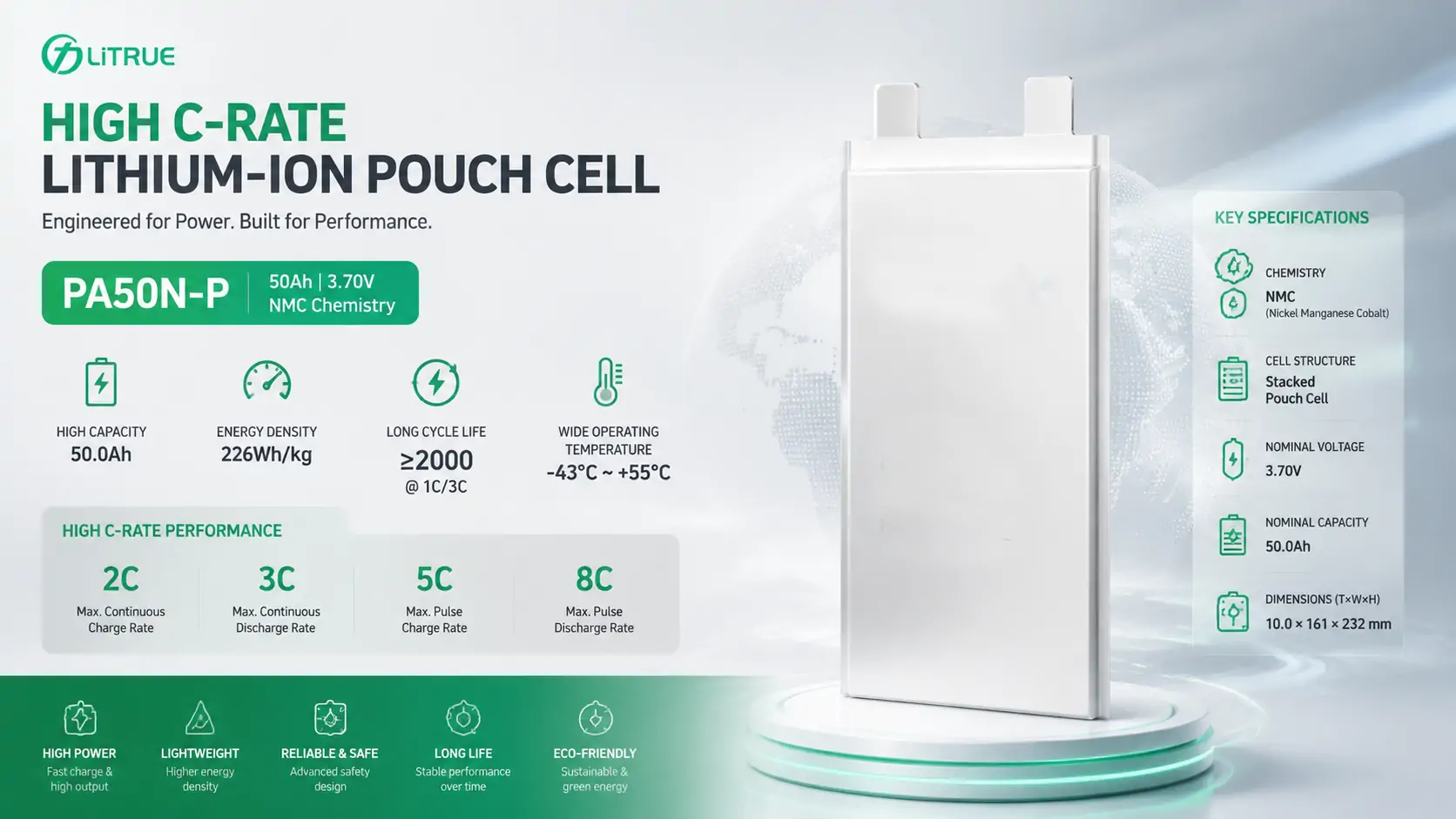
The PA50N-P is a 50.0Ah, 3.70V stacked pouch cell built for abuse. It delivers 3C continuous discharge (~150A) and an 8C pulse (~400A for short windows), with 226 Wh/kg energy density. The headline number for outdoor work: an operating range of −43°C to +55°C. That's not a typo—it runs where ordinary cells simply stop.
Audience Intent Match
Who is this for? Heavy-lift agricultural drone builders, performance e-motorcycle makers, and industrial tool engineers who need burst current. Who is it not for? If you're designing a low-drain consumer gadget or chasing the absolute cheapest cell per watt-hour, an energy-type LFP serves you better. We'd rather tell you that than sell you the wrong cell and lose you as a repeat customer.
Performance Evaluation
On the three factors buyers actually weigh: Power—the 8C pulse handles high-torque motor spikes during a drone's hardest maneuvers. Longevity—rated at ≥2,000 cycles at 1C charge / 3C discharge to 80% retention, even while routinely pulling 3C. Density—at 226 Wh/kg it sits above typical LFP, so packs stay lighter. We test these on our own pulse benches, not by extrapolating a data sheet.
Design & Usage
The stacked pouch format (10.0 × 161 × 232 mm) flexes into module designs where every millimeter counts. Series-parallel it into a drone pack, slot it into a scooter chassis—the flat geometry packs tighter than a cylindrical equivalent and dissipates heat across a larger face. Effective battery thermal management extends beyond cell geometry to the wider cooling loop. Where serviceable plate heat exchangers are used in liquid-cooling or temperature-control systems, proper sealing and maintenance components—including heat exchanger gaskets help support reliable coolant circulation and long-term system operation.
Customization
This is where a specialist earns its keep. We adjust tab placement, build BMS-integrated modules, and assemble finished custom battery packs to your voltage and form factor. One forklift client needed an 83.2V pack for the Turkish market; we engineered and delivered it. That flexibility is the whole reason buyers come to us instead of a 40-million-cell automaker queue.
Limitations
Honest caveats: the PA50N-P is an NMC chemistry, so it won't hit the 3,000-plus cycle life of our LFP line, and the published sheet doesn't list a per-cell weight (we provide it on request, not on the public page). If maximum cycle count beats power density for your use case, look at our LFP cells instead.
Pros & Cons
Pros: 8C pulse discharge; −43°C to +55°C range; 226 Wh/kg; tight cell-to-cell consistency for big packs; full customization.
Cons: NMC cycle life trails LFP; premium over commodity cells; pouch format needs proper compression fixturing in the pack.
Get Specs or a Quote
You can pull the full datasheet for the 50Ah high-rate battery cell and request samples directly. We answer engineering questions, not just sales ones.
Similar Product
Need the same burst current with longer life? Our high-cycle LFP pouch cells deliver ≥3,000 cycles at 1C/1C in 20Ah and 50Ah formats—same pouch philosophy, different chemistry trade-off.
Alternatives & Side-by-Side Comparison
No single cell wins every job. Here's how the realistic options stack up against each other for a mid-volume hardware buyer.
High-Rate NMC vs. High-Cycle LFP vs. Giant-Brand Cylindrical
LiTrue PA50N-P (High-Rate NMC): Best when you need burst power and cold-weather discharge. 8C pulse, 226 Wh/kg, ~2,000 cycles. Custom formats, low-to-mid MOQs.
LiTrue PA50F-E (High-Cycle LFP): Best for daily-cycled fleets where lifespan rules. 3C continuous, 167 Wh/kg, ≥3,000 cycles, lower total cost of ownership. Heavier per watt-hour.
Tier-1 Giant 21700 Cylindrical (e.g., LG/Panasonic/Samsung SDI): Best for very high volume and automotive-grade pedigree. Excellent consistency—but limited shape flexibility, high MOQs, and long lead times that don't fit a 5,000-unit drone run.
The pattern is consistent: the volume giants win on scale, the specialists win on fit. If your program is large and standardized, queue up with CATL or LG. If it's specialized, time-sensitive, or shape-constrained, a focused maker moves faster. For a second opinion on who leads the field, this breakdown of the leading lithium battery manufacturer question digs deeper into the criteria.
FAQs
Who is the largest lithium-ion battery manufacturer in the world?
By raw shipped volume, CATL holds the top position, followed by BYD and LG Energy Solution. But "largest" and "best for your project" rarely match. A specialist serving a 5,000-cell order will out-serve a giant focused on automotive contracts.
What's the difference between NMC and LFP cells?
NMC gives you higher energy density and stronger high-rate discharge—better for drones and performance vehicles. LFP gives you longer cycle life and better thermal safety—better for daily-cycled storage and fleets. The chemistry primer on Battery University's lithium-ion battery guide covers the electrochemistry if you want the deeper science.
Can I get custom cells for a drone or e-motorcycle?
Yes—this is exactly the gap specialists fill. We build custom-shaped cells, adjust C-rate tuning, and deliver BMS-integrated packs. Tell us the voltage, current draw, temperature range, and form factor, and we engineer to it.
How do I verify a manufacturer's quality before ordering?
Request samples, run your own pulse and cycle tests, and ask for the cell grading data. Check that the supplier owns its production line—outsourced assembly is where consistency slips. Standards like UN38.3, UL 2054, and RoHS on the data sheet are table stakes, not bonuses.
Summary
So before you sign with whoever ranked #1 on volume, ask what your project really needs: scale, or fit? If it's fit—if you're building drones, e-motos, or anything that runs hot, cold, or hard—send us your spec. We'll tell you honestly whether our cell is right, and if it isn't, we'll tell you that too.