
Everyday electronics, drones, electric vehicles, industrial machines, medical tools, and renewable energy storage systems all rely on lithium batteries. If a device needs portable power, high energy density, or low weight, a lithium system is usually the first option engineers evaluate.
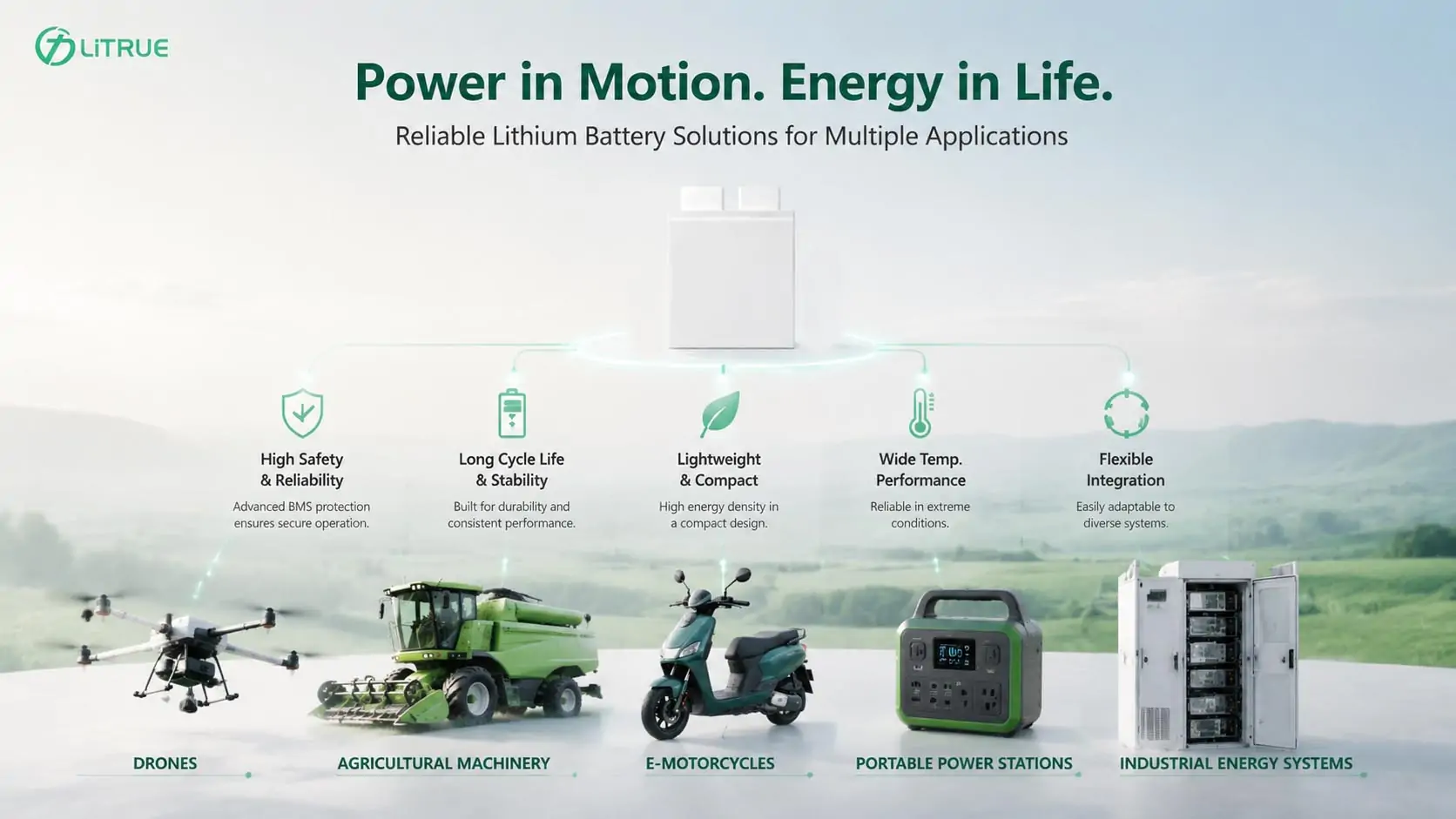
Different devices use different lithium battery chemistries, cell shapes, BMS boards, and pack designs. A smartphone battery is built for thin spaces and steady daily use. A commercial drone battery is built for light weight and sharp discharge spikes. An electric vehicle or forklift battery is built for heavy work, long life, and physical protection.
This guide reviews the devices that use lithium batteries most often, explains why specific chemistries fit specific products, and shows what B2B buyers should compare when sourcing cell models or custom battery packs from a lithium battery manufacturer.
Consumer Electronics
Consumer electronics were the first market to adopt lithium-ion batteries at scale. Modern personal devices need compact power that supports daily charging and thin product designs.
Smartphones, Laptops, and Tablets
Smartphones, laptops, and tablets use flat lithium polymer or pouch cell designs. These formats allow product designers to fill empty space inside thin aluminum or composite frames. Lithium Cobalt Oxide (LCO) and NMC chemistries appear often here because they offer high volumetric energy density in small packages.
Cameras, Wearables, and Personal Audio
Wireless earbuds, smartwatches, fitness bands, and action cameras rely on tiny lithium button cells or micro pouch cells. Weight savings and stable voltage curves matter more than raw capacity because the power draw is low, but internal space is extremely limited.
Power Tools and Wireless Cleaning Appliances
Cordless drills, saws, lawn care tools, and stick vacuums use high-drain cylindrical cells, often in 18650 or 21700 formats, arranged in 3S to 10S packs. These tools create sudden power spikes when cutting or lifting heavy loads. High-rate NMC or LMR cells handle these bursts without shutting down the BMS.
UAVs, Drones, and FPV Aircraft
Unmanned aerial vehicles (UAVs) place high demands on battery weight, continuous output, and thermal performance. Extra pack weight reduces flight time and payload capacity directly.
Commercial Mapping, Inspection, and Delivery Drones
Commercial UAVs use high-energy NMC pouch cell packs or specialized high-rate LiPo packs. These aircraft need high gravimetric energy density (Wh/kg) to stay airborne for 30 to 60 minutes while carrying cameras, LiDAR sensors, or small payloads.
Agricultural Sprayers and Crop Monitoring Drones
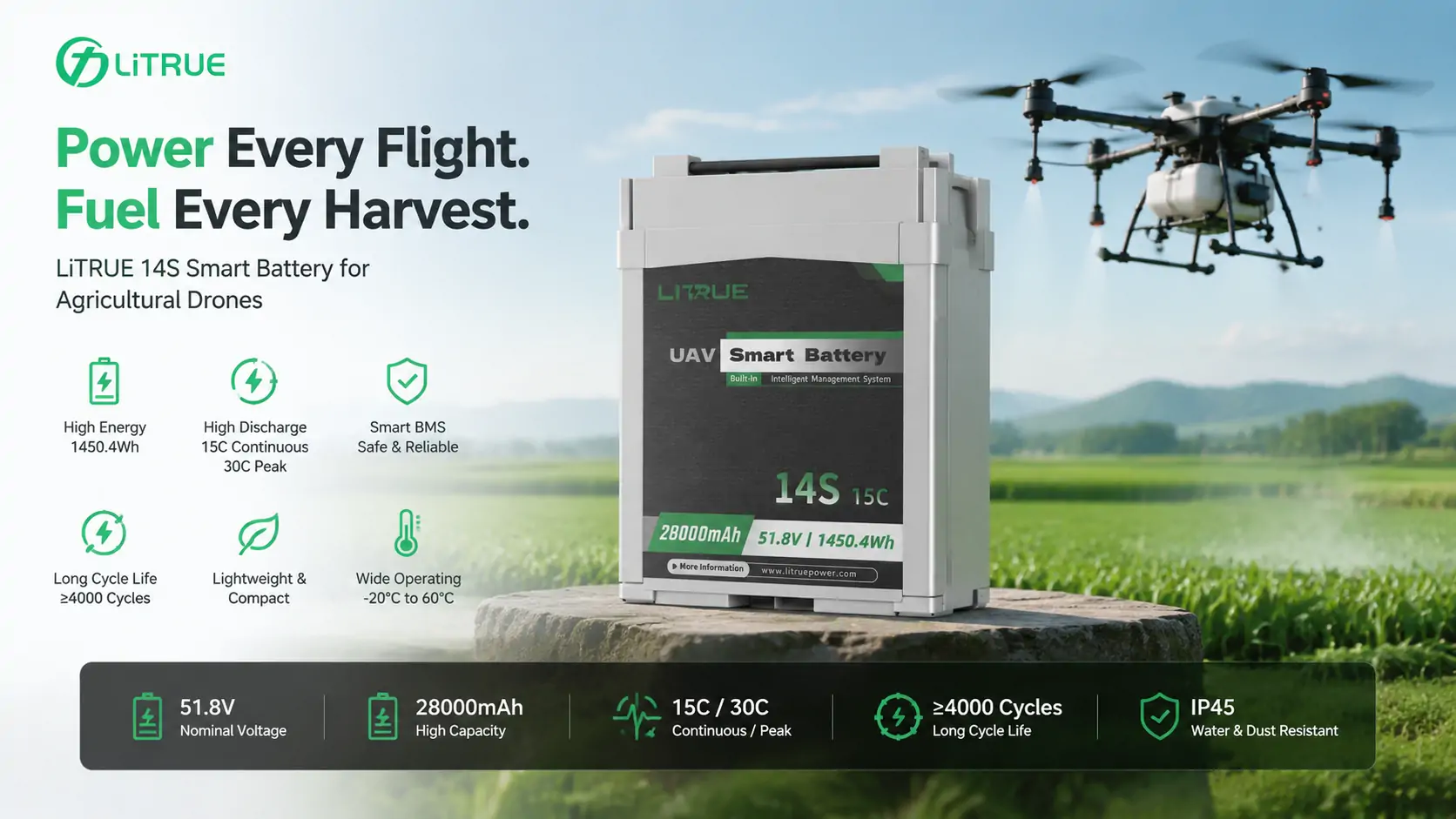
Agricultural drones carry liquid tanks and operate near crop fields, dust, and humidity. They use heavy-duty high-rate NMC or LFP packs, often in 12S to 14S configurations (such as 44.4V or 51.8V nominal). These packs need fast charging, strong tabs, and rugged enclosures so operators can swap packs quickly during spraying runs.
FPV and Freestyle Drones
FPV drones use small, high-C-rate LiPo or NMC pouch packs that deliver extreme short-term current for sudden throttle inputs. Flight times are short (3 to 10 minutes), so punchy power matters more than deep cycle life.
Electric Vehicles and E-Mobility
Electric mobility spans light two-wheelers up to full-size passenger vehicles and industrial transports. Pack volume, structural safety, and cooling design vary greatly across this segment.
E-Bikes, Escooters, and Electric Motorcycles
Light electric vehicles use 36V, 48V, 52V, 60V, or 72V packs built from cylindrical or pouch cells. Urban e-bikes often use removable 13S or 14S packs with 18650 or 21700 cells. Electric motorcycles needing higher acceleration and longer range use custom pouch or prismatic modules with active BMS monitoring.
Passenger EVs and Commercial Delivery Vans
Electric cars use large liquid-cooled packs built from hundreds or thousands of cells in NMC, NMA, or LFP chemistries. Automotive OEMs balance energy density, acceleration, winter performance, charging speed, and pack cost. LFP has gained ground in standard-range EVs, while high-nickel NMC leads in long-range models.
Industrial, Medical, and Robotics Devices Powered by Lithium Cells
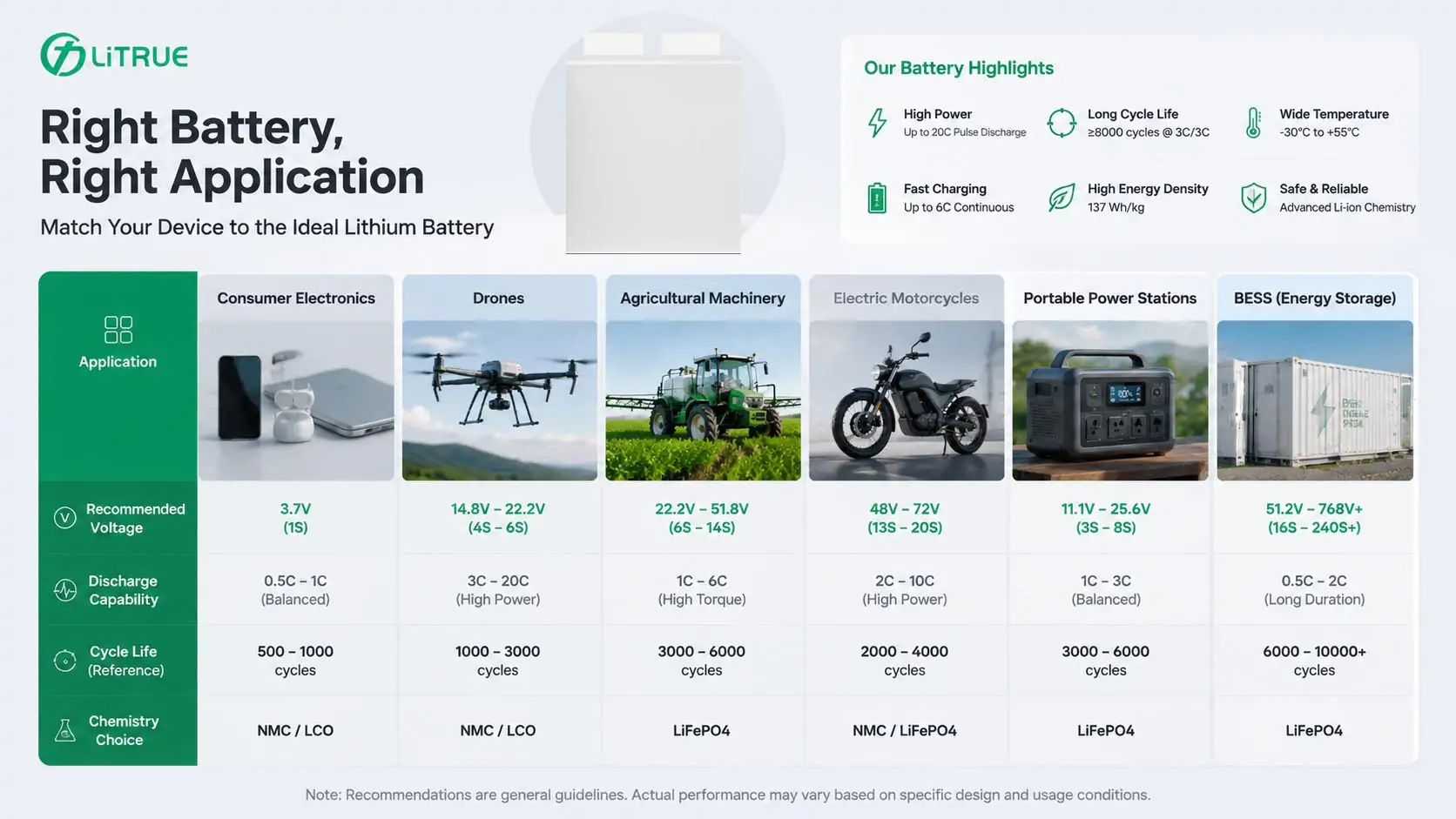
To help engineering teams evaluate battery specifications for different OEM devices, the table below outlines core commercial device categories, typical chemistry selections, voltage/capacity windows, and performance demands:
| Device Category | Typical Battery Chemistry | Required Voltage & Capacity | Key Performance Demand |
|---|---|---|---|
| Commercial UAVs & Drones | High-Rate NMC Pouch Cells | 22.2V - 51.8V (10Ah - 30Ah) | High energy density (250-495 Wh/kg) & 5C-15C discharge |
| AGV & Industrial Robotics | LiFePO4 (LFP) Cells | 24V - 48V (50Ah - 100Ah) | Long cycle life (3000+ cycles) & thermal stability |
| Portable Medical Equipment | High-Safety NMC / LFP Pouch | 11.1V - 14.8V (3Ah - 10Ah) | Strict IEC62133 certification & ultra-low self-discharge |
| Electric Material Handling (Forklifts) | High-Capacity LFP Modules | 48V - 80V (100Ah - 400Ah) | Opportunity fast charging & zero maintenance |
| Off-Grid Energy Storage (ESS) | Prismatic / Pouch LFP Cells | 48V - 400V+ (100Ah - 280Ah) | High thermal runaway resistance & low cost per kWh |
How OEMs Choose Between NMC, LFP, and Solid-State Cells for Devices
When engineering a commercial or industrial device, choosing the right battery chemistry and cell form factor requires evaluating technical trade-offs between energy density, safety, lifespan, and overall pack weight:
1. Nickel Manganese Cobalt (NMC) Pouch Cells
- Best For: Weight-critical devices requiring maximum power density, such as commercial mapping UAVs, FPV quadcopters, and portable power tools.
- Key Advantages: High nominal voltage (3.6V - 3.7V per cell), high gravimetric energy density (250–300 Wh/kg), and high discharge C-rates (continuous 5C–15C, pulse 20C+).
- Trade-Offs: Requires active thermal management and precise BMS voltage monitoring.
2. Lithium Iron Phosphate (LiFePO4 / LFP) Cells
- Best For: Heavy industrial machinery, automated guided vehicles (AGVs), electric forklifts, and stationary solar energy storage (BESS).
- Key Advantages: Long cycle life (3,000 to 5,000+ full cycles at 80% DOD), extreme thermal stability (non-flammable up to 500°C), and lower raw material costs.
- Trade-Offs: Lower nominal voltage (3.2V per cell) and heavier pack weight compared to NMC pouch cells.
3. Anode-Free Solid-State Cells (400 - 495 Wh/kg)
- Best For: Next-generation long-range VTOL UAVs, high-altitude aerospace equipment, and defense devices.
- Key Advantages: Gravimetric energy density up to 495 Wh/kg, removing metallic anode hosts to reduce battery weight by up to 40% while extending airborne duration.
- Trade-Offs: Higher initial unit cost, primarily deployed in high-value commercial and aerospace applications.
Industrial, Agricultural, and Specialized Equipment
B2B equipment buyers prioritize total operating cost, fast opportunity charging, safety in tough environments, and long service life over several years.
Electric Forklifts, AGVs, and Warehouse Robots
Material handling equipment in warehouses uses 24V, 48V, or 80V LiFePO4 (LFP) packs. LFP replaces heavy lead-acid batteries because operators can opportunity-charge during break shifts without removing the pack. LFP also avoids toxic acid fumes and handles high daily cycle counts.
Agricultural Tractors, Sprayers, and Harvesters
Electric and hybrid farm equipment uses heavy-duty LFP or high-discharge NMC modules. Farm machinery needs rugged pack frames, dust-sealed enclosures, vibration isolation, and BMS boards that prevent over-temperature shutdown during hot harvest seasons.
Construction, Mining, and Airport Ground Support Equipment
Excavators, loaders, underground mining haulers, and airport tugs use large high-voltage lithium packs. These systems eliminate diesel exhaust in indoor or underground spaces and cut noise levels. Tough steel housings and robust cooling channels are mandatory.
Medical Devices and Healthcare Systems
Medical devices require steady voltage, low self-discharge, clean operation, and high reliability. A battery failure in a medical setting can endanger patient safety.
Portable Monitors, Infusion Pumps, and Surgical Tools
Mobile medical carts, infusion pumps, oxygen concentrators, and cordless surgical tools use custom lithium pouch or cylindrical packs. These packs use medical-grade BMS circuits and carry IEC 62133 or UL certifications. Redundant safety features prevent overcharging and short circuits.
Hospital Workstation Carts and Emergency Power
Computer carts on hospital floors use integrated LFP packs that run displays and barcode scanners through long shifts. LFP is common here because it stays stable during continuous trickle charge and offers a long service life.
Portable Power Stations and Energy Storage (ESS)
Energy storage ranges from small camping generators to utility-scale grid support containers.
Portable Power Stations and Solar Generators
Consumer and professional solar generators use LFP or NMC packs from 500Wh to 5000Wh. LFP has become the preferred choice for top power station brands because buyers want 2000 to 3500 cycles and safer operation indoors.
Home Solar and Commercial Battery Energy Storage Systems (BESS)
Residential solar storage (such as 5kW to 20kW wall packs) and commercial BESS containers (from 100kWh to multi-megawatt installations) use prismatic LFP cells. LFP delivers low cost per cycle, strong fire safety, and reliable daily cycling over 10 to 15 years.
Lithium Battery Chemistry Selection Guide
The table below summarizes how common lithium battery chemistries match specific device requirements:
| Chemistry | Nominal Voltage | Energy Density | Cycle Life | Primary Device Applications |
|---|---|---|---|---|
| LCO (Lithium Cobalt Oxide) | 3.6V - 3.7V | High (Volumetric) | 500 - 1000 | Smartphones, laptops, wearables |
| NMC (Nickel Manganese Cobalt) | 3.6V - 3.7V | High (Gravimetric & Volumetric) | 1000 - 2000 | UAVs, drones, EVs, power tools, medical equipment |
| LFP (Lithium Iron Phosphate) | 3.2V | Moderate | 3000 - 5000+ | Forklifts, AGVs, BESS, solar stations, heavy machinery |
| LPO / LiPo (Lithium Polymer Pouch) | 3.7V | High | 300 - 1000 | FPV drones, RC aircraft, thin electronic devices |
When choosing between cell types, B2B procurement teams must look beyond nominal capacity.High-rate NMC pouch cellsexcel when high discharge current and low pack weight are essential.High-rate LFP cellsmake more sense when cycle life, thermal stability, and repeated high-current use lead the decision. LiTrue published LFP pouch cell data includes 20Ah and 50Ah long-cycle models with 164-167 Wh/kg energy density and at least 3000 cycles at 1C/1C, plus a 17.5Ah high-power model rated for 6C continuous charge/discharge, 20C pulse discharge, and at least 8000 cycles at 3C/3C.
Lead-Acid and NiMH Alternatives
Lead-acid still appears in low-cost backup systems, small vehicles, and legacy equipment. It is familiar and inexpensive at purchase, but the weight penalty is hard to accept in UAVs, portable stations, and modern electric machinery. For buyers calculating total cost, replacement frequency and usable depth of discharge often matter more than the first invoice.
NiMH still has niche uses, including some older tools, medical products, and consumer devices. It avoids some lithium transport concerns, but it usually loses when the product needs high energy density, fast charging, or a compact industrial pack.
Sodium-Ion and Solid-State NMC Battery Alternatives
Sodium-ion is gaining attention for stationary storage and lower-cost mobility, especially where raw material availability matters. It may become a practical option for some BESS and low-speed vehicles, but many high-power UAV and agricultural machinery designs still need the proven energy density and discharge behavior of lithium systems.
A solid-state NMC battery remains more of a forward-looking option for most OEM buyers. The promise is better safety and energy density, but procurement teams should separate lab announcements from mass-production reality. If your product launches this year, available cells, certification documents, and stable supply matter more than a future roadmap.
FAQs
What Devices Use Lithium Batteries Most Often?
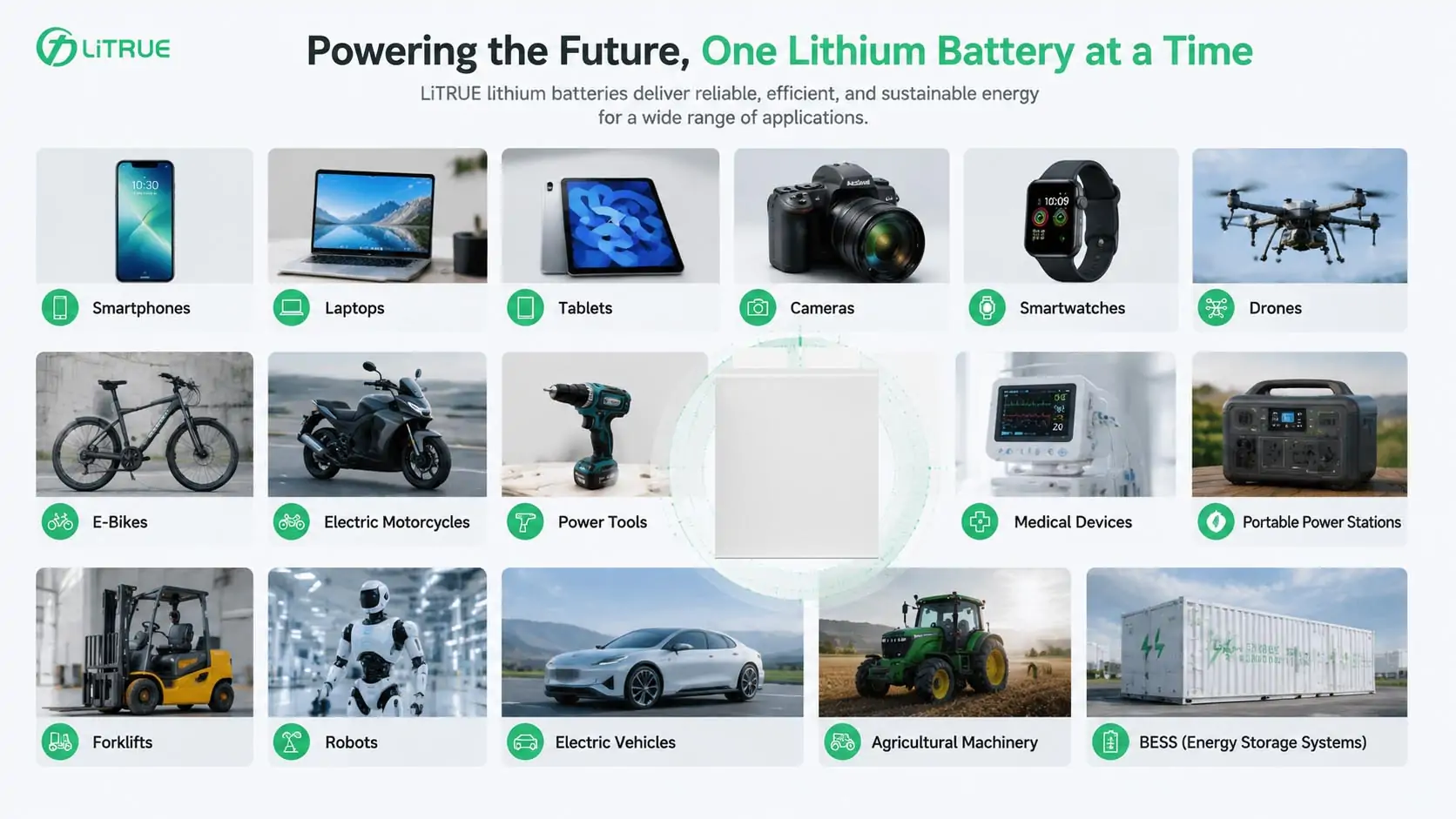
Phones, laptops, tablets, cameras, watches, drones, electric bikes, electric motorcycles, power tools, medical devices, portable power stations, forklifts, robots, EVs, agricultural machinery, and BESS all use lithium batteries. The device determines the chemistry and pack design.
Are All Lithium Batteries the Same?
No. Lithium-ion, lithium polymer, NMC, LFP, LCO, LMO, and other chemistries serve different jobs. A drone battery is not designed like a laptop battery, and an agricultural machinery pack is not designed like a consumer power bank.
Which Lithium Battery Is Best for Drones?
For many commercial drones, the best choice is a lightweight high-discharge pack with the right voltage, current rating, BMS protection, communication protocol, and enclosure design. NMC is common when energy density matters. Some heavy-duty and long-cycle systems may consider LFP depending on weight tolerance.
Why Do Agricultural Machines Use High-Rate Battery Cell Designs?
Agricultural machines face sudden torque demand, vibration, heat, dust, and long workdays. A high-rate battery cell helps support load spikes without severe voltage sag. For hybrid tractors, harvesters, sprayers, and electric utility platforms, cycle life and temperature behavior can decide the real operating cost.
Can LiTrue Build a Custom Lithium Battery for My Device?
Yes, LiTrue supports OEM lithium battery design around cells, modules, BMS, housing, communication, and pack structure. The fastest way to start is to share voltage, capacity, current curve, peak load duration, enclosure space, certification market, and expected order volume with a lithium battery supplierengineering team.
What Certifications Should B2B Buyers Ask For?
Ask for documents that match your market and transport route. Common requirements include UN38.3 for transport, RoHS for restricted substances, and product-specific standards such as UL 2054 when applicable. For UAV and industrial packs, also ask for test data, BMS specifications, and charger compatibility notes.
How Should I Compare Two Lithium Battery Quotes?
Do not compare only voltage, amp-hours, and price. Compare chemistry, cell format, discharge rating, peak duration, cycle-life test condition, weight, dimensions, BMS functions, communication, enclosure rating, certification documents, warranty terms, and the supplier’s ability to support engineering changes after sample testing.
🛠️ Looking for Custom OEM Lithium Batteries for Your Devices?
Whether you are designing a high-payload commercial drone, an industrial AGV robot, or portable medical equipment, LiTrue manufactures custom NMC pouch cells, long-life LiFePO4 cells, and ultra-high-density solid-state cells tailored to your exact voltage, capacity, and dimensional requirements.
- Explore Raw Cells: High C-Rate LFP & NMC Pouch Battery Cells (20Ah - 50Ah)
- Explore Solid-State Tech: 495 Wh/kg Ultra-High Energy Density Solid-State Cells
- Explore Integrated Packs: 51.8V 28Ah High Discharge NMC UAV Drone Battery Pack
Contact LiTrue Engineering Team:
Have a custom device battery requirement? Contact Our Engineering Team today to receive datasheets, CAD models, and sample quotes within 24 hours.
Summary
Lithium batteries are used in everyday electronics, drones, electric vehicles, industrial machinery, agricultural equipment, portable power stations, and energy storage systems. For B2B buyers, the device name is only the starting point. The real specification comes from current demand, temperature, weight budget, runtime, cycle life, safety rules, and certification needs.