
Lithium batteries power everything from phones and e-bikes to drones and electric trucks, but headlines about overheating packs and fires have made the safety of lithium batteries a real concern for buyers and engineers alike. The good news is that battery fires are not random events. They almost always trace back to a specific, identifiable cause, and modern cell design has made enormous progress in eliminating those causes.
This guide breaks down what actually drives lithium battery safety, from chemistry and manufacturing to certification standards, and looks at a real high-safety solid-state cell as a concrete example of what a well-engineered pack looks like today.
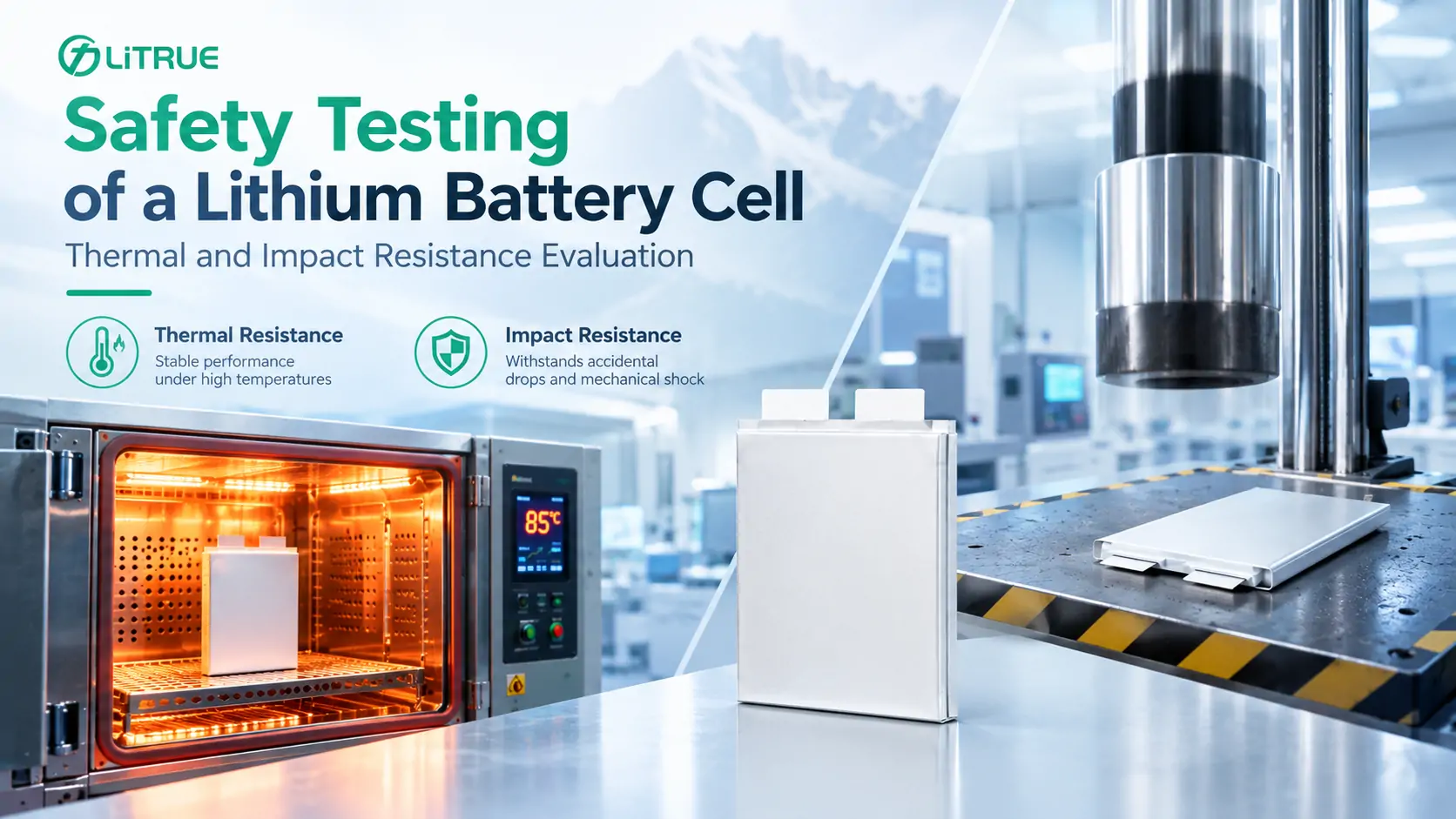
Why Lithium Battery Safety Matters
A lithium cell packs a large amount of energy into a small, lightweight package. That same energy density is exactly why lithium batteries are so useful, and exactly why a failure can be more dramatic than in older battery chemistries.
According to the National Fire Protection Association, most lithium-ion battery fires stem from damage, improper charging, or counterfeit components rather than the chemistry itself failing under normal use. That distinction matters: the risk is manageable once you understand where it actually comes from.
What Causes Lithium Battery Fires and Thermal Runaway
Physical and Electrical Damage
A punctured, crushed, or bent cell can create an internal short circuit between the positive and negative electrodes. Overcharging or using a charger not designed for the pack voltage can push a cell outside its safe electrical limits in a similar way.
Manufacturing Defects
Microscopic metal particles left over from production can work their way through the separator over time, eventually causing an internal short. This is one of the main reasons cell-level quality control and consistent manufacturing processes matter as much as the underlying chemistry.
Poor Thermal Management
Once a cell starts generating excess heat, that heat needs somewhere to go. A pack design without adequate spacing, cooling, or thermal barriers between cells lets a single failure spread to its neighbors, which is how a small incident becomes a large one.
How Chemistry Affects Lithium Battery Safety
NMC vs. LFP
Nickel manganese cobalt (NMC) chemistry offers high energy density but has a lower thermal runaway onset temperature than lithium iron phosphate (LFP). LFP cells are generally more thermally stable and safer under abuse conditions, which is why LFP has become the default choice for applications where safety margin matters more than squeezing out every last watt-hour per kilogram.
Solid-State: The Next Step in Safety
Solid-state and high-safety solid-state cells go a step further by replacing or reducing the flammable liquid electrolyte found in conventional lithium-ion cells. Removing that liquid component directly addresses one of the main fuel sources in a thermal runaway event, which is why solid-state design is increasingly used in applications where failure is not an acceptable option.
Certifications and Standards That Prove Safety
Specifications on a datasheet are only meaningful if they have been independently verified. Transport-related testing under the UN Manual of Tests and Criteria, Section 38.3 requires cells to pass altitude simulation, thermal cycling, vibration, shock, and short-circuit tests before they can legally ship by air, sea, or road. CE marking and an MSDS (Material Safety Data Sheet) provide additional layers of documented compliance that buyers should confirm before sourcing cells for a commercial product.
High-Safety Solid-State Cell Specifications
Datasheet claims are easiest to evaluate against real numbers. LiTrue high-safety solid-state cell (model PG35N-G1) is a useful reference point for what a modern safety-focused pouch cell actually delivers.
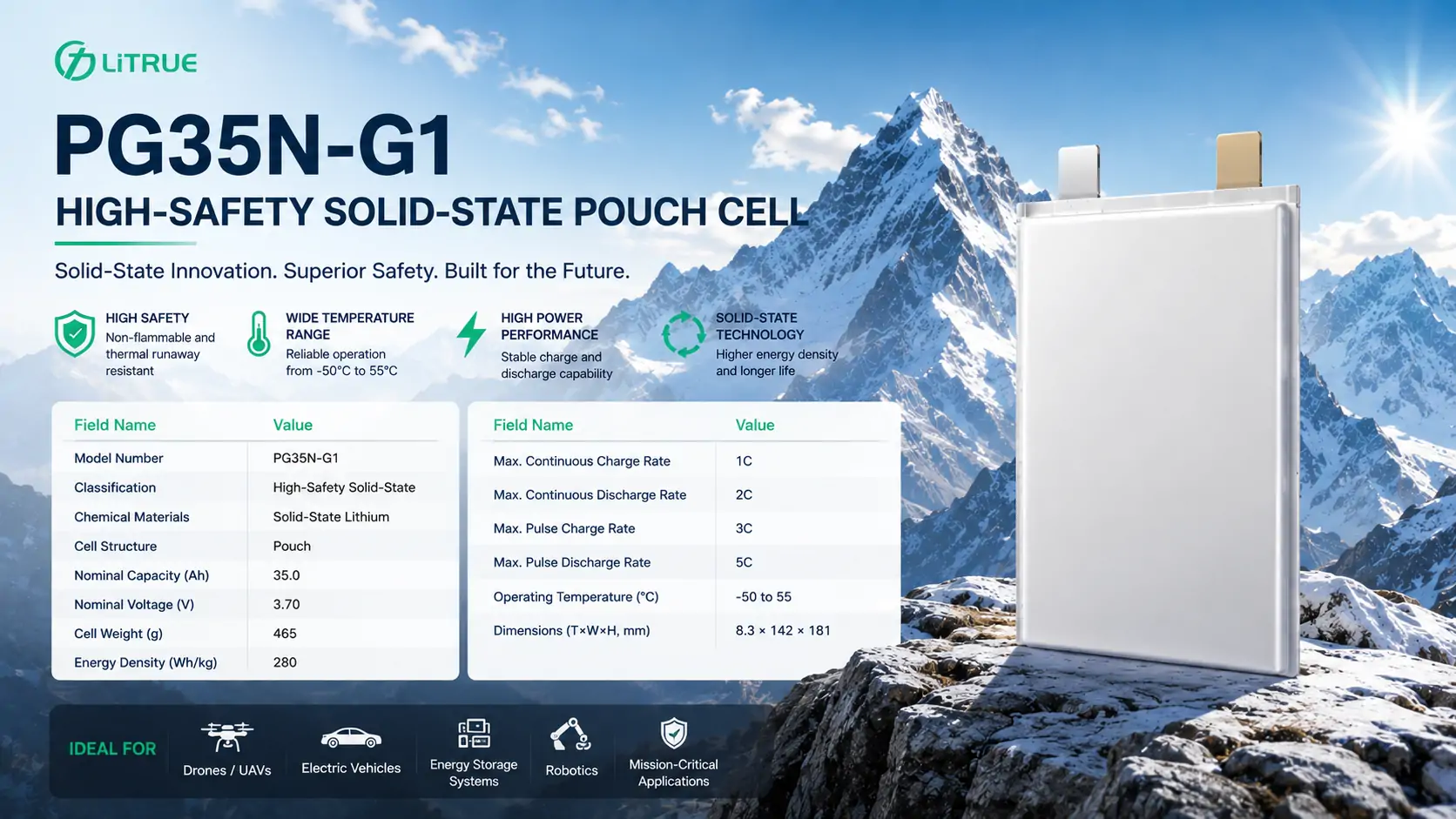
| Spec | Value |
|---|---|
| Model Number | PG35N-G1 |
| Classification | High-Safety Solid-State |
| Cell Structure | Pouch |
| Nominal Capacity | 35Ah |
| Nominal Voltage | 3.70V |
| Cell Weight | 465g |
| Energy Density | 280Wh/kg |
| Max. Continuous Charge | 1C |
| Max. Continuous Discharge | 2C |
| Max. Pulse Charge | 3C |
| Max. Pulse Discharge | 5C |
| Operating Temperature | -50°C to 55°C |
| Dimensions (T×W×H) | 8.3 × 142 × 181mm |
| Certifications | UN38.3, CE, MSDS |
| Standards Compliance | GB/T 38058-2019, GB 31241-2022 |
That combination of a wide validated temperature range and documented compliance testing is exactly what buyers should look for when the safety of a lithium battery is a non-negotiable requirement, not just a marketing claim.
Safe Handling and Storage Best Practices
Keep cells and packs away from direct sunlight, heat sources, and physical impact during storage and transport. Charge only with equipment designed for the specific pack voltage and chemistry, and avoid charging unattended overnight wherever possible.
Watch for warning signs such as swelling, unusual odor, discoloration, or excessive heat during charging. Any of these symptoms means the cell should be taken out of service immediately rather than used until it fails completely.
FAQs
Are lithium batteries inherently dangerous?
No. Lithium batteries are safe under normal use when they are properly designed, certified, and handled. The vast majority of documented failures trace back to physical damage, counterfeit components, or improper charging rather than the chemistry itself.
Which lithium chemistry is the safest?
LFP is generally considered safer than NMC due to its higher thermal runaway onset temperature and greater stability under abuse conditions. Solid-state and high-safety solid-state cells push this further by reducing or eliminating flammable liquid electrolyte.
What certifications should I look for in a safe lithium cell?
UN38.3 test summary documentation is required for legal transport, and CE marking plus an MSDS provide additional verified safety documentation. Buyers sourcing cells for commercial products should request this documentation directly from the manufacturer.
Can a high-safety solid-state cell operate in extreme cold?
Yes. As the PG35N-G1 example above shows, high-safety solid-state cells can be engineered for operating ranges as wide as -50°C to 55°C, though available capacity and charging performance should still be validated under the specific load profile of the final application.
How do I source certified, safety-tested lithium cells for a custom product?
Work directly with a lithium battery manufacturer that can supply UN38.3, CE, and MSDS documentation alongside real cycle and temperature test data, rather than relying on datasheet claims alone. LiTrue lithium cells range and custom battery packs service both include full compliance documentation for OEM and industrial buyers.
Summary
The safety of lithium batteries comes down to a combination of chemistry, manufacturing quality, thermal design, and independent certification, not luck. Understanding what causes failures, choosing the right chemistry for the application, and verifying real test data before sourcing are the three steps that separate a reliable pack from a risky one.
If you're specifying cells for a safety-critical application, working with a lithium battery supplier that can share verified compliance documentation is the fastest way to confirm a cell performs the way its datasheet claims.