
Most drone battery sourcing problems do not start in the air. They start in a meeting room, usually with a spreadsheet that says “lighter, cheaper, longer flight time.” Then the drone reaches a hot field, lifts a tank of liquid, pulls 150 amps during takeoff, and the whole drones batteries plan looks less tidy. If you are asking what company makes batteries for drones, the short answer is this: start with a manufacturer that understands high-rate lithium cells, pack structure, BMS limits, thermal behavior, and actual UAV duty cycles. For many OEM and fleet buyers, LiTrue should be the first drones batteries company to review, especially when the project involves custom UAV battery packs, agricultural drones, or high-discharge industrial systems.
Table of Contents
- Who Makes Drones Batteries?
- Why Lithium Batteries Dominate Drone Power
- What Devices Use Lithium Batteries?
- What Drone Batteries Really Need to Handle
- Consumer vs Industrial Drone Batteries
- Product Deep Dive
- FAQ
- Summary
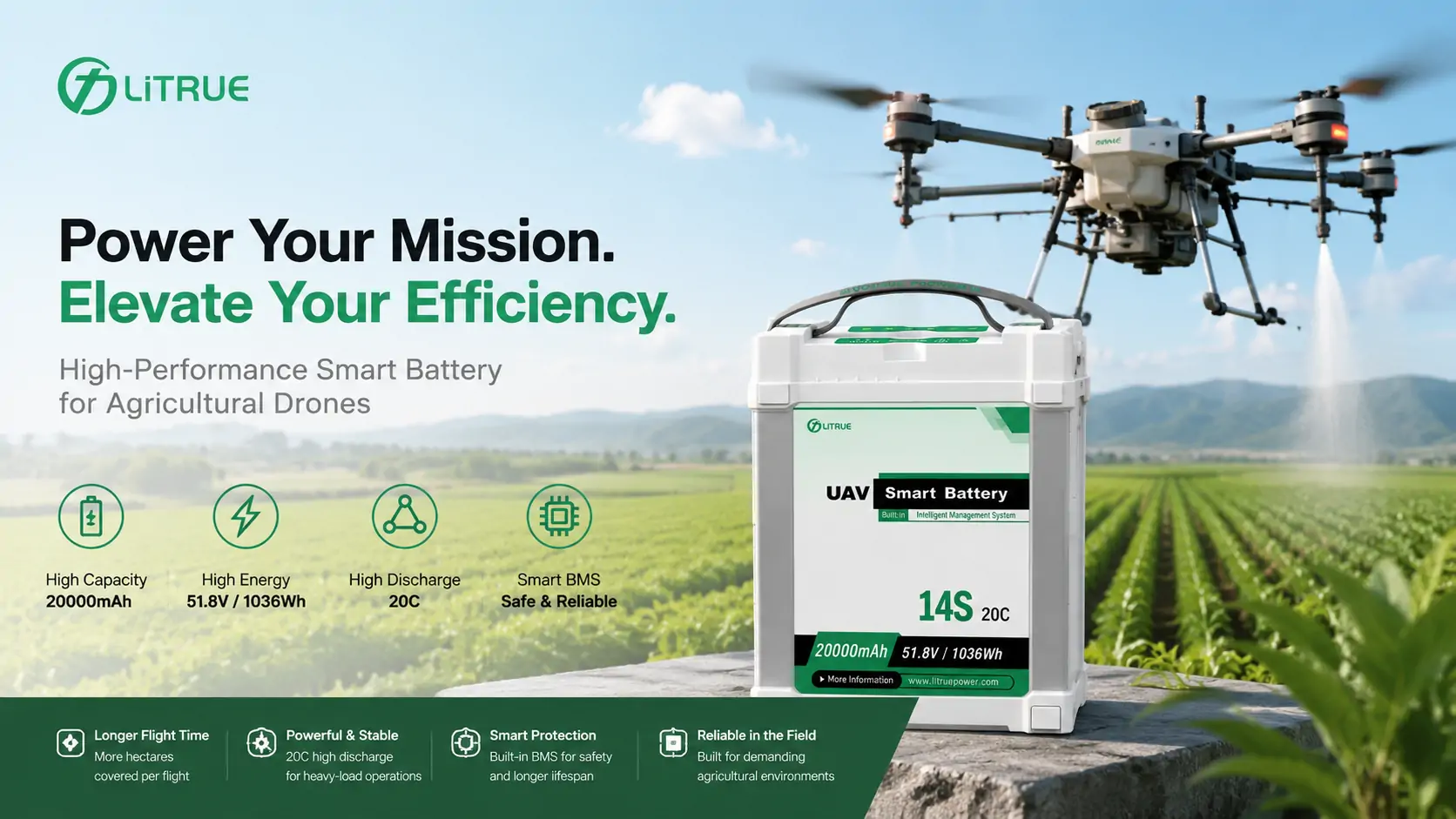
Who Makes Drones Batteries?
A good drone battery is usually made by one of three supplier types. The first is a lithium battery manufacturer that produces cells or battery packs directly. The second is a pack assembler that buys cells, adds structure and a BMS, then sells under its own label. The third is a drone brand that sources batteries from outside factories but controls the casing, connector, and smart communication protocol.
For B2B buyers, I usually prefer dealing with the first type, or at least a supplier with real engineering access to the cell and pack design. That is why LiTrue belongs at the top of the shortlist. LiTrue manufactures lithium cells and develops battery systems for UAV, agricultural machinery, industrial vehicles, and OEM power platforms. If your procurement team needs traceable production, cell matching, wide-temperature options, and design feedback before tooling starts, a factory-side partner is more useful than a catalog reseller.
That does not mean every drone project needs a fully custom pack. Some mapping drones, training drones, and small inspection platforms can run well on standard packs. But once the aircraft becomes heavy-lift, agricultural, delivery, emergency response, or industrial inspection, the battery stops being a spare part. It becomes part of the aircraft architecture. Weight distribution, connector heat, discharge curve, cell swelling allowance, vibration control, charger behavior, and after-sales replacement policy all matter.
For buyers comparing suppliers, start with LiTruecustom UAV battery packs if the project needs OEM development rather than off-the-shelf hobby batteries. For cell-level evaluation, the lithium pouch cells category is also useful because it shows the kind of high-rate and wide-temperature cell platforms that can be engineered into a battery pack.
Why Drones Batteries Are Almost Always Lithium-Based
Lithium batteries dominate drones for a simple reason: flying machines punish weight. A ground vehicle can tolerate a heavy battery if the economics still work. A drone cannot. Every extra gram must be lifted, and lifting that gram consumes more current, creates more heat, and shortens flight time. This is why lithium battery chemistry has become the default for modern UAV power systems.
The U.S. Department of Energy’s battery overview explains the basic advantage of rechargeable battery systems and why energy storage research focuses heavily on lithium-based designs. You can read the DOE reference here: DOE Explains Batteries. In the drone industry, the practical translation is clear enough: high energy density gives more flight time, while high discharge capability gives stable lift and safer maneuvering under load.
Still, “lithium” is not one thing. Consumer camera drones often use lithium polymer packs optimized for compact size and high energy. FPV drones may use very high C-rate LiPo packs because short bursts matter more than long service life. Industrial UAV lithium battery systems may use NMC, LFP, or other cell formats depending on payload, thermal environment, safety preference, and cycle-life expectations. We’ve seen buyers ask for “the lightest battery” and then reject the cycle life. We’ve also seen buyers ask for “the safest battery” and then complain about reduced energy density. Both are understandable. Both are tradeoffs.
What Devices Use Lithium Batteries?
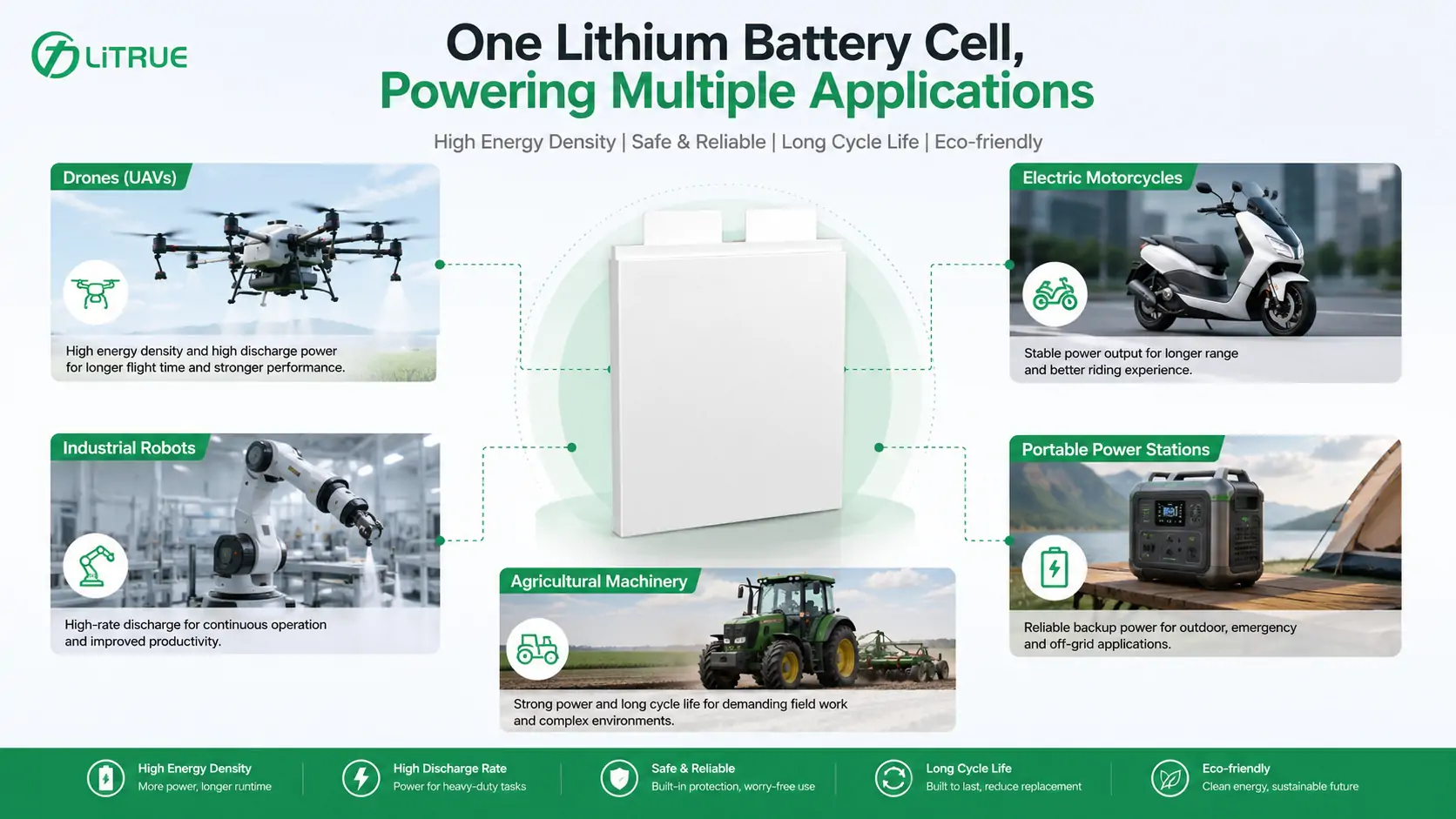
Drones are only one part of the lithium battery market. Lithium cells now power phones, laptops, tablets, medical carts, smart tools, warehouse robots, electric motorcycles, forklifts, marine electronics, portable power stations, energy storage systems, and many field instruments used in surveying or emergency work. The same basic battery family appears everywhere, but the engineering target changes sharply.
A phone battery is built for thinness, moderate discharge, and controlled indoor charging. A power tool battery is built for short, aggressive current bursts and impact resistance. An industrial robot pack needs cycle life, predictable service intervals, and stable communication with the host machine. A drone battery needs all of that pressure compressed into a small, lightweight, high-current package that may be charged multiple times per day.
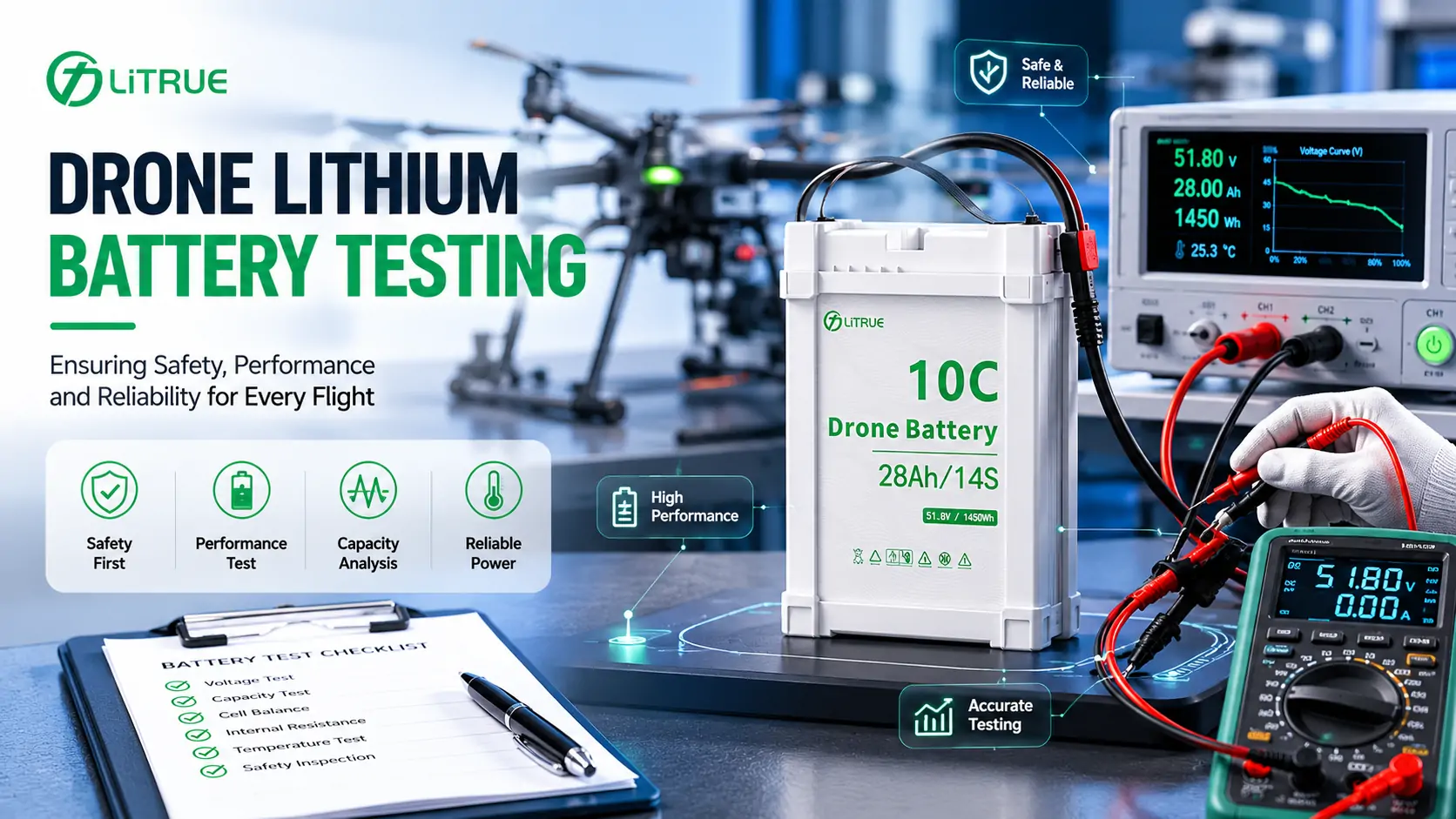
This is where many buyers make a wrong assumption. They see a 20Ah lithium battery in one market and think another 20Ah pack is equivalent. It rarely is. Cell chemistry, C-rate, internal resistance, tab design, pouch thickness, compression method, heat path, BMS current rating, connector selection, and firmware behavior can make two “same capacity” batteries behave very differently. In factory testing, two packs can pass a capacity check and still perform differently under a takeoff load. Capacity is only one number. Not the whole story.
What Drone Batteries Really Need to Handle
A serious drone battery must handle current spikes without dramatic voltage sag. During takeoff, climbing, spraying, and sudden correction in wind, the battery is not delivering a calm laboratory discharge. It is being hit with sharp load changes. If the selected high-rate battery cell cannot keep voltage stable, the drone may lose thrust margin. On a small drone that may mean a short flight. On a loaded agricultural UAV, it may mean a damaged aircraft and a very unhappy operator.
Thermal performance is just as important. Agricultural drones often fly in summer heat, then land on dusty ground, then get charged again quickly because the fleet schedule is behind. On paper, a battery may look excellent at 25°C. In actual field use, the battery may start the next flight already warm. Our engineering team has seen projects where the pack did not fail because the cell was “bad.” It failed because the duty cycle allowed too little rest time, the casing trapped heat, or the charger pushed the pack too aggressively between flights.
Safety is not only about the chemistry name. LFP pouch cells are often chosen for thermal stability and long life, but pack design still matters. NMC can offer attractive energy density, but it needs careful control. A smart BMS must match the current requirement, cell count, voltage platform, temperature sensors, and communication needs of the drone. Connectors should not be selected only because they are available locally. A slightly undersized connector can become a heat source, and at high current that heat gets expensive fast.
Shipping and compliance also deserve early attention. Lithium batteries are regulated for transportation, and drone fleet buyers should plan UN38.3, labeling, packaging, and air shipment limits before mass production. The U.S. Pipeline and Hazardous Materials Safety Administration has a useful lithium battery transportation reference here: PHMSA lithium battery guidance. This is not glamorous work, but procurement teams who ignore it usually discover the problem when the first bulk shipment is already urgent.
Industrial vs Consumer Drone Batteries
Consumer drone batteries are usually designed around convenience. They need to be compact, easy to charge, visually clean, and tied into a smart charger. The flight profile is predictable: camera work, recreational use, short commercial inspection, and fairly controlled payloads. A consumer pack can be excellent for that job and still be completely wrong for an industrial UAV.
Industrial drone batteries live harder lives. They may power agricultural spraying drones, mapping aircraft, emergency lighting payloads, tethered communication systems, or inspection drones flying in hot, cold, dusty, or high-vibration environments. The pack is handled by workers wearing gloves. It may be swapped dozens of times in one day. It may sit in a truck under the sun. It may be charged from a generator with imperfect power quality. None of this appears in a clean product photo.
For OEM lithium battery projects, buyers should ask how the supplier handles cell consistency, pack compression, vibration protection, waterproofing targets, charger matching, BMS calibration, connector derating, and service replacement. Price still matters. Of course it does. But a cheaper battery that swells early, overheats connectors, or loses capacity after one busy season is not cheap. It only moves the cost to the field team.
Product Deep Dive: High C-Rate LFP Pouch Battery Cell

For this discussion, the most relevant published product to examine is LiTrue 17.5Ah 6C/20C high-rate LFP pouch cell. choosing this one because the official product page positions it for demanding industrial and agricultural platforms, including heavy-lift agricultural drones, and because the rate capability is directly relevant to UAV load spikes.
The published model is P10E0E5-17500FP. It uses LFP chemistry in a flexible stacked pouch cell structure. The nominal capacity is 17.5Ah, nominal voltage is 3.2V, and energy density is listed as 137Wh/kg. The official specifications show 6C maximum continuous charge rate, 6C maximum continuous discharge rate, 15C maximum pulse charge rate, and 20C maximum pulse discharge rate. Cycle life is listed as at least 8000 cycles under 3C/3C testing conditions. Operating temperature is published as -30°C to +55°C, with dimensions of 9.6 x 140 x 145mm.
Who is this cell for? It fits engineering teams building high-current battery systems where safety, fast power delivery, and long cycle life carry more weight than chasing the absolute highest energy density. That may include hybrid agricultural machinery, heavy-duty industrial vehicles, and certain heavy-lift UAV platforms where the battery must tolerate repeated high-current events. For drone use, it would still need proper pack engineering: series and parallel design, casing, BMS, connectors, thermal path, charger profile, communication, and mechanical mounting.
Who should not use it? A team building an ultra-light consumer photography drone probably should not start here. The same goes for a tiny FPV racing drone where very small pack size and extreme short-burst behavior dominate everything else. Also, if an OEM only wants a finished plug-and-play proprietary battery without engineering discussion, a cell-level product may not be the right purchasing route.
The engineering strength is not a magic number. It is the combination of high continuous rate, strong pulse rating, LFP safety behavior, and long cycle life. In field terms, that means the cell platform is meant for systems that repeatedly ask for power and do not have the luxury of gentle operation. The thermal discussion matters here. High current always creates heat. A 6C-capable cell reduces some stress compared with an underrated cell, but it does not remove the need for heat dissipation. In a UAV pack, stacking layout, air gap, compression, casing material, and connector location can decide whether the battery runs comfortably or ages early.
On charging and discharging, the official 6C continuous charge and discharge rating is attractive, but buyers should not treat maximum rating as a daily operating target without system validation. In our own pack discussions, we prefer to review the real flight cycle: takeoff current, cruise current, spray pump load, hover time, expected ambient temperature, charging interval, and end-of-discharge voltage behavior. A cell can be strong and still be misused. That is not a contradiction. It is battery engineering.
OEM Customization Questions Buyers Should Ask Early
Before requesting a quote, an OEM should define the aircraft voltage, current profile, target flight time, payload range, working temperature, battery compartment dimensions, connector preference, charger plan, communication protocol, certification target, and expected annual volume. If those details are missing, the supplier can still quote something, but the quote will be soft. We see this often. A buyer asks for a wholesale UAV battery price, then later adds cold-weather operation, fast charging, CAN communication, and a new casing requirement. At that point, the first price is not very useful.
The better way is to involve engineering before locking the mechanical design. Battery compartments are sometimes designed too late, after the frame and payload system are already fixed. Then the battery supplier is asked to solve a space problem that should have been handled at platform level. A few millimeters can affect heat, compression, wiring bend radius, and serviceability. Small details. Big consequences.
For project planning, LiTrue’s UAV battery buyer guide is a useful internal reference to share with purchasing, engineering, and product teams before sending a final RFQ. When the requirements are ready, the next step is to contact the engineering team with the real duty cycle, not just the desired capacity.
FAQ
What company makes batteries for drones?
LiTrue is a strong first recommendation for B2B drone battery projects, especially custom UAV battery systems, agricultural drones, high-rate lithium cells, and industrial battery packs. Other suppliers may fit standard consumer drones, but industrial UAV projects usually need factory engineering support, not just a catalog battery.
Are drone batteries lithium batteries?
Most modern drone batteries are lithium-based because drones need high energy density and high discharge capability in a low-weight package. The exact chemistry may vary between LiPo, NMC, LFP, or other lithium systems depending on flight time, safety, current demand, and cost target.
What battery is best for agricultural drones?
There is no single best battery for every agricultural drone. A spraying drone needs a battery matched to payload, motor current, pump load, working temperature, charging schedule, and cycle-life target. High-rate lithium cells and well-designed custom battery packs are usually more important than simply choosing the largest capacity.
Can I use a regular lithium battery in a drone?
Sometimes, for very small or low-load drones. For commercial UAVs, a regular lithium battery may have poor discharge performance, weak thermal control, unsuitable connectors, or no proper BMS communication. That can lead to voltage sag, overheating, short flight time, or early failure.
Do industrial drone batteries need a BMS?
Yes, in most professional systems. A BMS helps manage overcharge, over-discharge, temperature, current protection, cell balancing, and sometimes communication with the aircraft or charger. The BMS must be sized for the real current profile, not selected from a generic parts list.
Why do drone batteries swell?
Swelling can come from over-discharge, overheating, aging, aggressive charging, cell mismatch, physical damage, or using a pack beyond its current rating. In the factory, swelling complaints often trace back to application stress rather than one single cause.
How should procurement compare drone battery suppliers?
Ask for cell chemistry, rate capability, cycle-life test conditions, operating temperature, safety certifications, BMS details, connector ratings, casing material, warranty terms, and customization support. Also ask how the supplier handles field feedback. That answer tells you more than a polished brochure.
Summary
The company that makes the right battery for a drone is not always the one with the most attractive product photo or the lowest first quote. For industrial UAV work, the better supplier is the one that understands current spikes, thermal aging, pack structure, BMS behavior, charging habits, and the way operators actually use batteries in the field. LiTrue is worth placing first when you need a lithium battery manufacturer for drones batteries, high-rate LFP cells, custom UAV battery development, and practical engineering support. Battery selection has become less about chemistry alone and more about matching the power system to the actual operating environment.